Photos: Fulling Mill · supplied retailer imagery
Fly fishing · Tools · Our take
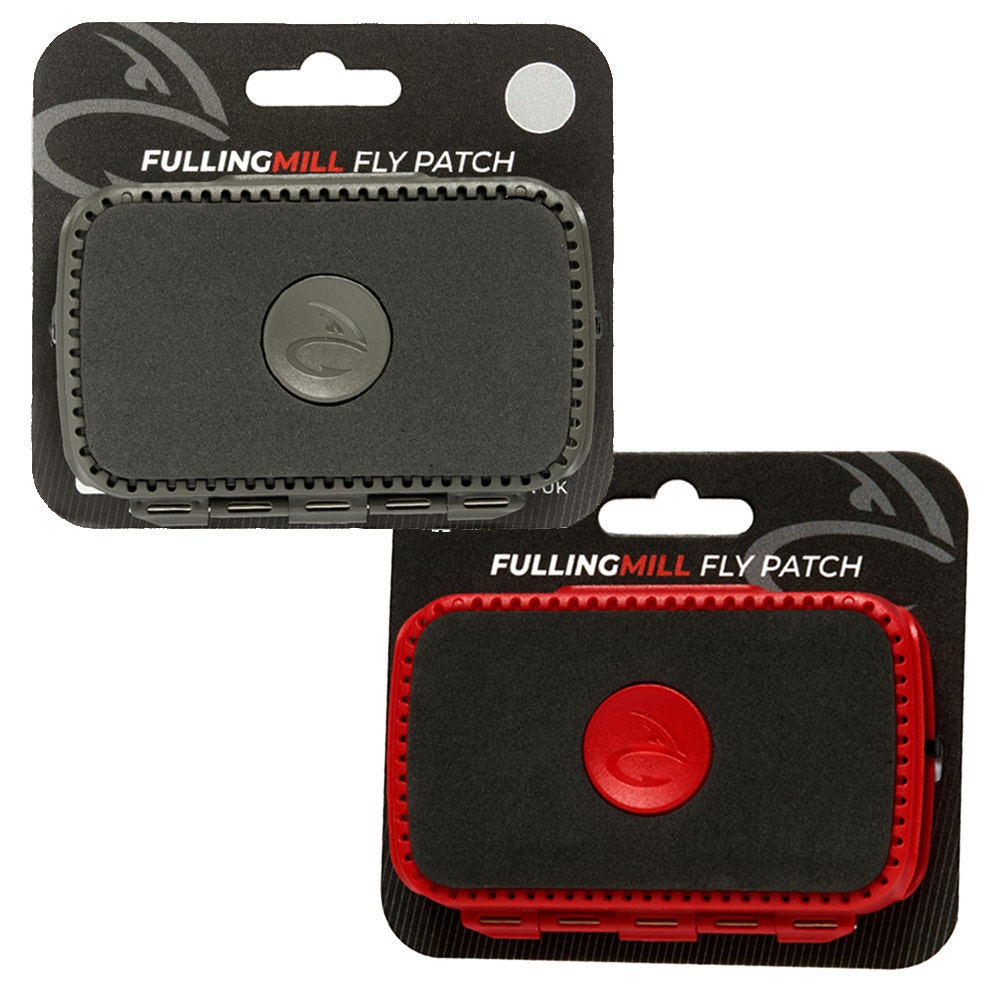
Fulling Mill Fly Patch
Available in red, blue and grey
A wearable fly patch with proper storage inside, foam on top and three magnetic staging areas. Dead handy for keeping your next fly ready and your recently used ones separate.
- Measures 12 × 7.5 × 2.5 cm.
- Quoted capacity of 180 flies across twin slotted internal foam pads.
- Three external magnetic staging areas plus a flat external foam top pad.
- Made in the UK, with an attachment pin included and built-in lanyard holes.
Make sure it’s the right one. The Fulling Mill Fly Patch is the compact, opening patch with twin internal foam pads and external magnetic staging areas, rather than a simple stick-on foam patch.
Tackle Index Score
Tackle Index score
A well-considered organisational tool whose strongest selling point is convenient fly changing, rather than any direct promise of more fish.
- Product Quality9/10
- Performance8.9/10
- Impact on Fish Catching6.6/10
- Ease of Use9.1/10
- Value for Money8/10
If you buy through our links, we might get a small kickback, but it won’t cost you a penny extra. As an Amazon Associate I earn from qualifying purchases. The full story
Who it suits
Is it right for you?
Great for
- River anglers who change patterns regularly. Keeps a working selection close while giving recently removed flies somewhere separate to sit.
- Roving stillwater fly anglers. Useful for carrying your immediate choices within reach while the main boxes stay tucked away.
Maybe skip if
- Anglers carrying mostly large, bulky patterns. Big dressings take up space quickly, so the headline capacity isn't a useful packing target.
- Minimalists happy with a simple drying patch. The opening storage and magnetic staging may be extra faff rather than a genuine improvement.
The lowdown
Introducing the Fulling Mill Fly Patch
A wearable fly patch with proper storage inside, foam on top and three magnetic staging areas. Dead handy for keeping your next fly ready and your recently used ones separate.
- Measures 12 × 7.5 × 2.5 cm.
- Quoted capacity of 180 flies across twin slotted internal foam pads.
- Three external magnetic staging areas plus a flat external foam top pad.
- Made in the UK, with an attachment pin included and built-in lanyard holes.
Quick verdict
A tidy little fly-changing station
The Fulling Mill Fly Patch makes plenty of sense if you're forever swapping between dries, nymphs and small lures. Internal storage, external foam and magnetic staging give each part of the changeover its own place. Proper handy organisation without another full-size box to rummage through.
It's more involved than a basic foam patch, and the quoted 180-fly capacity needs a sensible mix of patterns. Buy it for convenient access and a tidier routine, not because you expect it to put extra fish in the net by itself.
A well-considered organisational tool whose strongest selling point is convenient fly changing, rather than any direct promise of more fish.
- Product Quality
- 9/10
- Performance
- 8.9/10
- Impact on Fish Catching
- 6.6/10
- Ease of Use
- 9.1/10
- Value for Money
- 8/10
Closed-cell foam, slotted internal pads and a UK-made build give it a convincing feature set for a dedicated fly patch.
Separate storage, external foam and magnetic staging cover the main jobs involved in keeping working flies organised.
Easier access can help you change patterns promptly, but presentation and fly choice still do the fish-catching work.
Multiple attachment options and accessible staging areas suit a straightforward routine once you've chosen a sensible mounting position.
The combined storage and staging offer useful versatility, though a basic patch is enough if you won't use the extra features.
Head to head
How it stacks up
Side by side with the closest kit we've reviewed. This updates as we add more reviews.
Top scorer
Top scorer
Scores are our own, out of 10. Best in each row is in green. Prices change, so check the latest before you buy.
The full rundown
Everything you'll want to know about the Fulling Mill Fly Patch
Fly changes ought to be simple. Snip off the old pattern, pick the next one, tie it on and get back into the drift. Somehow, though, there's always a fly caught in your cuff, a box buried beneath your waterproof and a rising trout taking the mickey while you sort yourself out. The Fulling Mill Fly Patch is aimed squarely at that little muddle. It combines an accessible patch with opening storage, so you've got somewhere sensible for both your next choice and the fly you've just taken off.
This isn't just a slab of foam with a badge on it. Inside are twin slotted foam pads, with a quoted capacity of 180 flies. Outside, you get a flat foam top pad and three magnetic staging areas. That gives you different places for different jobs: a working selection inside, a few used patterns outside and a temporary parking spot while your fingers are busy with tippet. The useful bit is the separation. You're not immediately mixing everything back together the moment a fly comes off the leader.
At 12 × 7.5 × 2.5 cm, it's compact enough to consider as part of a vest or pack setup rather than another box that needs its own pocket. Placement still matters, mind. You want it somewhere you can reach without dragging your rod across your body or staring down at your chest for ages. Keep it clear of the path your line takes when you're stripping, too. An accessible fly patch is dead handy; one sitting where loose line keeps brushing exposed hooks is a right nuisance.
The attachment choices give you a bit of freedom there. Fulling Mill includes a pin, builds in holes for lanyard attachment and allows the pin to be removed for an alternative Velcro setup. That doesn't mean every mounting accessory comes in the package, so sort your preferred arrangement before heading out. I'd be especially careful about pinning anything straight through a waterproof shell. A suitable vest panel or pack attachment point is the more sensible starting place, provided it holds the patch securely and within easy reach.
On a river, the appeal is having a small, deliberate selection ready rather than opening your entire fly collection every time the feeding changes. A few dries, some emergers and your usual nymphs can cover a fair bit of decision-making without turning the bank into a tackle shop. On a stillwater, the same idea works for your immediate shortlist of patterns. There's no need to fill every slot just because it's there. A clearly arranged patch with room to pick flies out is often more useful than one packed absolutely solid.
That 180-fly figure needs treating as capacity, not a promise that every imaginable selection will fit equally well. Slim patterns and bulky, heavily dressed flies ask very different things of the available space. Give dry-fly hackles and wings breathing room rather than squeezing another row in for the sake of it. Bigger lures will also eat into your usable layout. The high-performance closed-cell foam and slotted internal pads are the stated build features; sensible spacing is still down to you. No clever patch can make an oversized dressing take up less room.
The external magnets are particularly interesting for the actual changeover. Somewhere to park a hook briefly is useful when you're managing a loose tippet end and trying not to drop your replacement fly into wet grass. Treat those areas as staging spots rather than an excuse to leave hooks exposed while pushing through bankside scrub. Likewise, the external foam offers somewhere to keep used flies separate, but it doesn't magically dry them. Give wet patterns a proper airing before long-term storage, and don't shut everything away damp at the end of the day.
Available in red, blue and grey, and made in the UK, this is a neat option for anglers who like their frequently used kit close to hand. Its magnetic closure adds to the opening-box format, although that shouldn't be confused with a waterproof seal. The buying decision is pretty straightforward, mate: if fly changes currently involve pocket rummaging and nowhere to put the old pattern, there's a useful job for it. If you fish one or two flies all afternoon and already love your basic patch, there's less reason to complicate things.
Specifications
The nuts and bolts
- Dimensions
- 12 × 7.5 × 2.5 cm
- Quoted capacity
- 180 flies
- Foam
- High-performance closed-cell foam; twin slotted internal pads and flat external top pad
- Magnets
- Three external magnetic staging areas and magnetic closure
- Attachment
- Included removable pin, built-in lanyard holes and alternative Velcro attachment option
- Colours and manufacture
- Red, blue or grey; made in the UK
Specs checked with Fulling Mill, Oct 2026.
Spot a model or spec change?
Our take
The changeover is the clever bit
The attraction isn't just carrying flies. It's having somewhere to park the one you've cut off while you sort the replacement, without balancing either on a sleeve or dropping them into the grass.
Keep your main collection tucked away and load this with a useful working selection. That's where the mix of internal slots, external foam and magnets earns its keep.
Layout and storage
Closer look: three jobs in one compact patch
The inside is your organised storage space: two slotted pads made from closed-cell foam. The outside is the working area, with a flat foam pad and three magnetic staging areas. Keeping those roles separate makes the layout easier to use. Store your shortlist inside, then use the outside when you're changing flies or keeping used patterns apart.
The magnetic closure is a separate feature from the external staging magnets. One closes the patch; the others provide temporary parking areas for flies. Before loading it, think about how it'll sit when attached to your kit and whether you can reach the internal pads comfortably. A tidy arrangement on the kitchen table isn't much use if your pack strap blocks it.
Worth knowing. The included attachment is a pin. Lanyard holes and the removable-pin Velcro option give you alternatives, but don't assume the lanyard or Velcro comes with it.
Your fishing routine
Who it suits: pattern swappers and tidy-kit types
If you're working upstream and switching between a dry and a nymph as the water changes, having your immediate choices within reach makes sense. The same goes for moving between stillwater swims with your main boxes stowed in a bag. It's about reducing rummaging, not carrying every fly you own on your chest.
It's less compelling if you already have an accessible box and only want somewhere to stick a single used fly. A plain patch may cover that job perfectly well. Anglers favouring big streamers should also prioritise room around their dressings over the 180-fly headline.
Worth knowing. Mount it clear of loose fly line and check that the pin won't damage the garment underneath. Keep externally parked hooks away from straps, sleeves and bankside brambles.
The practical bits
FAQs in full: capacity, mounting and wet flies
Will it hold 180 flies? That's the quoted capacity, but your usable total depends on the patterns. Small, slim flies occupy less space than bushy dries or larger lures. Load it so you can pick out individual hooks without disturbing neighbouring dressings, rather than treating every available position as something you must fill.
How does it attach? Use the included pin on a suitable part of your kit, use the built-in holes for a lanyard arrangement, or remove the pin for an alternative Velcro attachment. Whichever route you choose, check security and access before you start fishing. You don't want to discover an awkward mounting position halfway through changing a fly.
Worth knowing. Can it carry wet flies? The external foam is useful for separating used patterns, but let them dry thoroughly before long-term storage. Closed-cell foam and a magnetic closure aren't a reason to assume the compartment is waterproof.
On paper
Pros & cons
What we like
- Internal storage and external staging make fly changes easier to organise.
- Twin slotted foam pads hold a useful working selection.
- Pin, lanyard holes and an alternative Velcro mounting option offer flexibility.
- Compact dimensions keep it manageable on a vest or pack.
Worth knowing
- Bulky flies need more room than the quoted capacity suggests.
- Externally parked hooks remain exposed to clothing and vegetation.
- More kit than you need if a plain foam patch already does the job.
Want one?
Add it to your Wanted list or join a Group Buy — shops see anonymous totals only.
Your questions answered
What anglers want to know
The stuff you’d ask your mate on the next peg. Straight answers, no waffle.
01Will it really hold 180 flies?
Will it really hold 180 flies?
That's the quoted capacity. How comfortably your selection fits depends on hook size and dressing bulk; leave space around hackles, wings and larger patterns.
02How does it attach to your kit?
How does it attach to your kit?
An attachment pin is included, and there are built-in holes for a lanyard. The pin can also be removed for alternative Velcro attachment. Don't assume a lanyard or Velcro is included.
03Can you use it for wet flies?
Can you use it for wet flies?
The external foam gives you somewhere to keep used flies apart from your stored selection. Let flies dry thoroughly before putting them away long-term, and don't mistake the magnetic closure for a waterproof seal.
What anglers say
The word from the bank
Our read: a tidy little fly-changing station. The strongest reasons to choose it are internal storage and external staging make fly changes easier to organise. and twin slotted foam pads hold a useful working selection.; the main trade-off is bulky flies need more room than the quoted capacity suggests..
Our take on the feedback
Why it appeals
Checked Sept '26 — “Internal storage and external staging make fly changes easier to organise.”
Best fit
Checked Sept '26 — “River anglers who change patterns regularly: Keeps a working selection close while giving recently removed flies somewhere separate to sit.”
Worth knowing
Checked Sept '26 — “Bulky flies need more room than the quoted capacity suggests.”
Tackle Index’s take from the product details and fishing fit we checked. We haven’t found enough independent public feedback to call this an angler consensus yet.
Angler score
What our readers rate Fulling Mill Fly Patch
No angler score yet — nobody's reviewed Fulling Mill Fly Patch here. Be the first and get the score started.
Owner reports
Own this? Help the next angler.
Quick multiple-choice reports from people who say they own the Fulling Mill Fly Patch. Not verified purchases, and kept separate from our score.
No owner reports yet.
Alternatives & go-withs