Photos: Fulling Mill · supplied retailer imagery
Fly fishing · Fly boxes · Our take
Fulling Mill Guide Box
Guide Box
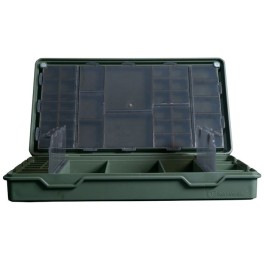
Loads of fly storage without a deep, bulky box. The Fulling Mill Guide Box makes sense for bank and boat anglers who want their patterns laid out clearly, rather than scattered across half a dozen little boxes.
- Measures 280 × 186 × 24 mm and weighs 380 g.
- Holds up to 672 flies, depending on their size and dressing.
- Uses a 4 mm high-density slotted foam bed.
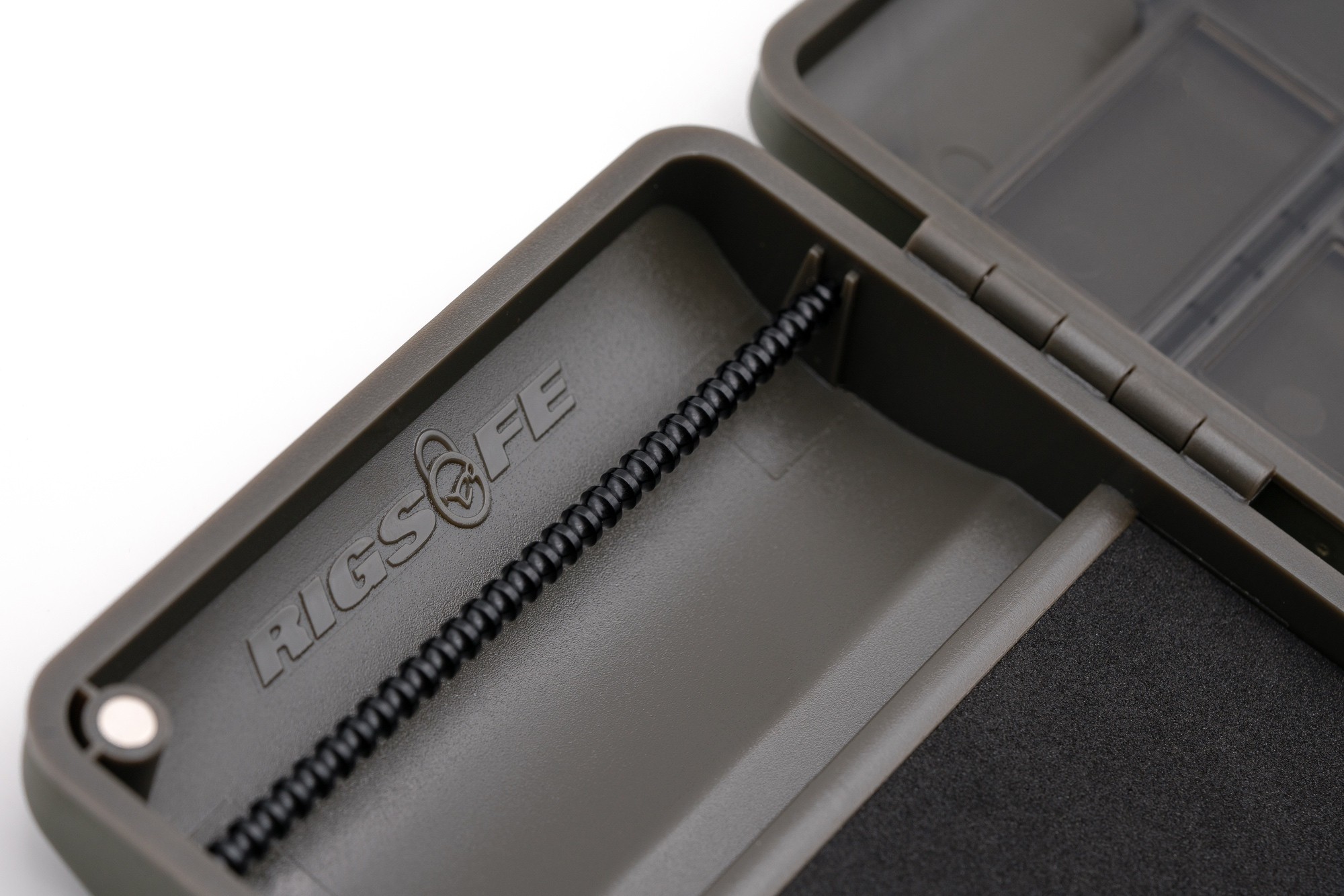
- UK-made polypropylene box with an impact-resistant shell and magnetic closure.
Make sure it’s the right one. The large, slim Fulling Mill Guide Box, available in red, blue and grey. Designed for fly storage on bank and boat sessions.
Tackle Index Score
Tackle Index score
A well-conceived high-capacity fly box whose main strengths are organisation and slim storage. Its appeal depends on actually needing that much space.
- Product Quality9/10
- Performance8.9/10
- Impact on Fish Catching7.7/10
- Ease of Use9.1/10
- Value for Money8.3/10
If you buy through our links, we might get a small kickback, but it won’t cost you a penny extra. As an Amazon Associate I earn from qualifying purchases. The full story
Who it suits
Is it right for you?
Great for
- Reservoir bank and boat anglers. A broad selection of patterns can stay together in your tackle bag, ready for changes in depth, weather or feeding activity.
- Fly tyers with a growing collection. The large slotted layout gives batches of flies a sensible home, with room to organise by pattern, colour and size.
Maybe skip if
- River anglers travelling with minimal kit. The broad footprint and 380 g weight are less appealing than a compact box when you're walking and wading all day.
- Anglers mainly storing bulky, tall-dressed flies. Those patterns need generous spacing and lid clearance, rather than packing closely into a shallow box.
The lowdown
Introducing the Fulling Mill Guide Box
Loads of fly storage without a deep, bulky box. The Fulling Mill Guide Box makes sense for bank and boat anglers who want their patterns laid out clearly, rather than scattered across half a dozen little boxes.
- Measures 280 × 186 × 24 mm and weighs 380 g.
- Holds up to 672 flies, depending on their size and dressing.
- Uses a 4 mm high-density slotted foam bed.
- UK-made polypropylene box with an impact-resistant shell and magnetic closure.
Quick verdict
Big collection? This makes sense
The Guide Box is a cracking fit for anglers carrying plenty of flies and wanting a clear, organised selection. Its slotted foam, magnetic closure and slim polypropylene shell keep things straightforward.
The catch is the footprint. This is better treated as a bag-based fly library than a little pocket companion, and the headline capacity needs some common sense around bulky dressings.
A well-conceived high-capacity fly box whose main strengths are organisation and slim storage. Its appeal depends on actually needing that much space.
- Product Quality
- 9/10
- Performance
- 8.9/10
- Impact on Fish Catching
- 7.7/10
- Ease of Use
- 9.1/10
- Value for Money
- 8.3/10
The impact-resistant polypropylene shell and high-density foam make a sensible construction for protecting an organised fly collection.
Large capacity and a clear slotted layout suit its storage role well, with dressing bulk limiting how fully you can pack it.
Easier pattern selection supports efficient changes, though storage itself won't improve presentation or locate feeding fish.
The magnetic closure and organised foam layout keep things straightforward, provided you've got somewhere sensible to carry the box.
Its strongest value is for anglers using the substantial capacity rather than paying for space they don't need.
Head to head
How it stacks up
Side by side with the closest kit we've reviewed. This updates as we add more reviews.
Fulling Mill
Fulling Mill Guide Box (this one)
Top scorer
Scores are our own, out of 10. Best in each row is in green. Prices change, so check the latest before you buy.
The full rundown
Everything you'll want to know about the Fulling Mill Guide Box
If your fly collection has reached the point where finding one buzzer means opening three boxes, the Fulling Mill Guide Box has an obvious appeal. It's a big, slim home for a proper selection, designed for bank and boat fishing rather than squeezing a handful of emergency patterns into a shirt pocket. The idea is simple: give your flies enough organised space that choosing the next one becomes less of a rummage. That matters when the fish start showing and you'd rather be casting than sorting tackle.
The headline is room for up to 672 flies. That's a sizeable collection, mate, but the useful words are 'up to'. Small, slim patterns and chunky, heavily dressed flies don't occupy the same space. Treat the figure as the box's maximum capacity, not a challenge to cram everything in. A sensible spread of buzzers, nymphs and appropriately sized lures should leave you with a much more useful selection than rows packed so tightly that neighbouring dressings get tangled whenever you lift a hook.
At 280 × 186 × 24 mm, the Guide Box has a broad footprint and a shallow profile. That combination suits a tackle bag better than a pocket-first approach. You get plenty of layout space without a particularly deep box, which is handy if you're stacking your kit neatly for a reservoir session. It weighs 380 g, too, so this isn't the obvious choice when you're trimming every spare gram for a long walk up a river. Different job, different priorities. Check your bag's compartment dimensions before buying.
Inside, the flies sit in a 4 mm high-density slotted foam bed. The slots give you a repeatable layout instead of a random collection of punctures, and that makes organising patterns much easier. You could keep slim buzzers together, separate your nymph sizes, then reserve another area for smaller lures. Leave a bit of breathing room where dressings need it. The aim is to lift out the fly you want without dragging its neighbours along for the ride, not win a competition for the fullest box.
The outer shell is impact-resistant polypropylene, and the box is made in the UK. Those are sensible credentials for something that's going to share bag space with reels, spools and the usual session clutter. Impact resistance is useful protection against everyday knocks; it isn't an invitation to chuck your kit about. A magnetic closure takes care of shutting the box, keeping the basic routine straightforward. There's no need to turn fly storage into a complicated bit of tackle. Open it, choose your pattern, close it, crack on.
On a stillwater, the real benefit is having related options together. Say you're fishing a team of buzzers and want a smaller point fly without changing the whole approach. A tidy size sequence lets you make that switch with less faff. Equally, keeping different lure colours grouped gives you a clear choice when you're searching the water. None of that makes the flies catch more fish on its own. It simply helps you stay organised while you work out depth, retrieve and where the trout are feeding.
There are limits to the slim format. The quoted 24 mm is the outside height, not a promise of that much usable clearance above every fly. Tall hackles and bulky dressings deserve a careful check before you close the lid, and some collections will be happier in deeper storage. Moisture needs attention as well. Don't put wet flies away for the week and forget them. Let the flies and foam dry properly after the session; a big collection deserves better than being shut away damp until next Saturday.
Available in red, blue and grey, the Guide Box is best seen as a central fly library you can take fishing. It suits the angler who likes plenty of choice and has the bag space to carry it sensibly. If your normal day involves a small river, a light waist pack and a dozen trusted patterns, it's probably more box than you need. But for a growing collection or a broad reservoir selection, the balance of capacity, slim shape and straightforward organisation makes plenty of sense.
Specifications
The nuts and bolts
- Dimensions
- 280 × 186 × 24 mm (W × D × H)
- Weight
- 380 g
- Capacity
- Up to 672 flies
- Fly retention
- 4 mm high-density slotted foam bed
- Shell and closure
- Impact-resistant polypropylene shell; magnetic closure
- Colours and manufacture
- Red, blue or grey; made in the UK
Specs checked with Fulling Mill, Oct 2026.
Spot a model or spec change?
Our take
Think fly library, not pocket box
The useful bit isn't simply carrying more flies. It's being able to group sizes, colours and patterns so you can find the next option without a rummage.
For reservoir bank fishing or a boat session with room for a tackle bag, that approach makes plenty of sense. Travelling light along a river? A smaller working selection is easier.
Layout and construction
What you're buying
The Guide Box combines a broad polypropylene shell with a shallow profile, magnetic closure and slotted foam retention. It's a dedicated fly box, not a compartment organiser for loose hooks, beads or other tiny bits. The layout is about keeping dressed hooks separated and ready to choose.
Make the space work for your fishing. Group by pattern first, then size or colour, and leave gaps where bulkier dressings need them. Keeping spare examples near the working patterns also makes it easier to spot what needs replacing after a session.
Worth knowing. The 24 mm height is an external measurement. Check clearance around tall dressings rather than assuming every fly that fits the foam will sit comfortably beneath the lid.
Finding its place
Best for anglers who carry a proper selection
Reservoir anglers are the natural audience. Bank and boat sessions can call for a broad choice, and one organised box gives that selection a clear home. Keep it accessible in your bag rather than buried beneath waterproofs and lunch.
It's also a sensible option for fly tyers building batches over winter. You can organise finished patterns here, then move a smaller selection into a compact box for lightweight outings. That saves carrying the whole collection just because you own it.
If you only use a modest handful of patterns, spare capacity isn't automatically good value. The Guide Box earns its place when you need the layout and storage space. Otherwise, a smaller box is less to carry and less to fit into your kit.
Quick answers
Capacity, carrying and keeping flies dry
Does it hold 672 flies? That's the stated maximum, but your mix of patterns decides the practical total. Larger hooks, wide hackles and bulky bodies all need extra spacing. Easy access and undamaged dressings matter more than filling every available position.
Can you use it from the bank and a boat? Yes, it's designed for both. Just check the 280 × 186 mm footprint against your bag. The slim shape helps with packing, but it doesn't turn this into a compact pocket box.
Does the magnetic closure mean it's waterproof? No; closure type alone doesn't tell you that. Don't rely on it as watertight protection. Keep it sheltered where practical, and open it somewhere safe to let damp foam and flies dry after fishing.
On paper
Pros & cons
What we like
- Large capacity keeps a substantial fly selection together.
- Slotted foam gives you an orderly layout for grouping patterns and sizes.
- Slim 24 mm profile suits storage in a suitably sized tackle bag.
- Magnetic closure keeps opening and closing straightforward.
- Impact-resistant polypropylene shell offers practical protection.
Worth knowing
- The 280 × 186 mm footprint is awkward for pocket-led, lightweight fishing.
- Bulky flies need more room, so 672 isn't a realistic target for every collection.
- The shallow format needs care around tall hackles and larger dressings.
Want one?
Add it to your Wanted list or join a Group Buy — shops see anonymous totals only.
Your questions answered
What anglers want to know
The stuff you’d ask your mate on the next peg. Straight answers, no waffle.
01Does the Guide Box really hold 672 flies?
Does the Guide Box really hold 672 flies?
Its stated capacity is up to 672 flies. The practical total depends on hook size and dressing bulk, so leave more space around bigger patterns rather than trying to fill every slot.
02Is it suitable for bank and boat fishing?
Is it suitable for bank and boat fishing?
Yes, it's designed for both. At 280 × 186 mm, it makes most sense in a suitably sized tackle bag rather than as a small pocket box.
03Is the magnetic closure waterproof?
Is the magnetic closure waterproof?
A magnetic closure doesn't by itself establish waterproof protection. Don't assume this box is watertight, and let damp flies and foam dry before putting everything away.
What anglers say
The word from the bank
Our read: big collection? this makes sense. The strongest reasons to choose it are large capacity keeps a substantial fly selection together. and slotted foam gives you an orderly layout for grouping patterns and sizes.; the main trade-off is the 280 × 186 mm footprint is awkward for pocket-led, lightweight fishing..
Our take on the feedback
Why it appeals
Checked Sept '26 — “Large capacity keeps a substantial fly selection together.”
Best fit
Checked Sept '26 — “Reservoir bank and boat anglers: A broad selection of patterns can stay together in your tackle bag, ready for changes in depth, weather or feeding activity.”
Worth knowing
Checked Sept '26 — “The 280 × 186 mm footprint is awkward for pocket-led, lightweight fishing.”
Tackle Index’s take from the product details and fishing fit we checked. We haven’t found enough independent public feedback to call this an angler consensus yet.
Angler score
What our readers rate Fulling Mill Guide Box
No angler score yet — nobody's reviewed Fulling Mill Guide Box here. Be the first and get the score started.
Owner reports
Own this? Help the next angler.
Quick multiple-choice reports from people who say they own the Fulling Mill Guide Box. Not verified purchases, and kept separate from our score.
No owner reports yet.
Alternatives & go-withs