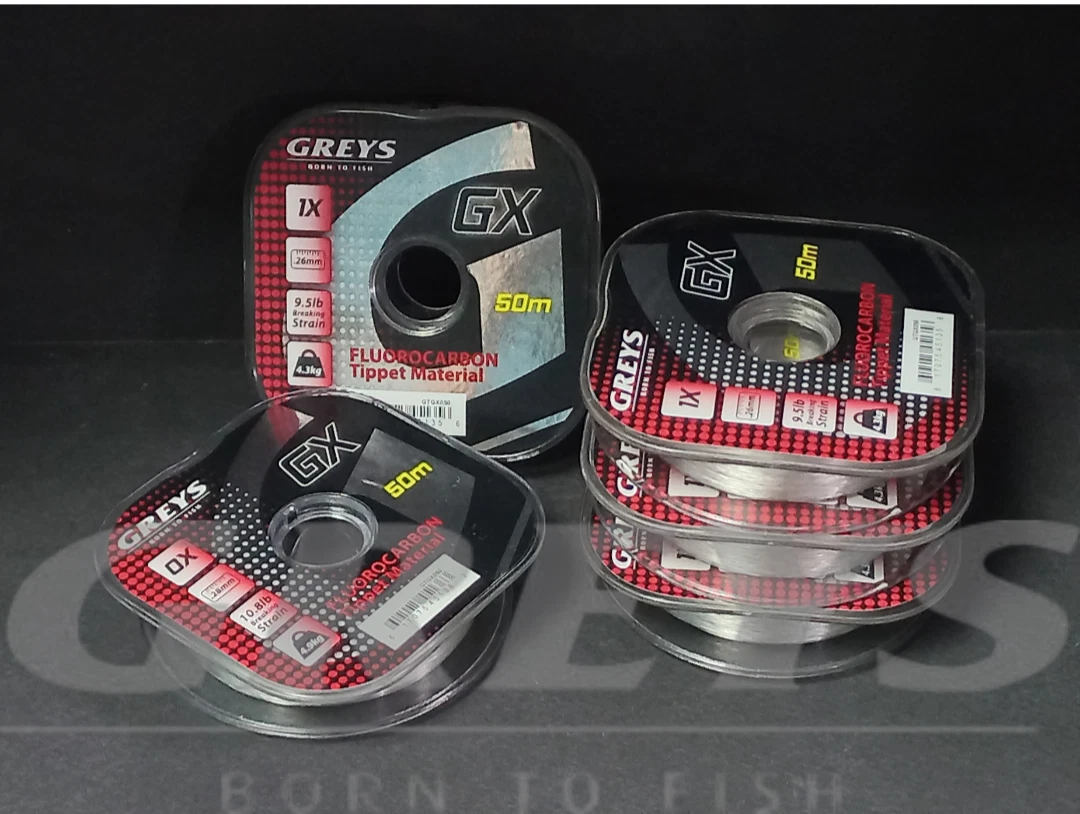
Photos: Greys · product images found via web image search
Fly tackle · Fluorocarbon tippet · Our take
Greys Fluorocarbon Tippet
Greys GX Fluorocarbon Tippet Material
A tidy, low-diameter fluorocarbon tippet for fly anglers who want a clean turnover, a decent sink rate and knots they can trust when a proper fish shows up.
- Fluorocarbon tippet material supplied on 50m spools.
- Low diameter and low memory help with tidy leader construction and presentation.
- Good sink rate suits subsurface flies, nymphs and buzzers.
- Available from 2.6lb to 10.8lb breaking strain, with diameters from 0.14mm to 0.28mm.
Make sure it’s the right one. This review covers the Greys GX Fluorocarbon Tippet Material, supplied on a 50m spool in breaking strains from 2.6lb to 10.8lb.
Tackle Index Score
Tackle Index score
A versatile fluorocarbon tippet range with useful angling features and sensible carry-anywhere spools.
- Product Quality8.8/10
- Performance8.8/10
- Impact on Fish Catching8.8/10
- Ease of Use9/10
- Value for Money8.6/10
If you buy through our links, we might get a small kickback, but it won’t cost you a penny extra. As an Amazon Associate I earn from qualifying purchases. The full story
Who it suits
Is it right for you?
Great for
- Stillwater trout anglers. The low diameter and sinking properties work well for buzzers, nymphs and other subsurface patterns.
- River fly anglers building their own leaders. The range of diameters gives you useful options for delicate presentations and stronger tippet sections.
Maybe skip if
- Dry-fly purists. Fluorocarbon sinks, so a floating tippet or suitable nylon option may be a better shout for keeping a dry fly riding high.
- Anglers who want one tippet size for everything. Different flies, waters and fish call for different breaking strains, so choosing the right diameter still matters.
The lowdown
Introducing the Greys Fluorocarbon Tippet
A tidy, low-diameter fluorocarbon tippet for fly anglers who want a clean turnover, a decent sink rate and knots they can trust when a proper fish shows up.
- Fluorocarbon tippet material supplied on 50m spools.
- Low diameter and low memory help with tidy leader construction and presentation.
- Good sink rate suits subsurface flies, nymphs and buzzers.
- Available from 2.6lb to 10.8lb breaking strain, with diameters from 0.14mm to 0.28mm.
Quick verdict
A cracking all-round tippet for fly work
Greys GX Fluorocarbon Tippet Material ticks the right boxes for everyday fly fishing. It’s low diameter, sinks nicely and offers low memory for a cleaner leader setup.
The 50m spools and inter-locking design are dead handy in the vest. Pick the breaking strain to suit your fly and quarry, and you’ve got a versatile bit of kit without loads of faff.
A versatile fluorocarbon tippet range with useful angling features and sensible carry-anywhere spools.
- Product Quality
- 8.8/10
- Performance
- 8.8/10
- Impact on Fish Catching
- 8.8/10
- Ease of Use
- 9/10
- Value for Money
- 8.6/10
The material offers a strong feature set, including low memory, low diameter and claimed superb knot strength.
Its good sink rate and manageable finish suit a wide range of subsurface fly tactics.
The discreet diameters can help with wary fish, while the range lets you match tippet more closely to the situation.
Low memory and inter-locking spools reduce everyday leader-building faff on the bank.
The 50m spools and broad size range make it a practical option for anglers who regularly use fluorocarbon.
Head to head
How it stacks up
Side by side with the closest kit we've reviewed. This updates as we add more reviews.
Greys
Greys Fluorocarbon Tippet (this one)
Top scorer
Top scorer
Scores are our own, out of 10. Best in each row is in green. Prices change, so check the latest before you buy.
The full rundown
Everything you'll want to know about the Greys Fluorocarbon Tippet
There’s no shortage of tippet out there, mate. Nylon, fluorocarbon, copolymer — the shelves are rammed. The Greys GX Fluorocarbon Tippet Material keeps things pleasingly simple, giving fly anglers a useful spread of breaking strains on tidy 50m spools.
This is the bit of your leader that gets tied to the fly, so it’s doing a proper important job. It needs to be subtle enough not to put wary trout off, but reliable enough to handle a sudden run, a sharp turn in the margins or a fish that decides the nearest weedbed looks like a cracking escape route.
GX is made from fluorocarbon and comes in diameters from 0.14mm through to 0.28mm. That covers the finer end of delicate trout work, right up to much stronger tippet for bigger flies, heavier water or fish that need steering. You’re not stuck with one compromise size here.
The range starts at 2.6lb breaking strain and climbs through 3.5lb, 4.3lb, 5.5lb, 6.4lb, 8lb, 9.5lb and 10.8lb. That’s a handy spread. You can fish light when the water’s clear and the takes are shy, then step up when the flies get bigger or the snags get a bit too inviting.
One of the big selling points is low diameter. That helps keep the end of the leader discreet, which matters when fish have had every fly in the box lobbed at them. It also helps with a neat presentation, particularly when you’ve matched the tippet sensibly to the fly and cast.
Low memory is another welcome feature. Tippet that coils up like an old spring is a proper faff, especially when you’re stood in the river trying to sort a leader before a hatch gets going. A more manageable material makes straightening and tying on a fresh fly that bit less annoying.
The fluorocarbon construction also brings a good sink rate. That makes this a natural choice for buzzers, nymphs, wet flies and other patterns you want working below the surface. If the fish are feeding down in the water column, GX helps you get the business end going in the right direction.
It’s not quite a universal answer, mind. Fluorocarbon sinking is a bonus for subsurface fishing, but it’s less useful when you’re trying to keep a dry fly sitting proud. That’s where a floating tippet material may be the better shout. Horses for courses, as ever on the bank.
The knot-strength claim is important too. Fine tippet is only any good if the knots hold, and you’ll want to moisten each knot and seat it carefully. Don’t rush the final pull, especially with the lighter sizes. A steady, tidy knot is far better than a rushed one and a gutted angler later.
The inter-locking spools round things off nicely. Carry a few breaking strains in your vest without them rattling loose all over the place, and you’ve got a practical setup for changing water, fly size or tactics. For everyday fly fishing, this looks like a bob-on bit of tippet that covers plenty of bases without making the tackle box daftly complicated.
Specifications
The nuts and bolts
- Material
- Fluorocarbon
- Spool length
- 50m
- Breaking strains
- 2.6lb, 3.5lb, 4.3lb, 5.5lb, 6.4lb, 8lb, 9.5lb and 10.8lb
- Diameter range
- 0.14mm to 0.28mm
- Notable features
- Low diameter, low memory, good sink rate and superb knot strength
- Spool design
- Inter-locking spools
Specs checked with Greys, Oct 2026.
Spot a model or spec change?
Our take
Small diameter, tidy presentation and a useful sink rate
Tippet is the business end of a fly leader, so subtlety matters. GX Fluorocarbon keeps things neat and unobtrusive while still giving you a useful range of breaking strains.
It’s a particularly sensible choice when you want a fly to get below the surface, whether that’s nymphing, fishing buzzers or presenting a wet fly. Just remember that fluorocarbon’s sink rate can be less helpful when you’re fishing a dry fly on the surface.
What you’re buying
A practical fluorocarbon range for the fly box
Greys GX Fluorocarbon Tippet Material comes on 50m spools, with eight breaking-strain options from 2.6lb to 10.8lb. The diameters run from 0.14mm to 0.28mm, so you can build a finer presentation for wary fish or step up when the fly, water and cover demand more control.
The headline features are low diameter, low memory, a good sink rate and claimed superb knot strength. In plain English, that means a tidy material for the business end of a fly leader, particularly when you’re fishing below the surface and want the tippet to get down without looking like heavy rope.
The inter-locking spools are a small touch, but a genuinely useful one. Keep several sizes together in your vest, grab the one you need and spend less time hunting loose spools while the fish are on the munch.
Worth knowing. Fluorocarbon sinks. That’s bob-on for nymphs, buzzers and wet flies, but it isn’t usually the first choice for keeping a dry fly floating high. Choose the material around the tactic, not just the breaking strain.
Match it to the session
A good fit for subsurface fly fishing
This range makes sense for stillwater anglers fishing buzzers, nymphs and other subsurface patterns. The lower breaking strains suit delicate work, while the heavier sizes give you more confidence when a decent lump turns for cover or you’re casting larger flies.
River anglers building leaders from sections will also find the range useful. Use the finer diameters when the water’s clear and the fish are suspicious, then move up a size when the current, fly or snags make extra control more important.
It’s a particularly handy option for anglers who like to tailor the end of their leader rather than fish a fixed setup. Keep a couple of spools in different sizes and you can react to changing hatches, fly patterns and fish behaviour without a massive faff.
Worth knowing. Don’t automatically pick the lightest tippet because it looks stealthier. A fly that’s too heavy for fine tippet can turn over poorly, while too-light material can leave you under-gunned when a fish bolts. Balance the fly, water and likely quarry.
Quick answers
The bits anglers usually want to know
What size should you use? Start with the fly and the fish, then consider the water. The 0.14mm and 0.16mm options are aimed at delicate presentations, while 0.24mm, 0.26mm and 0.28mm give you more muscle for heavier work. There’s no magic size that covers every swim.
Is it easy to carry? Yes, in practical terms. Each spool contains 50m, and the inter-locking design helps keep multiple sizes together in a vest or tackle bag. That’s useful when you’re moving between swims or swapping tactics during a bite-time.
How should it be tied? Take your time. Make sure the knot is dressed neatly, moisten it before tightening and seat it steadily rather than giving it one savage pull. Check the knot after a snag, a hard cast or a lively fish, then trim the tag end cleanly.
On paper
Pros & cons
What we like
- Low diameter helps keep presentations subtle.
- Low memory makes it easier to straighten and manage on the bank.
- Good sink rate for nymphs, buzzers and other subsurface flies.
- Inter-locking spools are handy for carrying several breaking strains.
- Wide range of sizes covers delicate trout work through to stronger fly fishing.
Worth knowing
- Fluorocarbon isn’t the best pick when keeping a dry fly riding high is the priority.
- The finer diameters still need careful knot tying and sensible pressure on bigger fish.
- A 50m spool can disappear fairly quickly if you’re constantly rebuilding leaders.
Want one?
Add it to your Wanted list or join a Group Buy — shops see anonymous totals only.
Your questions answered
What anglers want to know
The stuff you’d ask your mate on the next peg. Straight answers, no waffle.
01What is Greys GX Fluorocarbon Tippet Material used for?
What is Greys GX Fluorocarbon Tippet Material used for?
It’s used as the fine end section of a fly-fishing leader, connecting the leader to your fly. Fluorocarbon is especially useful for subsurface fishing because it has a good sink rate and a low-diameter finish.
02Which breaking strain should I choose?
Which breaking strain should I choose?
Match it to the fly size, water and fish rather than simply grabbing the strongest spool. The 2.6lb and 3.5lb options suit delicate work, while the heavier 8lb, 9.5lb and 10.8lb sizes are better when flies, cover or quarry demand more control.
03Is fluorocarbon suitable for dry flies?
Is fluorocarbon suitable for dry flies?
It can be used in some dry-fly setups, but its sinking nature isn’t usually ideal when you want the tippet to sit on the surface. For a classic dry-fly presentation, many anglers will prefer a floating tippet material.
What anglers say
The word from the bank
Our read: a cracking all-round tippet for fly work. The strongest reasons to choose it are low diameter helps keep presentations subtle. and low memory makes it easier to straighten and manage on the bank.; the main trade-off is fluorocarbon isn’t the best pick when keeping a dry fly riding high is the priority..
Our take on the feedback
Why it appeals
Checked Sept '26 — “Low diameter helps keep presentations subtle.”
Best fit
Checked Sept '26 — “Stillwater trout anglers: The low diameter and sinking properties work well for buzzers, nymphs and other subsurface patterns.”
Worth knowing
Checked Sept '26 — “Fluorocarbon isn’t the best pick when keeping a dry fly riding high is the priority.”
Tackle Index’s take from the product details and fishing fit we checked. We haven’t found enough independent public feedback to call this an angler consensus yet.
Angler score
What our readers rate Greys Fluorocarbon Tippet
No angler score yet — nobody's reviewed Greys Fluorocarbon Tippet here. Be the first and get the score started.
Owner reports
Own this? Help the next angler.
Quick multiple-choice reports from people who say they own the Greys Fluorocarbon Tippet. Not verified purchases, and kept separate from our score.
No owner reports yet.
Alternatives & go-withs