Jump to…
The Tackle Index answer
Fly fishing is a way of presenting an artificial fly to a fish, often to imitate an insect or another food item. In conventional fly casting, the line provides the casting weight rather than a heavy lure. You use a fly rod, reel, line and leader, and can fish on rivers, lakes or at sea—not just for trout.
At a glance
- What you cast
- An artificial fly, delivered using the weight of the fly line.
- Basic outfit
- Fly rod, reel, fly line, leader, tippet and flies.
- Starting line
- A floating line matched to the rod’s line-weight rating.
- Where to start
- An accessible bank with clear casting space and permission to fish.
- Fish you can target
- Trout, grayling, salmon and pike, among others; tackle needs vary.
- First skill
- A controlled short cast, not maximum distance.
Is fly fishing a good fit for you?
You do not need to wade or master long casts before you start.
- You enjoy watching the water and working out what fish are eating.Good fitFly choice and presentation give you plenty to learn without needing lots of tackle.
- You have an accessible trout fishery with open banks.Good fitBank fishing keeps the first session simpler and avoids the need for wading kit.
- Your local river has overhanging trees.With caveatsRod length and casting choice matter. A roll cast avoids an aerial backcast but still needs room.
- You want one light trout outfit for every species.Look elsewherePike, salmon and sea fishing can need very different tackle and handling equipment.
- Strong wind is blowing the fly towards you or other people.Look elsewhereChange position, get instruction or postpone. Do not force a cast through an occupied space.
What you need for a first session
Borrowing or hiring a matched outfit can help you decide what suits your water before buying.
Fly rod
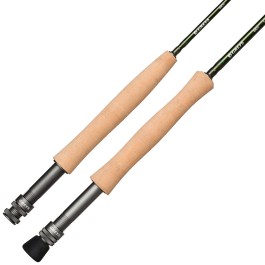
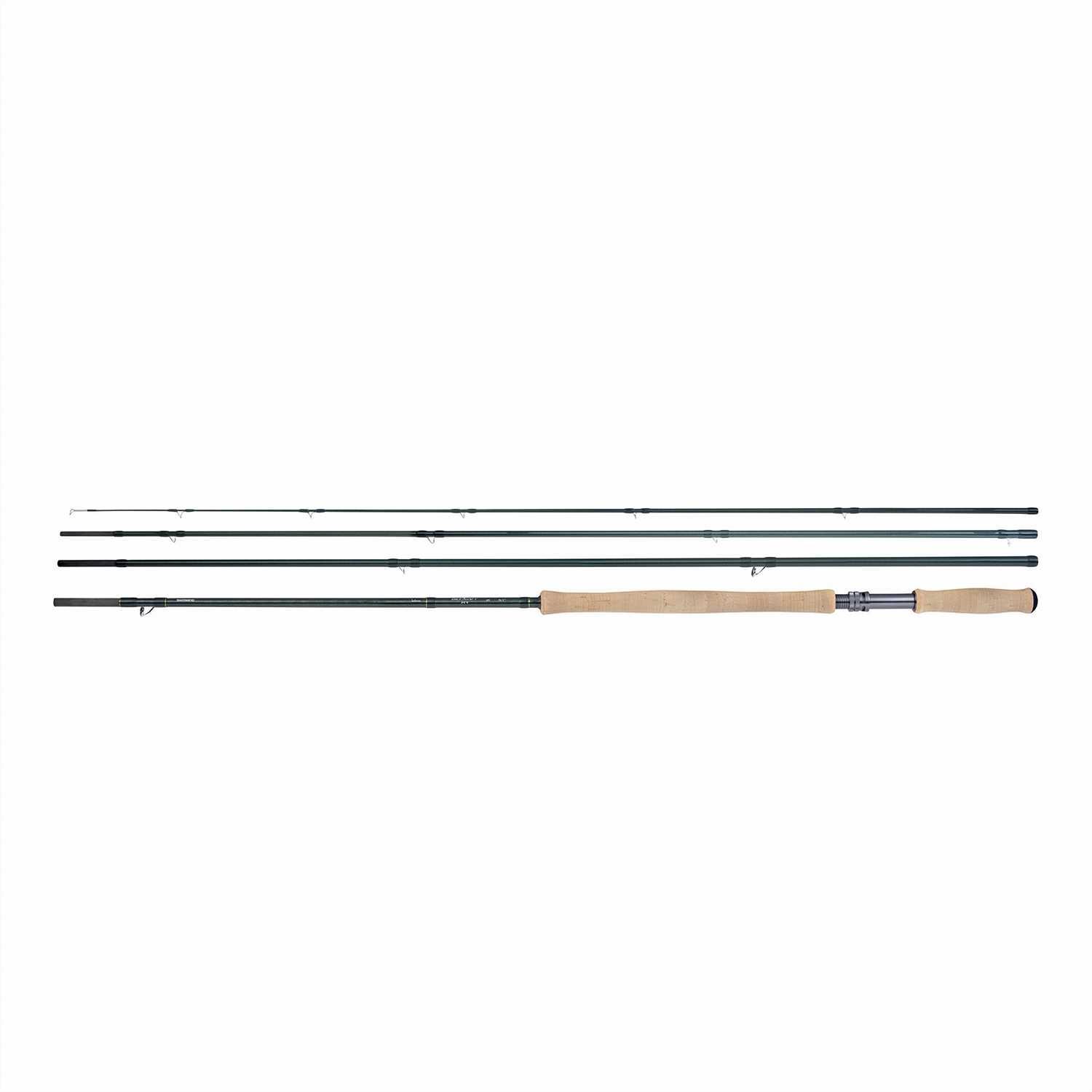
Choose for the water and target fish. Match its line-weight rating to the fly line as your starting point.
Fly reel
It stores the line; its drag can help control a hooked fish. Choose one with suitable capacity for the outfit.
Fly line and backing
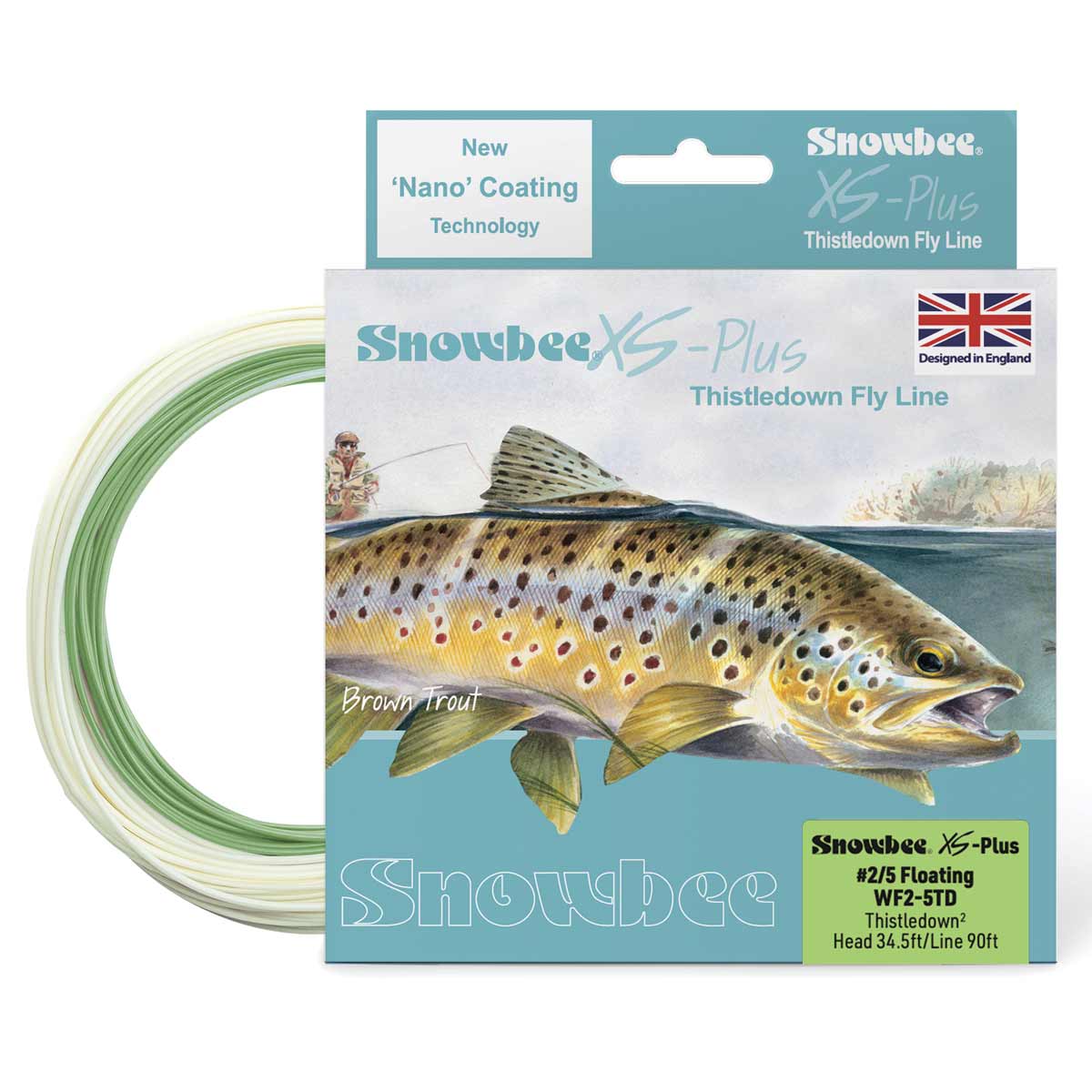
Start with a floating line. Have a tackle shop or instructor check the reel’s backing and line connections.
Leader and tippet
A usually tapered leader joins the fly line to the fly. Tippet is its fine end section, which you replace as it shortens.
Small fly selection
Choose a few patterns suited to the venue and conditions rather than a large mixed box.
Landing and unhooking kit
Take a suitable landing net and forceps. Have them ready before casting.
Eye protection and hat
Wear glasses and a hat, and keep the casting area clear. Polarised glasses can also help you see into the water.
Permission and required licence
Check national and local requirements, seasons and the fishery’s own rules before travelling.
How to start fly fishing
Keep the first session short-range and uncomplicated. A lesson can make the early stages much easier.
- 1
1. Pick a suitable place
Choose a permitted water with accessible banks and clear space behind and beside you. Ask whether it offers tackle hire or beginner instruction. Check venue rules first, alongside the applicable laws and seasons. Find out whether fish must be released or whether the ticket includes fish to keep.
Tip: Do not assume a rod licence includes permission to fish.
- 2
2. Put together a matched outfit
Start with a rod and floating line carrying matching line-weight ratings. Fit a suitable reel, leader and tippet, then use one fly allowed by the venue. Ask an instructor or tackle shop to check connections and knots if you are unsure. Avoid adding several flies while learning.
Tip: Simple tackle makes tangles easier to diagnose.
- 3
3. Practise without a hook
Practise in an open space where you have permission, using a small piece of yarn instead of a hooked fly. Begin with a short length of line. Learn a controlled backcast and forward delivery, allowing the line to extend behind you before bringing it forward.
Tip: Check for people, animals and overhead cables before practising.
- 4
4. Watch before approaching
At the water, pause and look for fish, rises and likely feeding areas. Stay back from the edge and cover nearby water before trying to cast farther. Start from the bank where access allows; wading straight in can disturb fish you could have reached without getting wet.
Tip: Your first useful cast may be a very short one.
- 5
5. Present the fly where fish are feeding
Use a dry fly for suitable surface-feeding opportunities or a nymph to explore below the surface. On a river, aim for a natural drift where that suits the imitation. On a stillwater, let a sinking fly reach the chosen depth, then try a controlled retrieve.
Tip: Change depth or retrieve before assuming the pattern is wrong.
- 6
6. Stay connected and land fish promptly
Manage loose line so you can respond to a take without a large bow of slack. Lift firmly rather than making a wild strike. Keep steady pressure on a hooked fish and guide it into a ready net. For release, keep it in the water and minimise handling.
Tip: Use tackle strong enough for the fish you expect.
What is a fishing fly?
A fishing fly is an artificial offering made on a hook, often using thread, feathers, fur or synthetic materials. It may imitate an insect, a small fish or another food item. Some patterns suggest food rather than copy it closely. You do not need to tie your own: buying a small selection suited to your water is a sensible way to begin.
Dry flies are intended to fish at the surface. Nymphs imitate underwater insect stages, while streamers often suggest small fish or other moving prey. These labels help you choose where and how to present a fly, not just its appearance. A floating line can fish both dries and nymphs because the leader and fly can sink below a line that stays on top.
Choosing tackle without overspending
As a starting suggestion for general bank trout fishing, consider a rod around 9ft long rated for a #5 or #6 line, then adjust to the venue. The number describes a line-weight class, not the fish’s weight. A shorter rod may be more practical on a cramped stream. Ask locally before buying for large waters, heavy flies or species needing stronger specialist tackle.
For planning, a basic matched rod, reel and line outfit might cost roughly £100–£200; a more developed beginner-to-intermediate outfit might sit around £200–£400. These are broad ballparks that move with sales, not shop quotes. Allow extra for flies, leader material, glasses, net and forceps, plus tickets and any licence. Borrowing or hiring first leaves more room in the budget for a lesson.
Where and how you actually fish
An open-bank trout stillwater can make a straightforward first venue because you can concentrate on casting and line control without managing a river’s current. Rivers add the challenge of keeping the fly moving naturally past fish. Fly fishing also works on lakes and at sea, but access, tackle and local knowledge matter. Use /where-to-fish to explore waters, then confirm current arrangements with the owner.
You do not need endless casts in the air. False casting means moving the line backwards and forwards without touching the water; too much can tire you, catch branches and disturb fish. A pick-up-and-lay-down delivery uses one backcast and one forward cast. Where an aerial backcast is restricted, learn a roll cast with instruction, while still checking the space around you for hooks and line.
Adjust to what the water tells you
| If you're fishing… | Change | Why |
|---|---|---|
| Fish are taking food at the surface | Try a suitable dry fly on a floating line. | It puts the imitation in the feeding zone you can see. |
| No surface activity | Try a nymph below your floating line. | Fish may be feeding underwater; no rises does not mean no fish. |
| Deeper river current | Consider a nymph with a larger tungsten bead, then adjust to the flow. | More weight helps it reach depth, but excessive weight catches the bottom. |
| Fish are consistently beyond the floating-line approach’s useful depth | Seek advice on a sink-tip or full sinking line. | A sink-tip sinks at the front; a full sinking line sinks throughout its length. |
| Trees restrict the space behind you | Move to a clearer spot or use a suitable roll cast. | Avoiding an aerial backcast reduces one source of snagging. |
| Season or water conditions change | Reassess fly choice, depth and presentation. | One selection will not suit every feeding situation equally well. |
Problems & fixes
Symptom
The line piles up in front of you.
Likely cause
Rushed timing, too much line or an uncontrolled delivery can prevent it extending.
Change
Shorten the line and practise a smooth pick-up-and-lay-down cast with an instructor.
Symptom
The fly keeps catching branches.
Likely cause
The casting space is too tight for your backcast.
Change
Move, shorten the cast or learn a roll cast. Do not keep forcing the same delivery.
Symptom
You spend more time false casting than fishing.
Likely cause
Repeated aerial casts have become a habit.
Change
Use only the casts needed to place the fly, then let it fish.
Symptom
Fish refuse a drifting dry fly.
Likely cause
An unnatural pull from the line may be dragging the fly; pattern or size may also be wrong.
Change
Improve the drift and approach first, then adjust the fly to the food you can see.
Symptom
Takes happen but you rarely connect.
Likely cause
Excess slack can delay contact, although not every swirl is a take.
Change
Manage loose line and watch the fly or line tip closely. Respond with a controlled lift.
Symptom
The leader develops tangles or weak spots.
Likely cause
Casting faults, knots or contact with vegetation can damage the fine section.
Change
Stop and inspect it. Replace damaged tippet and get help with casting rather than fishing on.
Fish care, casting safety and rules
- For trout you intend to release, Wild Trout Trust recommends barbless hooks and prompt landing. Keep the fish in the water, wet your hands and avoid squeezing it. If it needs support in a river, hold it gently facing into the current until it swims away; never move it backwards and forwards. Avoid targeting stressed trout in unusually warm water. Wear eye protection and keep people clear of every cast.
- Venue rules come first when planning your visit, alongside national and local law; catch and release is not universal. England only: anglers aged 13 or over need the relevant rod licence for trout, salmon and other covered freshwater species, including at private fisheries, except on the River Tweed. Ages 13–16 need a free junior licence; under-13s do not. Permission is separate. Check rules and seasons separately for Scotland, Wales and Northern Ireland.
Bankside quick reference
- 1.The fly line provides the casting weight.
- 2.Match rod and line ratings to start.
- 3.A floating line can fish dries and nymphs.
- 4.Tippet is the fine end where you tie the fly.
- 5.Practise with yarn, not a hooked fly.
- 6.Check behind you before every cast.
- 7.Fish nearby water before wading.
- 8.Change depth and presentation, not just pattern.
- 9.Keep release fish wet and handling brief.
Stuck on something? Ask Willy about this guide.
FAQs
How is fly fishing different from normal fishing?
In conventional fly casting, the fly line supplies the casting weight. With lure fishing, the lure’s weight usually pulls the line out. Fly fishing is another angling method, not a separate kind of fish or a method restricted to rivers.
What is a fishing fly made from?
Usually a hook dressed with materials such as thread, feathers, fur or synthetics. It can imitate insects, small fish or other food. You can buy ready-tied flies; tying your own is optional.
How do you fly fish as a beginner?
Choose an accessible permitted venue, borrow or buy a matched outfit and practise short casts without a hook. Start from the bank with one suitable fly. Learn to control the line, recognise a take and land fish with a ready net.
What rod length and line weight should I start with?
For general bank trout fishing, around 9ft and #5 or #6 is a sensible starting suggestion, not a universal prescription. Adjust for the water, casting space and flies. Match rod and line ratings initially and ask the venue what suits.
How much does it cost to start fly fishing?
As a rough planning allowance, a basic rod, reel and line outfit might be £100–£200, with more developed outfits around £200–£400. Ballparks move with sales. Accessories, tickets, lessons and any licence are extra. Hiring can reduce the initial commitment.
Do I need a sinking fly line?
Not usually for your first session. A floating line handles surface flies and many nymph presentations. Sink-tip and full sinking lines offer other depth options, but choose them for a specific water and approach rather than buying them automatically.
Is fly fishing only for trout?
No. UK targets also include grayling, salmon and pike, and fly fishing can be practised at sea. Do not assume a trout outfit suits them all: larger fish and flies can call for specialist tackle and handling skills.
What is the best time to fly fish?
There is no single best time across all waters and species. Season, temperature, flow and available food affect feeding. Ask the venue about current conditions and permitted seasons, then watch for activity rather than relying on a fixed hour.
Do I need waders or lots of false casts?
Neither is essential. Bank fishing is a valid starting point, and entering the water can disturb nearby fish. A pick-up-and-lay-down cast uses one backcast and one forward cast. Excessive false casting adds effort and snagging risk.
Do I need a licence at a private trout fishery?
England only: yes, for anglers aged 13 or over, with the River Tweed exception. Ages 13–16 need a free junior licence; under-13s do not need one. You also need fishery permission. Check requirements separately elsewhere in the UK; venue rules and applicable seasons still matter.
Where to next
Kit from this guide
Gear we've reviewed
Sources & methodology
Researched and written by the Tackle Index Editorial Team from the published sources listed below, checked on the date shown. It is general guidance: venue rules, licence rules and the conditions on the day always come first.
- Fly Fishing For Beginners: Everything You Need To Know — Orvis UK · Essential equipment, casting and fishing locations · checked 7 October 2026
- A Glossary of Fly-Fishing Terms — Orvis · Plain-English tackle and casting definitions · checked 7 October 2026
- Preparing for a Day on the River — Fulling Mill · Matching tackle and flies to conditions · checked 7 October 2026
- Catch and Release — Wild Trout Trust · Responsible trout handling and release practices · checked 7 October 2026
- Buy a rod fishing licence: When you need a licence — GOV.UK · England licensing, junior licences and permissions · checked 7 October 2026