Photos: Airflo · supplied retailer imagery
Predator fly tackle · Pike fly lines · Our take
Airflo 40+ Predator Fly Line
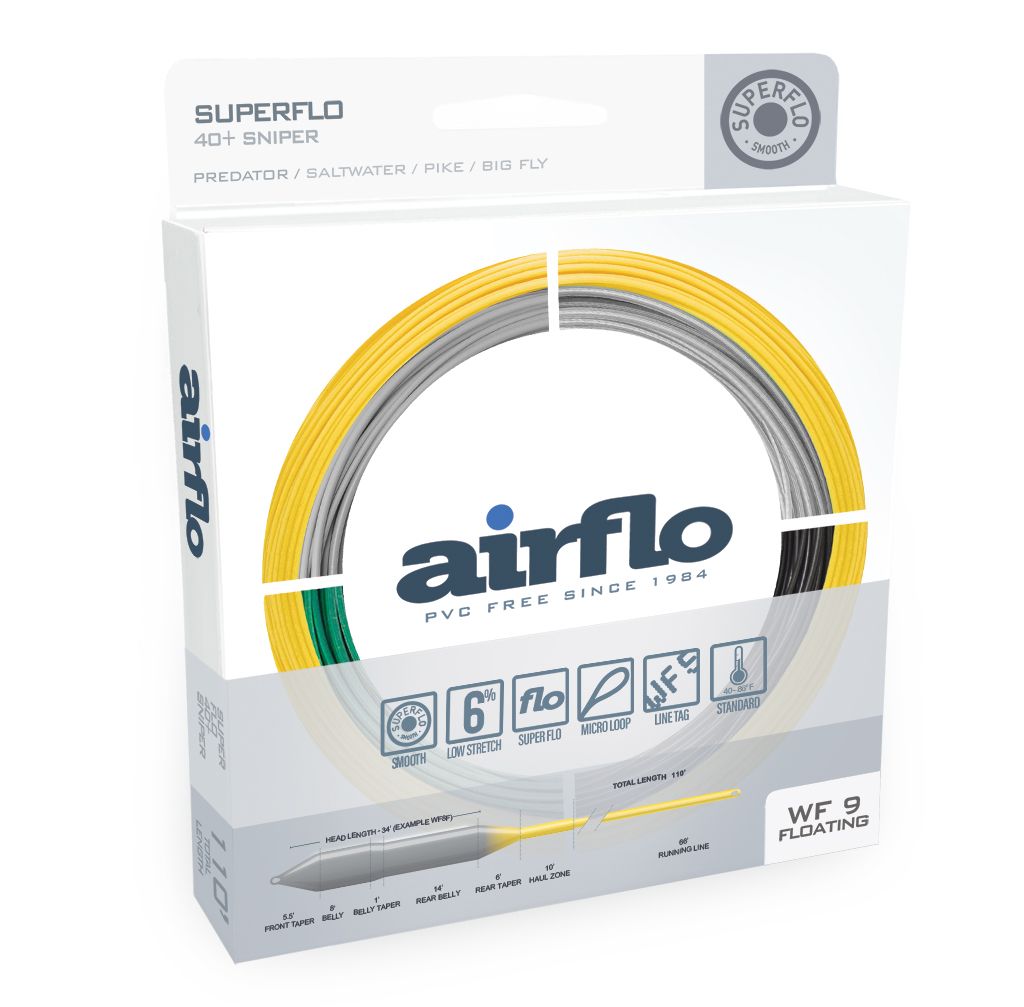
Superflo 40+ Sniper Predator Fly Line
A punchy, compact-headed fly line built to turn over big pike flies without making every cast feel like hard graft.
- Available in WF8, WF9 and WF10 line weights.
- Floating and fast-intermediate versions use a 31 ft / 9.2 m head; Sink 3 and Sink 7 versions use a 28 ft / 8.5 m head.
- Full-head weights are 330 grains / 21.4 g in WF8, 375 grains / 24 g in WF9 and 425 grains / 27.5 g in WF10.
- The total line length is 110 ft / 33.5 m, with density options covering surface, intermediate and deeper presentations.
Make sure it’s the right one. The product name supplied is Airflo 40+ Predator Fly Line. The checked product details identify the exact line as the Airflo Superflo 40+ Sniper predator fly line.
Tackle Index Score
Tackle Index score
A focused, capable predator line with the right features for big flies and varied depths.
- Product Quality9/10
- Performance9.4/10
- Impact on Fish Catching8.9/10
- Ease of Use8.8/10
- Value for Money8.7/10
If you buy through our links, we might get a small kickback, but it won’t cost you a penny extra. As an Amazon Associate I earn from qualifying purchases. The full story
Who it suits
Is it right for you?
Great for
- Pike fly anglers throwing big, bulky patterns. The compact, aggressive head is made to load a suitable heavyweight rod and turn over flies that would leave a lighter line struggling.
- Predator anglers fishing different depths. The floating, fast-intermediate, Sink 3 and Sink 7 choices let you tailor the line to shallow margins, open water or deeper holding zones.
Maybe skip if
- Trout anglers wanting delicate dry-fly presentation. This is a powerful predator line, so its head profile and weight are aimed at turnover and control rather than dainty landing.
- Anyone using a light fly rod. The WF8 to WF10 range and heavy full-head weights need properly matched predator tackle to work as intended.
The lowdown
Introducing the Airflo 40+ Predator Fly Line
A punchy, compact-headed fly line built to turn over big pike flies without making every cast feel like hard graft.
- Available in WF8, WF9 and WF10 line weights.
- Floating and fast-intermediate versions use a 31 ft / 9.2 m head; Sink 3 and Sink 7 versions use a 28 ft / 8.5 m head.
- Full-head weights are 330 grains / 21.4 g in WF8, 375 grains / 24 g in WF9 and 425 grains / 27.5 g in WF10.
- The total line length is 110 ft / 33.5 m, with density options covering surface, intermediate and deeper presentations.
Quick verdict
Verdict
If you’re chasing pike with bulky flies, this is a proper purposeful line rather than a general-purpose trout option. The compact head loads a suitable rod quickly and helps deliver big, air-resistant patterns without a load of faff.
Choose the density around the water in front of you: floating or fast intermediate for upper layers and shallow work, Sink 3 for getting down, and Sink 7 when the fish are sitting deep. Just match the line weight and density to your rod and approach.
A focused, capable predator line with the right features for big flies and varied depths.
- Product Quality
- 9/10
- Performance
- 9.4/10
- Impact on Fish Catching
- 8.9/10
- Ease of Use
- 8.8/10
- Value for Money
- 8.7/10
The compact head, braided core and useful loop arrangements give it a purposeful predator build.
Its aggressive head profile is well suited to loading a heavyweight rod and turning over bulky flies.
Multiple densities help you present the fly across different depths, which is a real edge when pike move through the water column.
The compact head and model identification are user-friendly, though the heavy line weights still need a properly matched outfit.
It offers a specialist setup with several density choices, making it good value if predator fly fishing is your main game.
Head to head
How it stacks up
Side by side with the closest kit we've reviewed. This updates as we add more reviews.
Airflo
Airflo 40+ Predator Fly Line (this one)
Top scorer
Scores are our own, out of 10. Best in each row is in green. Prices change, so check the latest before you buy.
The full rundown
Everything you'll want to know about the Airflo 40+ Predator Fly Line
Pike flies aren’t exactly shrinking violets, are they? Big rabbit strips, flashy baitfish patterns and all manner of feathered nonsense can be a proper handful in the air. That’s where the Airflo Superflo 40+ Sniper comes in. It’s a predator fly line built to get those bulky offerings moving without turning every cast into a full-on workout.
The key feature is the compact, aggressive head. Rather than asking you to carry loads of line outside the rod tip before the cast comes alive, it concentrates the weight into a relatively short section. That gives a suitable predator rod something substantial to load with, then helps the line kick the fly over with a bit of authority.
For pike fishing, that punch matters. A fly that looks lovely in the vice can become an absolute duvet once it’s wet. Add wind, a wire trace and a chilly pair of hands, and a line with a bit of grunt starts looking very sensible indeed. The 40+ Sniper is aimed squarely at that job: turn over the ugly stuff and get it fishing.
There are four densities to choose from, which is handy because pike don’t always read the same swim book. The floating version is the obvious pick for surface disturbance, shallow margins and keeping your fly riding high. It also gives you a clean, visual style of fishing when the water is clear and the fish are willing to come up.
The fast-intermediate option is a useful middle ground. It gets below the surface film and can help keep a fly working in a bit of chop, without committing you to a proper sinking line. That can be bob on over weed, along reed edges or when the fish are sitting just under the top layer rather than glued to the deck.
When the water column is deeper, the Sink 3 and Sink 7 versions bring more serious options. Sink 3 is the measured step down, while Sink 7 is for getting the fly down hard and keeping it there. Don’t just pick the fastest sink because it sounds more hardcore, mind. If the fly is constantly dragging bottom, you’ll spend more time clearing weed than watching the rod tip.
The head lengths differ slightly by density. Floating and fast-intermediate models have a 31 ft / 9.2 m head, while Sink 3 and Sink 7 lines use a 28 ft / 8.5 m head. That shorter sinking head keeps the overall setup compact and punchy, which suits the sort of short-to-medium range predator work many anglers do from the bank or a boat.
Line weight choice is properly important here. The range runs from WF8 to WF10, with full-head weights of 330 grains in WF8, 375 grains in WF9 and 425 grains in WF10. Match the line to the rod rather than trying to overpower it. The right pairing should load quickly and feel controlled; the wrong one can make casting clumsy and tiring.
You get 110 ft / 33.5 m of line overall, plus a 30 lb braided core on the floating and sinking versions. Floating and fast-intermediate models are looped at both ends, while Sink 3 and Sink 7 have a rear loop only. That’s all useful stuff when you’re sorting reels, leaders and sink rates before a bite-time session. Laser tagging also helps identify which line is which when the tackle bag gets a bit chaotic.
So, who’s this really for? The angler who wants to chuck proper predator flies, cover different depths and spend less time fighting the line than fighting the fish. It’s a focused bit of kit, not a dainty do-everything fly line. Match the weight, pick the right density and it should give your pike setup the direct, powerful feel needed to put a stunner in the net.
Specifications
The nuts and bolts
- Designed for
- Freshwater pike and cold saltwater predator fishing
- Line weights
- WF8, WF9 and WF10
- Densities
- Floating, fast intermediate, Sink 3 and Sink 7
- Head length
- 31 ft / 9.2 m on floating and fast-intermediate; 28 ft / 8.5 m on Sink 3 and Sink 7
- Full-head weights
- WF8: 330 grains / 21.4 g; WF9: 375 grains / 24 g; WF10: 425 grains / 27.5 g
- Total length and core
- 110 ft / 33.5 m; 30 lb braided core on floating and sinking versions
Specs checked with Airflo, Oct 2026.
Spot a model or spec change?
Our take
The big-fly, predator angle
The clever bit here is the short, aggressive head. It puts plenty of casting weight into a compact section, so bulky pike flies can turn over properly instead of collapsing in a soggy heap.
That makes the 40+ Sniper a specialist line for freshwater pike and cold saltwater predator fishing. It’s not trying to be delicate or dainty. It’s here for bosh, control and getting a fly out there.
What you’re buying
A compact head with predator work in mind
The Superflo 40+ Sniper uses a compact, aggressive head to concentrate casting weight near the rod. That’s exactly what you want when the fly is bulky, waterlogged or carrying plenty of flash and material. The head lengths are 31 ft / 9.2 m on floating and fast-intermediate models, and 28 ft / 8.5 m on Sink 3 and Sink 7 versions.
There are WF8, WF9 and WF10 options, with full-head weights from 330 grains / 21.4 g through to 425 grains / 27.5 g. That gives you a useful spread for heavyweight predator rods, but don’t ignore the rod rating. A well-matched outfit will feel crisp; an overloaded one can become a bit of a faff.
The 110 ft / 33.5 m total length gives you plenty of line for normal predator work. Floating and fast-intermediate lines have loops at both ends, while Sink 3 and Sink 7 versions are looped at the rear only. The 30 lb braided core on floating and sinking versions is aimed at proper predator use rather than dainty trout duties.
Worth knowing. Laser tagging identifies the model, which is dead handy if you keep several lines on spare spools. Sink rate matters as much as line weight: a deeper line won’t automatically catch more fish if it spends the session buried in weed.
On the bank
For anglers throwing big flies at active predators
This line makes most sense for pike anglers who fish substantial flies and want reliable turnover. The floating version suits shallow bays, margins and surface patterns, while fast intermediate is a solid choice when you want the fly just under the chop or upper layer.
Sink 3 and Sink 7 are for anglers who regularly need to search deeper water. Use them when the fish are holding down, the swim is clear enough, or you’re fishing from a boat and can count the line down. Keep the retrieve speed and depth in mind, especially as water temperatures change through the seasons.
It also suits cold saltwater predator work, provided the rest of your setup is built for that environment. The line weights and head shape favour direct, powerful casting, which is more useful with chunky saltwater patterns than a long, delicate presentation.
Worth knowing. If your normal fishing is small flies, light rods and gentle turnover, this will feel a bit much. For pike, though, a punchy head can be a real comfort when the wind gets up and the fly has absorbed half the lake.
Quick answers
The bits anglers usually want to know
For a flexible pike setup, floating or fast intermediate are the easiest places to start. Floating keeps things simple in shallow water and makes surface takes visible. Fast intermediate adds a little depth and can be more useful in wind or light chop. Go Sink 3 or Sink 7 when deeper presentations are a regular part of your fishing.
Use the rod maker’s recommended line range as your first port of call. The 40+ Sniper comes in WF8, WF9 and WF10, so there’s no need to guess or automatically buy the heaviest line. The goal is a rod that loads promptly while still feeling controlled through the cast.
For pike, use a suitable bite-resistant leader and make sure the connection is secure before you start casting. Floating and fast-intermediate lines are looped at both ends, while Sink 3 and Sink 7 have a rear loop only, so plan your front connection accordingly. Keep knots tidy and check the leader regularly after a few fish or snags.
Quick answers
The density choice should follow the swim, not fashion. A floating line is useful around weed and margins, an intermediate can search the upper water, and sinking models help you explore deeper layers. That approach gives you a better chance of putting the fly where the pike are actually sitting.
The aggressive head is also useful when you’re casting from awkward bankside positions. You don’t need to false cast endlessly to build line speed, which can be helpful around reeds, trees and tight swims. Keep the casting stroke smooth, though; brute force and a wet pike fly can quickly turn into a tangled mess.
On paper
Pros & cons
What we like
- Compact, aggressive head turns over bulky predator flies.
- Useful choice of floating, fast-intermediate, Sink 3 and Sink 7 densities.
- Available in three practical heavy line weights for pike and cold saltwater predators.
- Looped connections make leader changes and backing setup easier on most versions.
- Laser tagging helps identify the line model when you’ve got several spools or reels knocking about.
Worth knowing
- The short, powerful head may feel too punchy for anglers after delicate presentation.
- WF8 to WF10 means this is specialist predator tackle, not a versatile all-round fly line.
- Sink 3 and Sink 7 versions are looped at the rear only, so the front-end setup needs a little more thought.
Want one?
Add it to your Wanted list or join a Group Buy — shops see anonymous totals only.
Your questions answered
What anglers want to know
The stuff you’d ask your mate on the next peg. Straight answers, no waffle.
01Which Airflo 40+ Sniper density should I choose for pike?
Which Airflo 40+ Sniper density should I choose for pike?
Floating suits surface work, shallow margins and flies you want riding high. Fast intermediate is a handy all-rounder when you need a little depth without heading properly down. Sink 3 gives a more committed sinking presentation, while Sink 7 is the deeper option for finding fish below the top layers.
02What rod does the Airflo Superflo 40+ Sniper suit?
What rod does the Airflo Superflo 40+ Sniper suit?
It’s intended for heavyweight predator fly rods matched to WF8, WF9 or WF10 line weights. Check your rod’s recommended line rating before buying, then choose the line weight that sits inside that range rather than simply going for the heaviest option.
03Are the line ends looped?
Are the line ends looped?
Floating and fast-intermediate versions are looped at both ends. Sink 3 and Sink 7 versions are looped at the rear only, so you’ll need to make your leader connection at the front using your preferred predator setup.
What anglers say
The word from the bank
Our read: verdict. The strongest reasons to choose it are compact, aggressive head turns over bulky predator flies. and useful choice of floating, fast-intermediate, sink 3 and sink 7 densities.; the main trade-off is the short, powerful head may feel too punchy for anglers after delicate presentation..
Our take on the feedback
Why it appeals
Checked Sept '26 — “Compact, aggressive head turns over bulky predator flies.”
Best fit
Checked Sept '26 — “Pike fly anglers throwing big, bulky patterns: The compact, aggressive head is made to load a suitable heavyweight rod and turn over flies that would leave a lighter line struggling.”
Worth knowing
Checked Sept '26 — “The short, powerful head may feel too punchy for anglers after delicate presentation.”
Tackle Index’s take from the product details and fishing fit we checked. We haven’t found enough independent public feedback to call this an angler consensus yet.
Angler score
What our readers rate Airflo 40+ Predator Fly Line
No angler score yet — nobody's reviewed Airflo 40+ Predator Fly Line here. Be the first and get the score started.
Owner reports
Own this? Help the next angler.
Quick multiple-choice reports from people who say they own the Airflo 40+ Predator Fly Line. Not verified purchases, and kept separate from our score.
No owner reports yet.
Alternatives & go-withs