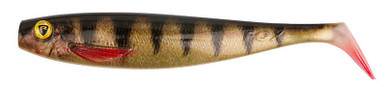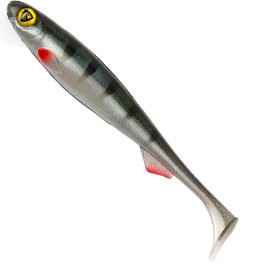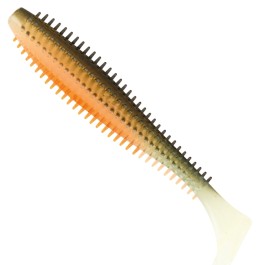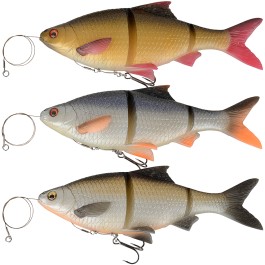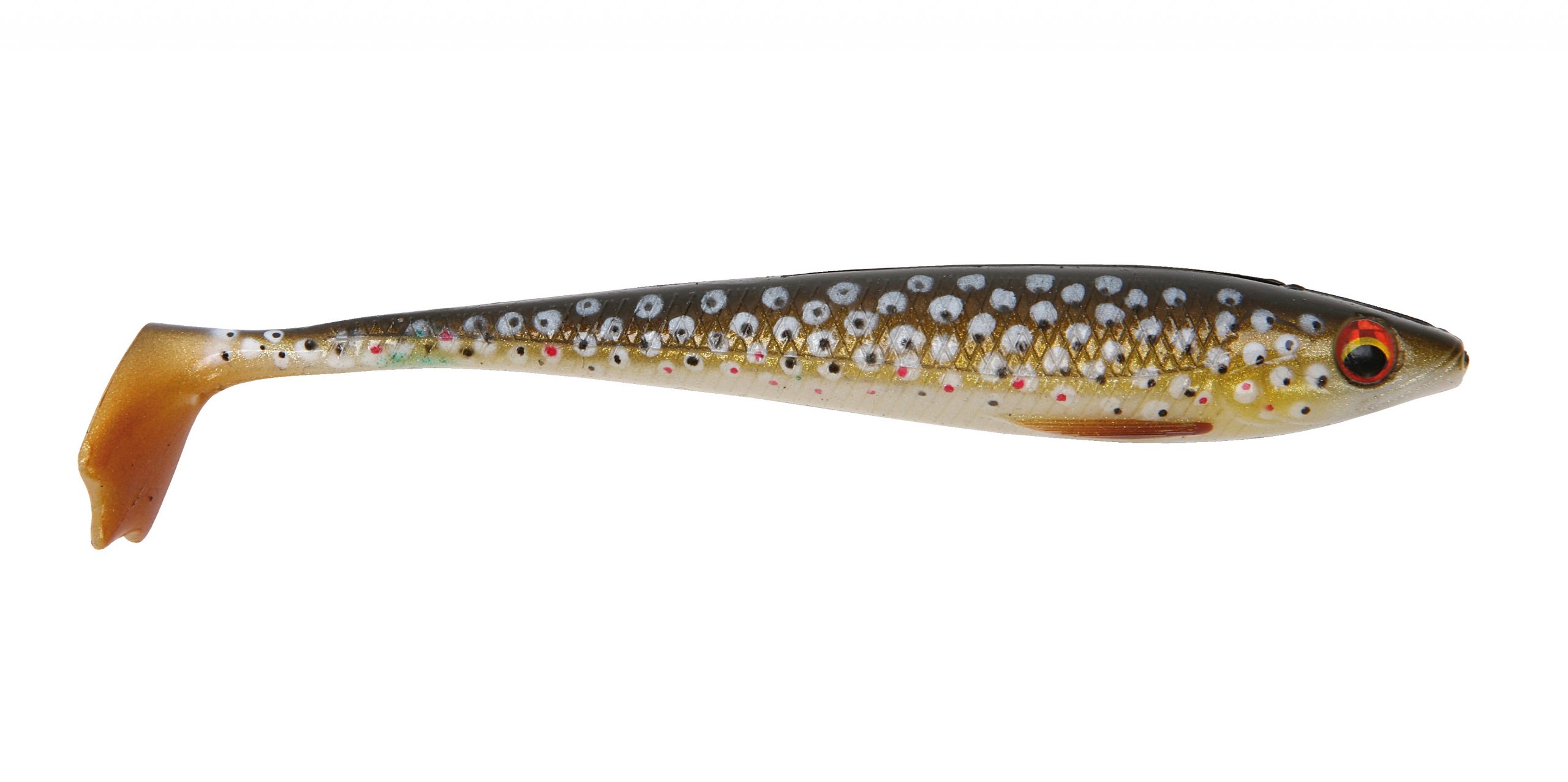
Photos: Daiwa · supplied retailer imagery
Lures · Soft shads · Our take
Daiwa Daiwa Prorex Duckfin Shad
Range overview; 9 cm Spotted Mullet pack details highlighted
A soft shad with a distinctive tail, rolling action and useful rigging options. A cracking fit for pike and zander fishing when you want to change your approach without changing the whole lure box.
- Soft-bodied shad aimed at predator fishing, including pike and zander.
- Listed in 6.5, 9, 13 and 20 cm lengths.
- Distinctive Duck Fin tail produces a rolling and swinging action.
- The 9 cm Spotted Mullet version contains seven lures.
Make sure it’s the right one. Listed lengths are 6.5, 9, 13 and 20 cm. The seven-lure pack refers specifically to the 9 cm Spotted Mullet version, not every size or colour.
Tackle Index Score
Tackle Index score
A solid feature-led score for a versatile soft shad; overall value depends on the exact pack and your rigging costs.
- Product Quality8.8/10
- Performance9/10
- Impact on Fish Catching8.4/10
- Ease of Use8.6/10
- Value for Money8.3/10
If you buy through our links, we might get a small kickback, but it won’t cost you a penny extra. As an Amazon Associate I earn from qualifying purchases. The full story
Who it suits
Is it right for you?
Great for
- Mobile pike and zander anglers. Different sizes and rigging options let you adapt to depth, prey size and retrieve speed as you move between swims.
- Anglers building a practical softbait selection. It's a straightforward shad pattern with scope to learn both jig-head and Carolina-rig presentations.
Maybe skip if
- Anyone wanting a completely ready-to-cast lure. You'll need to choose and fit an appropriate hook and weighting arrangement.
- Anglers prioritising maximum body durability. A soft shad is vulnerable to tooth damage and won't offer the same resistance to tearing as a hard-bodied lure.
The lowdown
Introducing the Daiwa Daiwa Prorex Duckfin Shad
A soft shad with a distinctive tail, rolling action and useful rigging options. A cracking fit for pike and zander fishing when you want to change your approach without changing the whole lure box.
- Soft-bodied shad aimed at predator fishing, including pike and zander.
- Listed in 6.5, 9, 13 and 20 cm lengths.
- Distinctive Duck Fin tail produces a rolling and swinging action.
- The 9 cm Spotted Mullet version contains seven lures.
Quick verdict
A useful shad, not a magic shortcut
The Duckfin Shad makes plenty of sense for pike and zander anglers who want a softbait they can fish at different speeds and rig to suit the swim. That distinctive tail and rolling, swinging action are the main attractions.
You'll still need to match the hook, weight and tackle to the version you choose. Soft bodies aren't tooth-proof, either. Get those basics sorted and there's a lot of useful fishing packed into a straightforward lure.
A solid feature-led score for a versatile soft shad; overall value depends on the exact pack and your rigging costs.
- Product Quality
- 8.8/10
- Performance
- 9/10
- Impact on Fish Catching
- 8.4/10
- Ease of Use
- 8.6/10
- Value for Money
- 8.3/10
Recessed eyes, moulded detailing and a positioning slit make a well-considered package, with the usual softbait durability trade-off.
Rolling and swinging movement, multiple rigging options and fast or slow retrieves give it useful presentation flexibility.
The size choices and adaptable presentation help you match the situation, but location and depth control remain the bigger factors.
A steady retrieve is straightforward, though correct hook alignment and weighting require a little care.
Versatility and the seven-body 9 cm Spotted Mullet pack are positives, but pack differences and replacement costs make value conditional.
Head to head
How it stacks up
Side by side with the closest kit we've reviewed. This updates as we add more reviews.
Daiwa
Daiwa Daiwa Prorex Duckfin Shad (this one)
Top scorer
Scores are our own, out of 10. Best in each row is in green. Prices change, so check the latest before you buy.
The full rundown
Everything you'll want to know about the Daiwa Daiwa Prorex Duckfin Shad
The Daiwa Prorex Duckfin Shad is the sort of lure that earns its place through flexibility rather than fancy claims. It's a soft-bodied shad for predator fishing, with pike and zander firmly in the picture, and that distinctive Duck Fin tail is the main talking point. You can work it quickly or slow things down, which is dead handy when the fish aren't giving much away. Rather than constantly rummaging for another lure, you can start by changing what you're doing with the one already attached.
The action is described as rolling and swinging, so this isn't just a fish-shaped body being dragged through the swim. There's movement to build your presentation around. A steady retrieve is a sensible starting point: get the lure travelling at a controlled depth, then see whether brief pauses or changes of pace make more sense. Don't feel obliged to twitch the rod like you're conducting an orchestra, mate. With an active tail doing some of the work, a tidy, repeatable retrieve gives you a useful starting point.
Size choice deserves a bit more thought than simply grabbing the biggest one for pike. Listed lengths run through 6.5, 9, 13 and 20 cm, giving you very different bait profiles within the same family. Think about the prey fish you're trying to copy, the water you're covering and what your outfit can comfortably cast. A 20 cm softbait belongs in a different tackle conversation from a 6.5 cm one. Remember that the jig head or other weighting adds to the casting load as well.
Rigging is where the Duckfin becomes particularly useful. It can be fished on a jig head or a Carolina rig, so you're not tied to one way of presenting it. A jig head is the straightforward option for keeping the weight and hook together and controlling the lure directly. A Carolina rig puts the weight ahead of the bait and offers a different presentation. Neither is automatically better. Clean bottom, broken ground, depth and how you want the lure to move should steer that decision.
There's a back slit for hook positioning, which is a welcome practical detail, but it doesn't remove the need to rig the body straight. Offer the hook up alongside the lure before threading it on, and work out where it needs to exit. A bunched or crooked body can spoil the presentation before you've made a proper cast. Once it's rigged, give it a short pull through clear water at your feet if conditions allow. Checking that it swims cleanly is much less faff than fishing a wonky bait all afternoon.
The finishing touches include moulded scale-pattern detailing, recessed 3D eyes and fish scent. They're nice additions to a recognisable prey-fish outline, although none should distract you from the bigger jobs: finding fish and putting the lure where they can intercept it. Scent isn't a promise that a reluctant zander will suddenly be on the munch. Likewise, a detailed body won't rescue a presentation sailing well above the feeding zone. Treat those features as extras around the lure's shape and action, not reasons to ignore depth and speed.
On the bank, the useful approach is to change one thing at a time. If you're working a drop-off, establish a controlled retrieve before swapping colours every few casts. If the lure keeps ploughing into the bottom, revisit the weight, retrieve or rod angle. For slower fishing, you still need enough control to recognise what's happening rather than letting everything drift about on slack line. And wherever pike are a realistic possibility, use a suitable wire trace. A neat lure presentation isn't worth a bite-off and a fish left carrying tackle.
The buying detail to watch is pack quantity. The 9 cm Spotted Mullet version contains seven lures, but don't carry that number across every size and colour. Soft shads are also consumables: teeth, snags and repeated hook changes can all shorten their useful life. That's the trade-off for this style of bait, not a reason to write it off. If you want a versatile predator shad and you're happy matching the rig to the swim, the Duckfin is a sensible one to shortlist. Just buy the version that fits your fishing.
Specifications
The nuts and bolts
- Lure type
- Soft-bodied shad
- Listed lengths
- 6.5, 9, 13 and 20 cm
- Tail and action
- Duck Fin tail; rolling and swinging action
- Body details
- Moulded scale pattern, recessed 3D eyes and back slit
- Scent
- Fish-scented
- Confirmed pack quantity
- Seven lures: 9 cm Spotted Mullet version
Specs checked with Daiwa, Oct 2026.
Spot a model or spec change?
Our take
One lure shape, several ways to fish it
The real appeal is flexibility. Fish it on a jig head when you want direct control over depth, or use a Carolina rig when you want the weight separated from the softbait.
Don't choose purely by the predator's name. The size of the prey fish, the depth and the tackle you're carrying matter more than a blanket rule that says small for zander and big for pike.
The lure
Closer look: movement first, tidy details second
What you're buying is a soft shad built around its distinctive Duck Fin tail. The rolling and swinging action gives you something to work with on a straightforward retrieve, without needing a complicated routine of rod movements. Fast and slow retrieves are both options, but the useful pace is the one that keeps the lure working through the part of the swim you actually want to fish.
The scale pattern and recessed eyes add visual detail, while the fish scent is another part of the package. More practically, the back slit assists hook positioning. Match the hook to the body rather than forcing a favourite jig head onto every size: too much hook can restrict the softbait, while a poorly positioned point can compromise the finished rig.
Worth knowing. Seven per pack is confirmed for the 9 cm Spotted Mullet version only. Check your chosen size and colour before comparing value; counting packets alone won't tell you how many replacement bodies you're getting.
Your fishing
Who it suits: anglers happy to tune the setup
This makes sense for mobile predator anglers covering different depths and features. You can stick with a familiar lure shape while changing its size, weighting or presentation. That's useful when you're moving from a shallower shelf to deeper water and want a manageable set of options, rather than a bag overflowing with completely different lure types.
It's also approachable for someone learning softbait fishing, provided they're happy to learn the rigging bit. Start with a suitable jig head and a straight-mounted body before getting clever. More experienced anglers have the Carolina-rig option to explore, but keep the whole arrangement appropriate for the fish present, including bite protection where pike are possible.
It's less convincing if your priority is opening a packet, clipping on and casting without choosing any other components. Nor is it the obvious pick if torn lure bodies really wind you up. Check the nose and hook exit after fish or snags; if the body no longer sits securely and straight, replacing it is better than nursing a poor presentation.
Quick answers
FAQs in full: size, speed and pack contents
Which size should you choose? The listed options are 6.5, 9, 13 and 20 cm. Start with the prey profile you want to imitate, then check that your rod, hook and weighting suit it. Pike will take smaller lures and zander aren't restricted to tiny baits, so avoid rigid species rules. For larger versions especially, consider the complete rig's casting weight rather than body length alone.
Can you fish it slowly? Yes, the Duckfin Shad is suitable for slow and fast retrieves. Slowing down is most useful when you can still maintain control and keep the lure in the intended zone. Simply fitting a heavy head and winding more slowly may leave you dragging the bottom. Balance weight, depth and pace, and use pauses deliberately rather than letting the lure disappear into slack line.
Does every packet contain seven? That quantity is confirmed for the 9 cm Spotted Mullet version, not the entire range. Check the exact option before ordering, especially if you're comparing different sizes. For a fair buying decision, look at the number of bodies you're getting alongside the hooks or jig heads you'll need, rather than assuming every packet offers the same amount of fishing.
On paper
Pros & cons
What we like
- Works with fast or slow retrieves, giving you room to change pace.
- Jig-head and Carolina-rig options cover different presentations.
- Back slit helps with hook positioning.
- Broad size range lets you match different prey profiles.
Worth knowing
- Soft bodies can suffer damage from pike teeth and repeated rigging.
- Needs a correctly matched hook and weight rather than a one-size-fits-all setup.
- Seven-lure pack quantity doesn't apply across the whole range.
Want one?
Add it to your Wanted list or join a Group Buy — shops see anonymous totals only.
Your questions answered
What anglers want to know
The stuff you’d ask your mate on the next peg. Straight answers, no waffle.
01Which Duckfin Shad size should I choose?
Which Duckfin Shad size should I choose?
The listed lengths are 6.5, 9, 13 and 20 cm. Match the lure to the prey fish and your tackle, rather than treating one size as compulsory for pike or zander. Include the rig's weight when checking your rod's casting range.
02Can you fish it slowly?
Can you fish it slowly?
Yes. It's suitable for slow as well as fast retrieves. Choose enough weight to control depth without making every pause a rapid plunge into the bottom.
03Do all packs contain seven lures?
Do all packs contain seven lures?
No blanket pack count applies here. Seven lures is confirmed for the 9 cm Spotted Mullet version; check the exact size and colour you're buying.
What anglers say
The word from the bank
Our read: a useful shad, not a magic shortcut. The strongest reasons to choose it are works with fast or slow retrieves, giving you room to change pace. and jig-head and carolina-rig options cover different presentations.; the main trade-off is soft bodies can suffer damage from pike teeth and repeated rigging..
Our take on the feedback
Why it appeals
Checked Sept '26 — “Works with fast or slow retrieves, giving you room to change pace.”
Best fit
Checked Sept '26 — “Mobile pike and zander anglers: Different sizes and rigging options let you adapt to depth, prey size and retrieve speed as you move between swims.”
Worth knowing
Checked Sept '26 — “Soft bodies can suffer damage from pike teeth and repeated rigging.”
Tackle Index’s take from the product details and fishing fit we checked. We haven’t found enough independent public feedback to call this an angler consensus yet.
Angler score
What our readers rate Daiwa Daiwa Prorex Duckfin Shad
No angler score yet — nobody's reviewed Daiwa Daiwa Prorex Duckfin Shad here. Be the first and get the score started.
Owner reports
Own this? Help the next angler.
Quick multiple-choice reports from people who say they own the Daiwa Daiwa Prorex Duckfin Shad. Not verified purchases, and kept separate from our score.
No owner reports yet.
Alternatives & go-withs