Photos: Daiwa · supplied retailer imagery
Mainline · Four-strand braid · Our take
Daiwa J-Braid X4
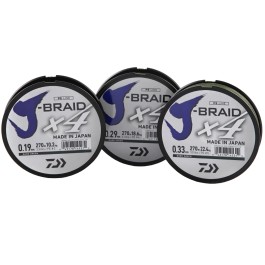
J-Braid X4 range; spool lengths and breaking strains vary by colour and diameter
Four strands, a round profile and plenty of choice. J-Braid X4 makes sense when you want low-stretch contact, but it isn't a straight swap for mono on every coarse or carp setup.
- Four-strand braided construction with a round line profile.
- Made in Japan.
- Listed diameter range of 0.07–0.33mm.
- Available in dark green, yellow and multicolour, with spool lengths depending on the version.
Make sure it’s the right one. This is the four-strand J-Braid X4, not J-Braid X8. We haven't tested it on the bank; this review looks at its confirmed features and the practical trade-offs of braided mainline.
Tackle Index Score
Tackle Index score
Provisional feature-based scores, not bank-test results; value depends on the current price of the exact spool you choose.
- Product Quality8.6/10
- Performance8.5/10
- Impact on Fish Catching7.7/10
- Ease of Use8/10
- Value for Money8.3/10
If you buy through our links, we might get a small kickback, but it won’t cost you a penny extra. As an Amazon Associate I earn from qualifying purchases. The full story
Who it suits
Is it right for you?
Great for
- Anglers wanting direct feedback. Braid's low stretch suits feeling the bottom with a marker lead, working lures and appropriate feeder fishing where braid is allowed.
- Anglers choosing line for a specific setup. The range of diameters, colours and spool lengths gives you useful options without forcing one version into every job.
Maybe skip if
- Carp anglers after a forgiving all-round mainline. Mono remains the simpler choice for many venues, particularly where cushioning matters or braided mainline is banned.
- Anglers prioritising the slickest possible braid. A finer-carrier braid is generally a better starting point if smoothness and reduced ring noise are your main priorities.
The lowdown
Introducing the Daiwa J-Braid X4
Four strands, a round profile and plenty of choice. J-Braid X4 makes sense when you want low-stretch contact, but it isn't a straight swap for mono on every coarse or carp setup.
- Four-strand braided construction with a round line profile.
- Made in Japan.
- Listed diameter range of 0.07–0.33mm.
- Available in dark green, yellow and multicolour, with spool lengths depending on the version.
Quick verdict
A sensible braid, provided your fishing calls for it
J-Braid X4 has a clear job: give you direct contact without making the buying decision overly complicated. The four-strand build, round profile and useful range of diameters make it a sensible option for braid-friendly feeder, lure and marker work.
For everyday carp fishing, don't ditch your mono just because braid looks stronger on the label. Fishery rules, abrasion, casting safety and cushioning under the rod tip all matter. Buy it for a particular job, not as a magic route to more bites.
Provisional feature-based scores, not bank-test results; value depends on the current price of the exact spool you choose.
- Product Quality
- 8.6/10
- Performance
- 8.5/10
- Impact on Fish Catching
- 7.7/10
- Ease of Use
- 8/10
- Value for Money
- 8.3/10
The round four-strand construction is a sensible foundation, though long-term consistency and wear haven't been checked on the bank.
Low-stretch contact suits its intended jobs, with the usual four-strand compromise in texture compared with finer-carrier braids.
More direct feedback can help suitable techniques, but it doesn't create bites or replace good presentation.
The available choices are useful, but braid needs care with spooling, knots, casting and clutch settings.
It offers a practical feature set for a straightforward braid, provided the exact spool is competitively priced against alternatives.
Head to head
How it stacks up
Side by side with the closest kit we've reviewed. This updates as we add more reviews.
Daiwa
Daiwa J-Braid X4 (this one)
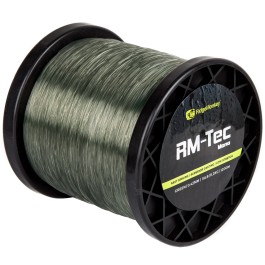
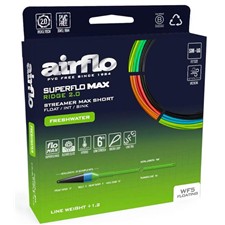
Top scorer
Top scorer
Scores are our own, out of 10. Best in each row is in green. Prices change, so check the latest before you buy.
The full rundown
Everything you'll want to know about the Daiwa J-Braid X4
Daiwa J-Braid X4 is the sort of mainline you should buy with a job in mind. Not because braid is automatically better than mono, and definitely not because a thinner line promises a PB next chuck. Its main appeal is that direct connection between you and whatever's happening at the other end. For feeling a lead over the bottom, working a lure or certain feeder setups, that's proper useful. For an ordinary carp session on a venue that bans braid, it's obviously a non-starter.
What you're buying here is a four-strand braid, made in Japan, with a round line profile. That's the X4 bit sorted, and it's important not to muddle it with Daiwa's X8 products. The listed diameter range runs from 0.07mm to 0.33mm, so there's a fair spread of options rather than one catch-all line. We haven't fished with this one, so there's no pretend tale of a screaming take or a lump from the margins. This is about its features and where they make practical sense.
The biggest change if you're coming from mono is the lack of stretch by comparison. Small movements travel back through braid with less cushioning, which helps explain its appeal for contact-led fishing. On a marker setup, that can help you interpret changes as you draw a lead across a spot. With a feeder, it can make the connection feel much more immediate, although rod choice, tip choice and conditions still matter. It won't identify every patch of lakebed for you, mate, but the principle is sound.
There's a flip side, and it's one you really shouldn't brush off. Mono gives you some spring when a fish lunges; braid leaves more of that job to the rod and clutch. If you're used to leaning hard on a fish with a tight drag, a switch deserves a rethink. Keep everything balanced, especially close in when there's little line between rod tip and fish. Any leader needs choosing for the job, too. Adding one isn't a blanket fix for an unsuitable setup or a risky swim.
The four-strand construction also sets expectations. Compared with a finer eight-strand braid, this type generally has a more noticeable texture and can be more audible through the rings. That doesn't make it a bit naff; it's simply a different compromise. A round profile is welcome, but it doesn't prove exceptional casting distance or flawless line lay on every reel. If absolute slickness is top of your shopping list, compare the alternatives. If you mainly want a straightforward braid for a defined task, X4 remains worth considering.
Colour and spool length need a quick check before you hit buy. The choices include dark green, yellow and multicolour. Dark green comes in 135m and 270m spools, while the multicolour version comes in 150m and 300m. Don't assume every colour has the same lengths or every diameter is offered in every combination. Think about reel capacity, useful working length and backing rather than simply grabbing the biggest spool. Backing can also help stop braid slipping around a smooth spool arbor when fitted properly.
Choosing the diameter is more important than chasing the smallest number. For reference, the dark green 0.13mm version is listed at 13lb, while 0.19mm is listed at 23lb. Those aren't interchangeable choices just because both might handle the fish you're targeting. Casting load, snags, knots and wear all come into it. Braid isn't immune to damage from sharp edges, whatever the breaking strain says. Check the working end regularly, and don't treat a strong-looking label as permission to fish tight to something you can't safely manage.
So where does J-Braid X4 land? It's a sensible candidate for anglers who already know why they want braid, whether that's lure contact, marker feedback or a suitable feeder arrangement. It's less convincing as an automatic upgrade for general carp fishing, where mono's forgiveness can be a real advantage. Check the rules, choose the exact spool carefully and give the whole setup a look before spooling up. Get that decision right and you're buying a useful tool, rather than expecting a change of mainline to turn a blank into a red-letter day.
Specifications
The nuts and bolts
- Construction
- Four-strand braid
- Profile and manufacture
- Round profile; made in Japan
- Diameter range
- 0.07–0.33mm
- Colours
- Dark green, yellow and multicolour
- Confirmed spool lengths
- Dark green: 135m and 270m; multicolour: 150m and 300m
- Example dark green ratings
- 0.07mm: 5.5lb / 2.6kg; 0.13mm: 13lb / 5.9kg; 0.19mm: 23lb / 10.2kg
Specs checked with Daiwa, Oct 2026.
Spot a model or spec change?
Our take
Contact is the reason to buy it
The big attraction is braid's very low stretch. Feeling a lead across the bottom or keeping in touch with a lure is where that direct connection becomes dead handy.
That same directness removes some forgiveness. Your rod, clutch and any suitable leader need to work together rather than leaving a hooked fish taking every sudden movement.
Construction and choice
Closer look: what you're actually buying
X4 is a four-strand braid with a round profile, made in Japan. Keep the buying decision grounded in that rather than reading extra promises into the name. The construction tells you what sort of braid it is; it doesn't tell you how long it'll last in your swim or how well your knots will hold. Those depend on use, condition and getting the setup right.
Match the colour to how you fish. Yellow can help when you want to watch the line, while dark green is an option if you prefer a less conspicuous colour. Neither makes the line invisible to fish. Multicolour is another choice, but don't assume particular colour-change intervals without checking the exact spool. Likewise, choose enough length for your fishing and a sensible reserve, not just enough to reach your usual clip.
Worth knowing. Load braid under steady tension and follow your reel's filling guidance. Loose coils can create hassle on later casts. For forceful casting with heavy leads or feeders, use appropriate finger protection and a correctly rated, venue-permitted leader arrangement; thin braid can cut fingers.
Picking the right job
Who it suits: contact first, forgiveness second
Marker work is an obvious application to consider because direct feedback is the whole point. Lure anglers have a similar reason to look at braid: keeping in touch with the lure and detecting changes. For feeder anglers, it can suit situations where low stretch is helpful, but balance it with the rod, hooklength and casting load. It isn't a reason to strike harder at every knock.
General carp anglers should be more selective. Check whether the venue distinguishes between braided fishing mainline and braid on marker or spod rods. If you're using it to fish, make sure the rig can release safely after a breakage and that any joining knots don't obstruct the intended release. Don't copy a mono setup blindly and assume everything still works.
If your current mono does the job and you like its cushioning, there's no need to change for the sake of it. Equally, if your priority is the smoothest-feeling braid, compare finer-carrier options before spending your quid. X4 makes most sense when its straightforward construction and available sizes match a clear need.
Before you spool up
FAQs in full: the practical bits
Can you use it for carp? Potentially, yes, but permission and suitability come first. Marker use and fishing-mainline use aren't always covered by the same venue rules. For fishing rods, consider the swim, fish-playing cushioning and rig safety together. Nothing about the X4 label removes those checks.
Which diameter is right? Start with the task and the tackle. The range includes very light options as well as much stronger versions: dark green 0.07mm is listed at 5.5lb, for example, whereas dark green 0.29mm is listed at 41lb. Neither is a universal recommendation. Check the exact spool's rating and allow for casting demands, knot performance and wear.
Should you choose X4 or X8? Four versus eight strands is the basic distinction. Eight-strand construction generally gives a smoother feel, but that doesn't automatically make it better for every job. Compare the actual diameter, breaking strain, length and current cost of the versions you need. Don't assume X4 is tougher around sharp snags simply because it has fewer strands.
On paper
Pros & cons
What we like
- Low-stretch braid offers direct feedback for suitable feeder, lure and marker work.
- Broad diameter range lets you choose around the actual job.
- Dark green, yellow and multicolour options cover different visibility preferences.
- Choice of spool lengths helps you match the purchase to your reel.
Worth knowing
- Less stretch means less cushioning than mono when playing fish.
- Four-strand braid generally feels coarser through the rings than finer-carrier alternatives.
- Not a universal carp mainline choice: venue restrictions and contact with sharp features can rule it out.
Want one?
Add it to your Wanted list or join a Group Buy — shops see anonymous totals only.
Your questions answered
What anglers want to know
The stuff you’d ask your mate on the next peg. Straight answers, no waffle.
01Can you use J-Braid X4 for carp fishing?
Can you use J-Braid X4 for carp fishing?
Yes, where the venue permits braid and the setup suits the job. It makes particular sense to consider it for marker work, but using it on your fishing rods needs more thought about abrasion, cushioning and safe rig release.
02Which diameter should I choose?
Which diameter should I choose?
Choose around the casting load, tackle, swim and intended use, not just fish size. Confirm the breaking strain on the exact spool; the thinnest version isn't automatically the best choice.
03What's the difference between X4 and X8?
What's the difference between X4 and X8?
X4 uses four strands; X8 uses eight. Eight-strand braids generally feel smoother, while X4 is the simpler construction. Strand count alone doesn't establish knot strength, abrasion resistance or suitability for your fishing.
What anglers say
The word from the bank
Our read: a sensible braid, provided your fishing calls for it. The strongest reasons to choose it are low-stretch braid offers direct feedback for suitable feeder, lure and marker work. and broad diameter range lets you choose around the actual job.; the main trade-off is less stretch means less cushioning than mono when playing fish..
Our take on the feedback
Why it appeals
Checked Sept '26 — “Low-stretch braid offers direct feedback for suitable feeder, lure and marker work.”
Best fit
Checked Sept '26 — “Anglers wanting direct feedback: Braid's low stretch suits feeling the bottom with a marker lead, working lures and appropriate feeder fishing where braid is allowed.”
Worth knowing
Checked Sept '26 — “Less stretch means less cushioning than mono when playing fish.”
Tackle Index’s take from the product details and fishing fit we checked. We haven’t found enough independent public feedback to call this an angler consensus yet.
Angler score
What our readers rate Daiwa J-Braid X4
No angler score yet — nobody's reviewed Daiwa J-Braid X4 here. Be the first and get the score started.
Owner reports
Own this? Help the next angler.
Quick multiple-choice reports from people who say they own the Daiwa J-Braid X4. Not verified purchases, and kept separate from our score.
No owner reports yet.
Alternatives & go-withs