Photos: Daiwa · supplied retailer imagery
Rods · Dropshot · Our take
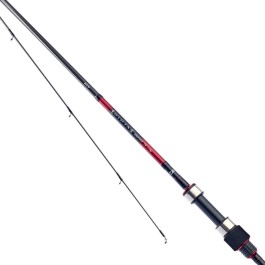
Daiwa Ninja Dropshot Rods
7ft 4in, 0.5–5g and 7ft 8in, 1–10g
A pair of lightweight dropshot rods for picking apart perch swims. The choice isn't just about reach: those different casting ranges really matter.
- HVF carbon blanks with lightweight reel seats and EVA split handles.
- Stainless-steel guide frames with titanium oxide rings.
- 7ft 4in: 0.5–5g casting range, 90g rod weight and 117cm closed length.
- 7ft 8in: 1–10g casting range, 100g rod weight and 121cm closed length; both models have two sections.
Make sure it’s the right one. This covers the two-section Ninja Dropshot models with HVF carbon blanks and EVA split handles. We haven't tested either on the bank.
Tackle Index Score
Tackle Index score
Provisional desk-based scores for the confirmed build and intended use, not bank-tested results; value remains dependent on the asking price.
- Product Quality8.6/10
- Performance8.5/10
- Impact on Fish Catching7.7/10
- Ease of Use8.8/10
- Value for Money8/10
If you buy through our links, we might get a small kickback, but it won’t cost you a penny extra. As an Amazon Associate I earn from qualifying purchases. The full story
Who it suits
Is it right for you?
Great for
- Perch anglers fishing light presentations. The 7ft 4in model offers a low casting range for small rigs in sheltered swims.
- Roving anglers needing more weight options. The 7ft 8in model's 1–10g rating gives more headroom when depth or modest flow calls for extra weight.
Maybe skip if
- Anglers fishing powerful flows or heavy rigs. A maximum stated casting weight of 10g across the range limits the loads you can sensibly use.
- Anyone wanting one rod for all predator fishing. These are light dropshot tools, not substitutes for heavier lure or dedicated pike tackle.
The lowdown
Introducing the Daiwa Ninja Dropshot Rods
A pair of lightweight dropshot rods for picking apart perch swims. The choice isn't just about reach: those different casting ranges really matter.
- HVF carbon blanks with lightweight reel seats and EVA split handles.
- Stainless-steel guide frames with titanium oxide rings.
- 7ft 4in: 0.5–5g casting range, 90g rod weight and 117cm closed length.
- 7ft 8in: 1–10g casting range, 100g rod weight and 121cm closed length; both models have two sections.
Quick verdict
Pick the casting range, not just the length
The Ninja Dropshot range looks a sensible shout for anglers who want to fish small soft plastics with a dedicated rod. Both models are light on paper, with practical fittings and clearly different casting ranges.
Go shorter for genuinely light presentations; consider the longer model when you need more weight to keep contact. Neither is a chuck-anything lure rod, and actual bite feel and loaded action remain untested.
Provisional desk-based scores for the confirmed build and intended use, not bank-tested results; value remains dependent on the asking price.
- Product Quality
- 8.6/10
- Performance
- 8.5/10
- Impact on Fish Catching
- 7.7/10
- Ease of Use
- 8.8/10
- Value for Money
- 8/10
HVF carbon and practical fittings make a promising package, though finish and long-term durability haven't been checked hands-on.
The low stated weights and distinct casting ranges look well matched to light dropshot work, with actual action still untested.
Matching the rod to a light presentation can support better control, but location and technique still do the heavy lifting.
Two-section construction and clearly separated load ranges keep setup and model selection straightforward.
The confirmed build suggests a sensible dedicated purchase, but without a verified current price this is the most tentative score.
Head to head
How it stacks up
Side by side with the closest kit we've reviewed. This updates as we add more reviews.
Daiwa
Daiwa Ninja Dropshot Rods (this one)

Top scorer
Scores are our own, out of 10. Best in each row is in green. Prices change, so check the latest before you buy.
The full rundown
Everything you'll want to know about the Daiwa Ninja Dropshot Rods
Dropshotting is a cracking change of pace when you'd rather wander a canal than sit behind motionless alarms. A small soft plastic, a bit of careful line control and a likely-looking perch spot can keep you properly occupied. Daiwa's Ninja Dropshot rods are built for that lighter approach, with two models that look close together in length but cover noticeably different casting loads. That's the important bit here, mate. You're choosing how light you want to fish, not simply how much rod you fancy carrying.
First, a straight answer on what this review can tell you: we haven't fished with either rod. The useful stuff here is the confirmed build, the model differences and how those fit normal dropshot work. Both use HVF carbon blanks, stainless-steel guide frames and titanium oxide guide rings. You also get a lightweight reel seat and an EVA split handle. That's a sensible collection of fittings for a rod you'll hold throughout the session, although it doesn't tell us exactly how crisp the blank feels or how it behaves under a decent perch.
The shorter option measures 7ft 4in and carries a 0.5–5g casting rating. Its stated rod weight is just 90g, which is encouraging for an approach built around small movements rather than big casts. Think sheltered canal edges, quiet little pockets and close-range work where a light rig lets you stay in touch. Don't read that as a promise that every shallow swim needs this model, though. Wind, depth, lure size and the weight needed to reach bottom all have a say in whether that relatively narrow range is enough.
Step up to the 7ft 8in version and the casting range becomes 1–10g, with a stated rod weight of 100g. The extra four inches are handy to have when you're steering line past bankside edges, but the bigger practical change is that higher load ceiling. It gives you more room when conditions call for additional weight to maintain contact. That doesn't turn it into a heavy river rod. If your regular spots need substantial leads just to hold bottom, you're shopping in the wrong corner of the tackle shop.
Whichever model catches your eye, think about the whole rig you're casting. A lead marked with the rod's maximum rating doesn't leave a free allowance for a chunky lure and the rest of the tackle. Keep the complete load within the stated range and use a smooth cast rather than trying to launch it into next week. A compact reel and a suitable fine line can make sense for this style, but balance matters more than blindly picking the smallest reel available. Ideally, have a hold with your own reel fitted before buying.
On the bank, the useful trick with dropshotting is separating lure movement from lead movement. You don't need to drag everything a yard each time you twitch the rod. Settle the weight, keep enough contact to understand what's happening and work in little movements with pauses between them. Around a lock cut or alongside marginal cover, that can keep the lure near a likely holding spot. In cold water, giving the pause some proper time is often a better starting point than constantly shaking away. The rod supports that approach; it doesn't do the thinking for you.
Transport is straightforward rather than genuinely pocket-sized. Both rods come in two sections, with closed lengths of 117cm for the shorter model and 121cm for the longer one. That's manageable in a normal rod sleeve, but neither disappears into a small rucksack for a sneaky lunchtime wander. The EVA split handle is a practical choice for this sort of roving setup, too. As with any light rod, protect the tip between swims and keep the guides clear of grit. Leaning it against rough concrete while changing a lure is asking for avoidable grief.
The buying decision comes back to your usual water. If your rigs are genuinely light and your swims sheltered, the 7ft 4in model deserves a look. If you regularly need a bit more weight, the 7ft 8in makes the more logical starting point. Neither will magically turn a blank into a bagged-up afternoon, and there's no hands-on verdict here on bite transmission or durability. What you do get is a clear choice between two lightweight, purpose-focused rods. Match that choice to your fishing, check the current asking price and you're making a much sounder decision.
Specifications
The nuts and bolts
- Blank
- HVF carbon
- Guides
- Stainless-steel frames with titanium oxide rings
- Handle and reel seat
- EVA split handle; lightweight reel seat
- 7ft 4in model
- 0.5–5g casting weight; 90g rod weight; 117cm closed length
- 7ft 8in model
- 1–10g casting weight; 100g rod weight; 121cm closed length
- Sections
- Two on both models
Specs checked with Daiwa, Oct 2026.
Spot a model or spec change?
Our take
Four inches isn't the big difference
The 7ft 4in rod is rated 0.5–5g, while the 7ft 8in handles a stated 1–10g. Choose around your usual complete casting load and fishing conditions, rather than treating the longer one as simply extra reach.
Build and model choice
Closer look: what you're actually buying
Both Ninja Dropshot models share an HVF carbon blank, stainless-steel guide frames, titanium oxide rings, a lightweight reel seat and an EVA split handle. Those are the confirmed ingredients. They don't establish the exact tip behaviour, recovery speed or balance with your reel, so we wouldn't pretend to judge those from a parts list.
The 90g and 100g stated rod weights are appealing for rod-in-hand fishing. Still, total outfit weight and where it balances matter too. A light rod paired with an awkwardly matched reel can feel less comfortable than you'd expect. Check that the seat holds your chosen reel securely and that the handle feels natural in your normal fishing grip.
Worth knowing. Don't confuse titanium oxide rings with titanium guide frames. The frames here are stainless steel. And don't choose by length alone: the change from 0.5–5g to 1–10g is the more important difference.
Match your water
Who it suits: perch hunters travelling light
These make most sense for anglers deliberately choosing light dropshot presentations, rather than trying to cover every lure method with one purchase. For a canal wander, take a small selection of plastics and weights, forceps and a suitable landing net. Keep the kit manageable and spend your time checking likely features rather than rummaging through half the shed.
Choose the shorter model when your usual complete rigs comfortably fit its lighter range. Choose the longer one when you need the extra casting allowance. Neither choice removes the need to adjust for wind and flow: if you can't maintain useful contact without exceeding the rating, change rod or find a more suitable swim.
They're less convincing as an only rod for someone mixing tiny perch lures with heavy spinners and bigger predator baits. Nor should light dropshot tackle become an excuse to target pike with unsuitable gear. If pike are a realistic prospect, use appropriate bite protection and rethink the outfit if necessary.
Quick bank-side answers
FAQs in full: the details that decide it
Which model should you buy? Start with the weight you actually cast. The 7ft 4in model is rated 0.5–5g; the 7ft 8in is rated 1–10g. The longer rod gives more load headroom, but it isn't automatically the better choice for tiny presentations in sheltered water.
Is the rating just for the lead? Don't assume so. Count everything being cast, including the soft plastic and hook. Leaving a sensible margin is better than loading right to the ceiling and giving it a forceful chuck. If you need more weight regularly, move to a rod rated for that job.
How easily do they pack down? Both are two-section rods. Closed length is 117cm for the 7ft 4in and 121cm for the 7ft 8in. Check your sleeve fits before ordering, and protect the finer end when travelling. They're normal two-piece rods, not compact multi-section travel models.
On paper
Pros & cons
What we like
- Two distinct casting ranges let you match the rod to the job.
- Low stated rod weights suit an active, rod-in-hand approach.
- Two-section construction makes transport straightforward.
- Practical EVA split handles and lightweight reel seats.
Worth knowing
- The shorter model's 5g ceiling leaves limited room for heavier rigs.
- Even the longer model isn't intended for heavy leads or powerful flows.
- Closed lengths over a metre aren't ideal for compact backpack storage.
Want one?
Add it to your Wanted list or join a Group Buy — shops see anonymous totals only.
Your questions answered
What anglers want to know
The stuff you’d ask your mate on the next peg. Straight answers, no waffle.
01Which Ninja Dropshot model should I choose?
Which Ninja Dropshot model should I choose?
Choose the 7ft 4in, 0.5–5g model for lighter complete rigs. The 7ft 8in, 1–10g version gives more room for additional weight. Let your usual load and swim conditions decide.
02Does the casting weight mean just the dropshot lead?
Does the casting weight mean just the dropshot lead?
Don't treat it as a lead-only allowance. Account for the lead, lure, hook and other components being cast, and stay within the rod's stated range.
03Are both rods two-piece?
Are both rods two-piece?
Yes. Both have two sections. The 7ft 4in model closes to 117cm, while the 7ft 8in model closes to 121cm.
What anglers say
The word from the bank
Our read: pick the casting range, not just the length. The strongest reasons to choose it are two distinct casting ranges let you match the rod to the job. and low stated rod weights suit an active, rod-in-hand approach.; the main trade-off is the shorter model's 5g ceiling leaves limited room for heavier rigs..
Our take on the feedback
Why it appeals
Checked Sept '26 — “Two distinct casting ranges let you match the rod to the job.”
Best fit
Checked Sept '26 — “Perch anglers fishing light presentations: The 7ft 4in model offers a low casting range for small rigs in sheltered swims.”
Worth knowing
Checked Sept '26 — “The shorter model's 5g ceiling leaves limited room for heavier rigs.”
Tackle Index’s take from the product details and fishing fit we checked. We haven’t found enough independent public feedback to call this an angler consensus yet.
Angler score
What our readers rate Daiwa Ninja Dropshot Rods
No angler score yet — nobody's reviewed Daiwa Ninja Dropshot Rods here. Be the first and get the score started.
Owner reports
Own this? Help the next angler.
Quick multiple-choice reports from people who say they own the Daiwa Ninja Dropshot Rods. Not verified purchases, and kept separate from our score.
No owner reports yet.
Alternatives & go-withs