Photos: Deeper · supplied retailer imagery
Tools · Castable sonar · Our take
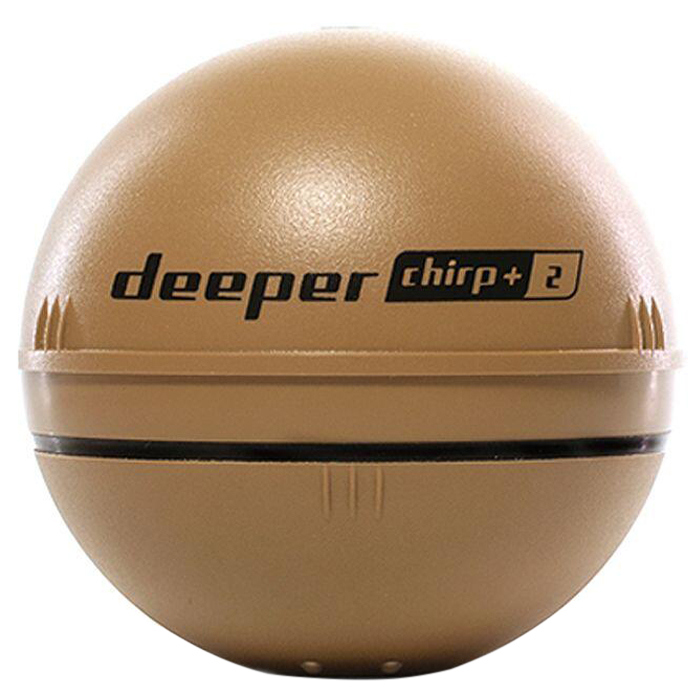
Deeper CHIRP+ 3 Sonar Fishfinder
CHIRP+ 3
Three CHIRP beams, GPS and a castable body make this a tempting swim-mapping tool. The trick is using what it shows without treating every fish return as a guaranteed bite.
- Castable sonar weighing 94 g, with an ABS enclosure and titanium inserts.
- Three-frequency CHIRP with narrow, medium and wide beam options.
- Scanning depth of 15 cm–100 m and Wi-Fi connection range up to 120 m.
- Claimed runtime up to 9 hours with GPS on, or 15 hours with GPS off.
Make sure it’s the right one. This covers the Deeper CHIRP+ 3 specifically. We haven't tested it on the bank; this is a look at its confirmed features and how they fit into your fishing.
Tackle Index Score
Tackle Index score
Provisional feature-based scores, not bank-test results; value is especially tentative without a confirmed selling price.
- Product Quality8.8/10
- Performance9.1/10
- Impact on Fish Catching8.1/10
- Ease of Use8.3/10
- Value for Money7.7/10
If you buy through our links, we might get a small kickback, but it won’t cost you a penny extra. As an Amazon Associate I earn from qualifying purchases. The full story
Who it suits
Is it right for you?
Great for
- Carp anglers learning unfamiliar lakes. Depth changes and the shape of the lakebed give you a useful starting point before checking individual spots.
- Anglers who enjoy dedicated mapping trips. You can spend time learning the water without repeatedly casting a sonar through a swim you're actively fishing.
Maybe skip if
- Light-tackle coarse anglers wanting an occasional depth check. The 94 g casting load and phone-based setup can be unnecessary faff when a plummet will answer the question.
- Anyone expecting a guaranteed fish locator. A return on the screen doesn't tell you that a carp is feeding or that your hookbait will get picked up.
The lowdown
Introducing the Deeper CHIRP+ 3 Sonar Fishfinder
Three CHIRP beams, GPS and a castable body make this a tempting swim-mapping tool. The trick is using what it shows without treating every fish return as a guaranteed bite.
- Castable sonar weighing 94 g, with an ABS enclosure and titanium inserts.
- Three-frequency CHIRP with narrow, medium and wide beam options.
- Scanning depth of 15 cm–100 m and Wi-Fi connection range up to 120 m.
- Claimed runtime up to 9 hours with GPS on, or 15 hours with GPS off.
Quick verdict
A proper swim-learning tool, not a shortcut to a PB
The CHIRP+ 3 makes plenty of sense if you want to explore depths, find changes in the lakebed and build a clearer picture of unfamiliar water. Three beam options give you useful control over how much water you're looking at.
Just keep your expectations sensible, mate. It needs suitable casting tackle, a phone and a bit of learning. It'll help you ask better questions about a swim, but it won't choose your rig or make the carp feed.
Provisional feature-based scores, not bank-test results; value is especially tentative without a confirmed selling price.
- Product Quality
- 8.8/10
- Performance
- 9.1/10
- Impact on Fish Catching
- 8.1/10
- Ease of Use
- 8.3/10
- Value for Money
- 7.7/10
The ABS enclosure, titanium inserts and supplied protective pouch suggest a considered package, though long-term durability hasn't been checked.
Three CHIRP beams and strong stated scanning capabilities offer plenty of scope, with real-world connection and readings still dependent on conditions.
Better knowledge of depths and features can improve location decisions, but it won't confirm feeding fish or fix a poor presentation.
USB-C charging helps keep ownership straightforward, while safe casting and interpreting sonar both require some learning.
Regular mapping could justify the purchase, but this remains a cautious provisional score without a confirmed price.
Head to head
How it stacks up
Side by side with the closest kit we've reviewed. This updates as we add more reviews.
Deeper
Deeper CHIRP+ 3 Sonar Fishfinder (this one)
Top scorer
Top scorer
Scores are our own, out of 10. Best in each row is in green. Prices change, so check the latest before you buy.
The full rundown
Everything you'll want to know about the Deeper CHIRP+ 3 Sonar Fishfinder
A lake can look properly featureless from the bank. Flat water, a few distant reeds and not much else to go on. Underneath, though, there might be a shelf, a gentle slope or a channel that changes how you approach the swim. That's where the Deeper CHIRP+ 3 earns its place in the conversation. It's a castable sonar designed to give you a look below the surface through your phone, rather than leaving you to piece everything together from a marker float and educated guesswork.
Let's get the important bit out of the way: we haven't taken this one fishing. This is a look at its confirmed features and what they mean for your sessions, not a tale about finding a secret bar and bagging a brace of stunners. Its biggest appeal is pretty straightforward. You can explore water from the bank, compare depths and investigate features before deciding where to put your rigs. That's useful groundwork, especially on a new venue where you haven't yet built up a mental picture of the lake.
The headline feature is three-frequency CHIRP sonar, with narrow, medium and wide beams. Think of those as different-sized windows into the water beneath the unit. The wide 47° beam covers more water, while the narrow 7° beam gives a more focused view; the 20° option sits between them. Wider isn't automatically better, either. As depth increases, each beam covers a bigger patch of bottom, so a return isn't necessarily directly beneath the middle of the sonar. Learning that relationship is more useful than simply leaving everything on the widest setting.
Deeper lists target separation down to 1 cm with the narrow beam, and 2.4 cm with the other two. That's about distinguishing closely spaced targets, not measuring a fish to the nearest centimetre or guaranteeing you'll spot every carp tucked against the deck. The stated scanning depth runs from 15 cm to 100 m, which comfortably covers the depth needs of ordinary UK carp and coarse fishing. Still, a detailed display needs a bit of judgement. Weed, bottom shape and suspended targets aren't an invitation to switch your watercraft off.
For practical bank work, the 94 g weight deserves as much attention as the clever sonar. This isn't something to lash onto a light float outfit because it's already set up beside you. Use tackle suitable for that casting load, check the attachment and follow the maker's casting guidance. A smooth, controlled cast makes far more sense than trying to send it into the next postcode. The enclosure is ABS with titanium inserts, and the supplied neoprene pouch is a sensible place to keep it when it's rattling around with the rest of your kit.
Connection is by Wi-Fi, with a stated range of up to 120 m. Treat that as a best-case ceiling rather than a distance you're guaranteed to achieve every trip. Your phone setup and conditions still matter, and connection range isn't a recommendation to cast that far. Battery life is quoted at up to nine hours with GPS on, or fifteen with GPS off. That's a useful allowance for exploring, although your phone needs to last as well. A charged power bank is dead handy if you're planning a proper mapping session.
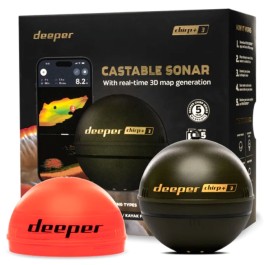
USB-C charging keeps the routine simple, with a claimed eighty per cent charge in sixty minutes and a full charge in 110 minutes. You also get two attachment bolts, a USB wire and a Night Fishing Cover alongside the pouch and paperwork. Before any of that hits the water, check the fishery rules. Sonar use isn't welcome everywhere. Even where it's allowed, repeated casts can disturb the swim, so doing your exploring outside a likely bite-time is a sensible bit of courtesy to both the fish and neighbouring anglers.
The best way to think about the CHIRP+ 3 is as another layer of understanding. Find a change in depth, check the area with a lead where appropriate, watch for showing fish and then choose a presentation that suits the actual spot. In winter, that might mean investigating deeper water without assuming every fish will be there; in summer, don't ignore obvious activity in the margins because the screen looks more exciting elsewhere. If you enjoy learning a venue, there's plenty here to get stuck into. If you want a button that says 'cast here, catch a lump', save yourself the disappointment.
Specifications
The nuts and bolts
- Weight and construction
- 94 g; ABS enclosure with titanium inserts
- CHIRP beams
- Narrow: 675 kHz / 7°; medium: 240 kHz / 20°; wide: 100 kHz / 47°
- Target separation
- 1 cm narrow; 2.4 cm medium and wide
- Scanning
- 15 cm–100 m depth; up to 15 scans per second
- Wireless connection
- Wi-Fi; up to 120 m connection range
- Battery and charging
- 3.8 V, 1300 mAh lithium-ion; up to 9 hours GPS on or 15 hours GPS off; USB-C, 80% in 60 minutes and full in 110 minutes
Specs checked with Deeper, Oct 2026.
Spot a model or spec change?
Our take
Find the shape of the swim first
The strongest reason to buy one isn't chasing fish symbols. It's working out where the shelves, slopes and deeper channels sit, then using that knowledge alongside showing fish and a marker lead.
Start broad, investigate anything interesting with a narrower beam, and check the actual spot before committing your hookbait. That's a much sounder plan than chucking at every promising mark.
The kit
Closer look: three beams and a manageable bank routine
The CHIRP+ 3 combines a castable sonar body with GPS and a Wi-Fi link to your phone. Its three beam choices are the important working tools: broad coverage for exploring, then a narrower view when you want to investigate something more closely. Keep your retrieve steady when comparing passes so you're not adding unnecessary variation.
The quoted scan rate reaches up to 15 scans per second. That supports a detailed stream of readings, but it doesn't make a hurried retrieve a good idea. Give yourself time to understand what's on the screen. Nor does a crisp return prove a patch is clean enough for a short hooklink; that's still something to check.
Worth knowing. The 1 cm target-separation figure applies to the narrow beam. It's not a blanket accuracy claim for fish size, position or bottom detail, and the medium and wide beams are rated at 2.4 cm.
Your fishing
Who it suits: curious anglers with water to learn
This is most appealing if you fish unfamiliar waters or enjoy learning one venue properly over time. A dedicated reconnaissance visit can let you investigate the shape of several swims without having baited rods in the way. Check permission first, then use what you learn to narrow down your choices rather than pretending you've solved the whole lake.
It's less compelling if your fishing is mostly short sessions on familiar pegs. For plumbing a float line or checking a near-bank slope, simpler tackle may already do everything you need. There's no prize for adding another screen to the session if it doesn't answer a useful question.
Value rests heavily on how often you'll use it. Without a confirmed selling price, there's no honest way to call it a bargain. Its feature set makes more sense for regular exploration than for the angler who'll have a cheeky play once, then leave it in the shed.
Bank-side questions
FAQs in full: casting, connection and checking the spot
Can your normal rod cast it? The key figure is 94 g, but don't judge suitability by rod strength alone. Your line, knots, attachment and casting technique all matter. Check the rod manufacturer's guidance and Deeper's instructions, and don't attempt a big cast with an outfit you're unsure about.
Will it stay connected at 120 m? That's the stated maximum Wi-Fi range, not a promise for every situation. Keep the phone positioned for a clear connection and follow the setup guidance. Plan your work around a dependable link rather than spending the session chasing the furthest possible reading.
Can you retire the marker gear? Not necessarily, mate. Sonar is useful for depth and feature finding, while dragging or feeling down a lead can help you judge the actual landing area. Neither tells you everything. Combine them with fish sightings and sensible rig choice, and you've got a much stronger starting point.
On paper
Pros & cons
What we like
- Three beam widths let you move from a broad search to a more focused look.
- GPS supports a more useful picture of your water than isolated depth readings.
- USB-C charging and substantial claimed runtime suit longer reconnaissance sessions.
- Night Fishing Cover and protective neoprene pouch come in the box.
Worth knowing
- At 94 g, it needs suitable tackle and controlled casting rather than a casual chuck on a light rod.
- Your phone becomes another battery-dependent bit of kit to manage.
- Sonar returns take practice to interpret and don't confirm species, feeding activity or rig suitability.
Want one?
Add it to your Wanted list or join a Group Buy — shops see anonymous totals only.
Your questions answered
What anglers want to know
The stuff you’d ask your mate on the next peg. Straight answers, no waffle.
01Can I cast it on my normal fishing rod?
Can I cast it on my normal fishing rod?
Only if the rod, line and complete casting setup are suitable for a 94 g load. Check the rod maker's guidance, inspect your connections and use a controlled cast. Don't assume a light feeder or float rod is up to it.
02How far does the CHIRP+ 3 connect?
How far does the CHIRP+ 3 connect?
The stated Wi-Fi range is up to 120 m. That's a connection limit under suitable conditions, not a promise of reliable operation at that distance on every water or with every phone setup.
03Does it replace a marker float and lead?
Does it replace a marker float and lead?
Not completely. Sonar helps reveal depth and underwater features, while a marker lead gives useful physical feedback about the spot. Together they're more informative than treating either as the whole answer.
What anglers say
The word from the bank
Our read: a proper swim-learning tool, not a shortcut to a pb. The strongest reasons to choose it are three beam widths let you move from a broad search to a more focused look. and gps supports a more useful picture of your water than isolated depth readings.; the main trade-off is at 94 g, it needs suitable tackle and controlled casting rather than a casual chuck on a light rod..
Our take on the feedback
Why it appeals
Checked Sept '26 — “Three beam widths let you move from a broad search to a more focused look.”
Best fit
Checked Sept '26 — “Carp anglers learning unfamiliar lakes: Depth changes and the shape of the lakebed give you a useful starting point before checking individual spots.”
Worth knowing
Checked Sept '26 — “At 94 g, it needs suitable tackle and controlled casting rather than a casual chuck on a light rod.”
Tackle Index’s take from the product details and fishing fit we checked. We haven’t found enough independent public feedback to call this an angler consensus yet.
Angler score
What our readers rate Deeper CHIRP+ 3 Sonar Fishfinder
No angler score yet — nobody's reviewed Deeper CHIRP+ 3 Sonar Fishfinder here. Be the first and get the score started.
Owner reports
Own this? Help the next angler.
Quick multiple-choice reports from people who say they own the Deeper CHIRP+ 3 Sonar Fishfinder. Not verified purchases, and kept separate from our score.
No owner reports yet.
Alternatives & go-withs