Photos: Deeper · supplied retailer imagery
Bankside tools · Castable fishfinders · Our take
Deeper START Fishfinder
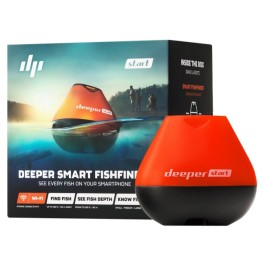
START · Black and orange · FNG0026
A castable Wi-Fi fishfinder that puts depth and sonar readings on your phone. Proper useful for getting your bearings, provided you treat it as a clue-finder rather than a shortcut to a PB.
- Castable sonar with readings displayed on a smartphone or tablet.
- Advertised casting range and maximum scanning depth are both 50 m / 165 ft.
- Connects over Wi-Fi rather than Bluetooth.
- Weighs 60 g and measures 60 × 65 × 65 mm.
Make sure it’s the right one. This review covers the Deeper START, not the PRO or CHIRP models. We haven't tested it on the bank; these are our thoughts on its confirmed features and how they fit everyday fishing.
Tackle Index Score
Tackle Index score
Provisional feature-based scores for an entry-level castable fishfinder, not bank-test results; value depends on the price you find and how often you'll use it.
- Product Quality8.3/10
- Performance8/10
- Impact on Fish Catching7.5/10
- Ease of Use8.6/10
- Value for Money8.1/10
If you buy through our links, we might get a small kickback, but it won’t cost you a penny extra. As an Amazon Associate I earn from qualifying purchases. The full story
Who it suits
Is it right for you?
Great for
- Bank anglers exploring unfamiliar water. Depth readings can help you build a clearer picture before picking a spot and putting bait in.
- Occasional sonar users fishing within its range. It offers a relatively straightforward phone-based route into castable sonar without needing boat-mounted kit.
Maybe skip if
- Long-range carp anglers. An advertised 50 m casting range won't reach plenty of the spots you'd tackle on bigger waters.
- Light-tackle anglers or anyone avoiding screens. The 60 g casting weight needs an appropriate outfit, and using it means adding a phone or tablet to your routine.
The lowdown
Introducing the Deeper START Fishfinder
A castable Wi-Fi fishfinder that puts depth and sonar readings on your phone. Proper useful for getting your bearings, provided you treat it as a clue-finder rather than a shortcut to a PB.
- Castable sonar with readings displayed on a smartphone or tablet.
- Advertised casting range and maximum scanning depth are both 50 m / 165 ft.
- Connects over Wi-Fi rather than Bluetooth.
- Weighs 60 g and measures 60 × 65 × 65 mm.
Quick verdict
Useful swim homework, not a magic fish button
The Deeper START makes sense if you want a straightforward look at depth and possible fish activity without fitting sonar to a boat. Its 60 g body and phone-based display make it a handy extra for suitably equipped bank anglers.
Keep your expectations sensible, though. The advertised 50 m range won't cover every swim, sonar returns aren't guaranteed carp, and a phone screen won't tell you whether your hookbait is presented properly.
Provisional feature-based scores for an entry-level castable fishfinder, not bank-test results; value depends on the price you find and how often you'll use it.
- Product Quality
- 8.3/10
- Performance
- 8/10
- Impact on Fish Catching
- 7.5/10
- Ease of Use
- 8.6/10
- Value for Money
- 8.1/10
The compact, purpose-built package looks practical, though long-term durability hasn't been established here.
The stated depth capability and scan rate offer useful scope, but the 50 m reach puts a firm boundary on its job.
Better swim knowledge can support better decisions, but sonar indications don't guarantee feeding fish or sound presentation.
A phone-based display keeps the setup approachable, with device preparation and safe casting still needing attention.
It has a sensible role as an entry-level scouting tool if used regularly, but occasional curiosity alone is harder to justify.
Head to head
How it stacks up
Side by side with the closest kit we've reviewed. This updates as we add more reviews.
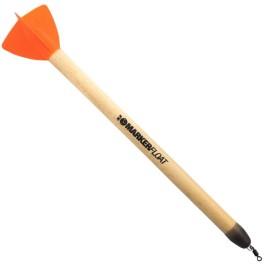
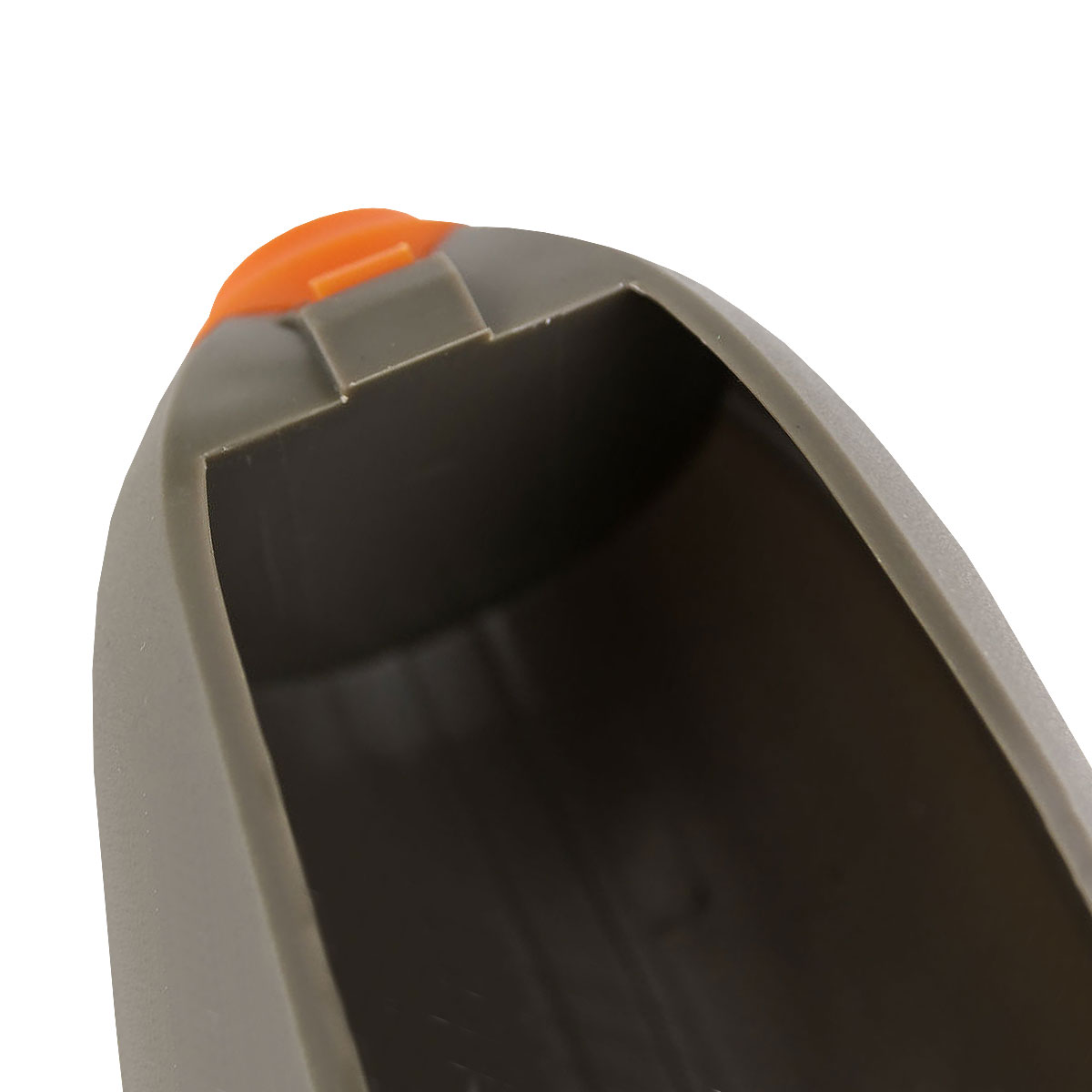
Top scorer
Top scorer
Scores are our own, out of 10. Best in each row is in green. Prices change, so check the latest before you buy.
The full rundown
Everything you'll want to know about the Deeper START Fishfinder
Turning up at a new lake is exciting right up until you're staring at a flat sheet of water with no idea what's underneath it. You can watch for shows, have a plumb about and work things out the old-fashioned way. The Deeper START adds another option: cast out a small sonar unit and look at the readings on your phone. It's there to give you a better starting point, not pick your rig, flavour your boilies or make the rods go off.
This is the START model, so don't muddle it up with the other Deeper units when you're comparing features. The confirmed basics are straightforward: a black-and-orange body, a weight of 60 g and dimensions of 60 × 65 × 65 mm. It connects over Wi-Fi and displays readings on a smartphone or tablet. We haven't used this one on the bank, so there's no invented tale about finding a hidden shelf and bagging a brace. This is about what it offers and where that could genuinely help.
Both the advertised casting range and maximum scanning depth are 50 m, or 165 ft. They're different things, despite sharing the same number. One concerns how far out you're working; the other concerns the depth below the unit. For plenty of smaller-water swims, that reach could cover the area you're interested in. If your usual carp fishing involves punching rigs towards a distant island, though, it's a clear limitation. Don't buy a short-range scouting tool expecting it to explain a spot you can't reach with it.
The useful bit is getting some shape into your understanding of a swim. Cast around within your water, retrieve steadily and compare the depth readings rather than getting fixated on one exciting mark. You might find a change that deserves a closer look or discover your chosen patch isn't the depth you expected. That's handy before you introduce a load of bait. Keep the casts controlled and respect neighbouring anglers, obviously. A floating gadget doesn't give you permission to sweep across someone else's lines or investigate their carefully baited spot.
Fish indications need a level head, too. Sonar returns can suggest something worth investigating, but they don't come with a little label saying hungry twenty-pound common. Species, feeding mood and whether a fish will accept your hookbait are separate questions. Equally, a quiet screen doesn't prove the whole swim is empty. Fish move, and you're only looking at the area the sonar covers at that moment. Watch the water as well. A proper show or a patch of fizz can still tell you something your latest cast hasn't.
There's a tackle consideration before you start lobbing it about. Sixty grams isn't something to casually flick out on whichever light rod happens to be nearest. Check that your outfit is suitable for casting that load, follow the attachment instructions and inspect your line and knots. Use a smooth cast rather than an all-out whack. A crack-off is annoying with a lead; with an electronic fishfinder, it's a much more expensive splash. It's compact enough to pack easily, but that doesn't make it weightless on the cast.
Using your phone as the display is convenient because it's probably already in your pocket. It also means another reason to have it out in rain, glare and muddy surroundings. Get the app ready before you leave, check device compatibility and think about charging both bits of kit for the session. The sonar link uses Wi-Fi, which shouldn't be confused with needing a public internet hotspot beside your peg. Still, sorting the setup at home is far less faff than troubleshooting while bite-time slips past.
For me, the sensible buying angle is swim homework. If you regularly fish unfamiliar venues within its working range, the START could help you ask better questions before committing your rods. Follow up interesting areas with a lead where appropriate, because depth alone won't confirm a clean landing for your rig. Check the fishery allows castable sonar, too. If you know every contour of your local pond or simply fancy an afternoon away from screens, you may not need it. Useful extra? Certainly. Essential ticket to a stunner? No, mate.
Specifications
The nuts and bolts
- Dimensions and weight
- 60 × 65 × 65 mm; 60 g
- Advertised casting range
- 50 m / 165 ft
- Maximum scanning depth
- 50 m / 165 ft
- Connection and display
- Wi-Fi; smartphone or tablet display
- Sonar
- 120 kHz; 10 scans per second
- Colour and product ID
- Black and orange; FNG0026
Specs checked with Deeper, Oct 2026.
Spot a model or spec change?
Our take
Find the questions worth asking
The real win isn't spotting a fish symbol and launching a rig straight at it. It's narrowing down where to investigate: a change in depth, a different part of the swim, or activity away from your first-choice spot.
Use those clues alongside what you can see from the bank and feel through a lead. That's a much more useful approach than letting the screen make every decision.
The kit
Closer look: sonar in a castable package
You're buying a floating sonar unit that works with a compatible phone or tablet. The START's confirmed sonar frequency is 120 kHz, with 10 scans per second. Those figures describe its operation; they don't, by themselves, prove how clearly it'll separate every fish from every underwater feature.
The practical approach is to make controlled exploratory casts and compare what you see. Slow down enough to give yourself a useful look, rather than racing it back like a lure. Keep track of the direction you're scanning so an interesting depth change actually means something when you switch back to fishing tackle.
Worth knowing. A depth reading isn't a verdict on your rig presentation. Follow up a promising area with suitable spot-checking methods, and don't assume a tidy-looking screen means your hookbait will sit clear of weed or debris.
Your fishing
Who it suits: curious bank anglers, not just gadget fans
This is most appealing if you move between venues and want extra help getting your bearings. On a manageable-sized swim, finding out whether you're looking at relatively shallow or deeper water can guide your next move. It's especially useful when you have a reason to investigate depth rather than simply wanting to see fish symbols.
It's less convincing if your spots are beyond 50 m, your tackle isn't suitable for casting 60 g, or your fishery doesn't allow sonar. An occasional pleasure angler who already knows their regular pegs may get more value from keeping things simple. Buy it for a job you've actually got, not because another screen promises to solve a blank.
Before you buy
FAQs in full: connection, reach and fish indications
Does it need Bluetooth or bankside internet? The START uses Wi-Fi to communicate with your display device. That's a local wireless link, not a requirement for the fishery to provide internet. Get the compatible app installed and any setup sorted beforehand; don't assume every older phone or tablet will work without checking.
Are casting range and scanning depth the same? No. Both are listed as 50 m / 165 ft here, but range is about working distance from you, while scanning depth is about the water beneath the unit. Treat the advertised reach as a limit to plan around, not a reason to keep forcing casts farther out.
Will it find carp for you? It can provide fish indications, but that doesn't establish species or feeding behaviour. A return is a reason to pay attention, not proof you should pile bait on top of it. Combine the reading with conditions, visible activity and your knowledge of the venue. There's still proper angling to do.
On paper
Pros & cons
What we like
- Gives bank anglers a way to investigate depth before committing bait.
- Uses a smartphone or tablet as the display, rather than a separate sonar head unit.
- Compact body is easy to find room for in a tackle bag.
- Depth readings and possible fish returns can help narrow down an unfamiliar swim.
Worth knowing
- The advertised 50 m range limits its usefulness for long-range carp work.
- At 60 g, it needs suitable casting tackle rather than a light float or lure outfit.
- Adds phone and charging faff, while sonar returns still need careful interpretation.
Want one?
Add it to your Wanted list or join a Group Buy — shops see anonymous totals only.
Your questions answered
What anglers want to know
The stuff you’d ask your mate on the next peg. Straight answers, no waffle.
01Does the Deeper START use Wi-Fi or Bluetooth?
Does the Deeper START use Wi-Fi or Bluetooth?
Wi-Fi. It links to a compatible smartphone or tablet, which displays the sonar readings. That local connection isn't the same thing as needing bankside Wi-Fi, though you should get the app installed and ready before travelling.
02How far can it scan?
How far can it scan?
The advertised casting range is 50 m / 165 ft, and the maximum scanning depth is also 50 m / 165 ft. Those are separate limits, not a promise that every cast will deliver a perfect connection at maximum distance.
03Can it tell me where the carp are?
Can it tell me where the carp are?
It can show returns interpreted as fish, but it can't reliably identify them as carp or tell you whether they'll feed. Treat the screen as another clue alongside showing fish, bubbles, conditions and proper spot checking.
What anglers say
The word from the bank
Our read: useful swim homework, not a magic fish button. The strongest reasons to choose it are gives bank anglers a way to investigate depth before committing bait. and uses a smartphone or tablet as the display, rather than a separate sonar head unit.; the main trade-off is the advertised 50 m range limits its usefulness for long-range carp work..
Our take on the feedback
Why it appeals
Checked Sept '26 — “Gives bank anglers a way to investigate depth before committing bait.”
Best fit
Checked Sept '26 — “Bank anglers exploring unfamiliar water: Depth readings can help you build a clearer picture before picking a spot and putting bait in.”
Worth knowing
Checked Sept '26 — “The advertised 50 m range limits its usefulness for long-range carp work.”
Tackle Index’s take from the product details and fishing fit we checked. We haven’t found enough independent public feedback to call this an angler consensus yet.
Angler score
What our readers rate Deeper START Fishfinder
No angler score yet — nobody's reviewed Deeper START Fishfinder here. Be the first and get the score started.
Owner reports
Own this? Help the next angler.
Quick multiple-choice reports from people who say they own the Deeper START Fishfinder. Not verified purchases, and kept separate from our score.
No owner reports yet.
Alternatives & go-withs