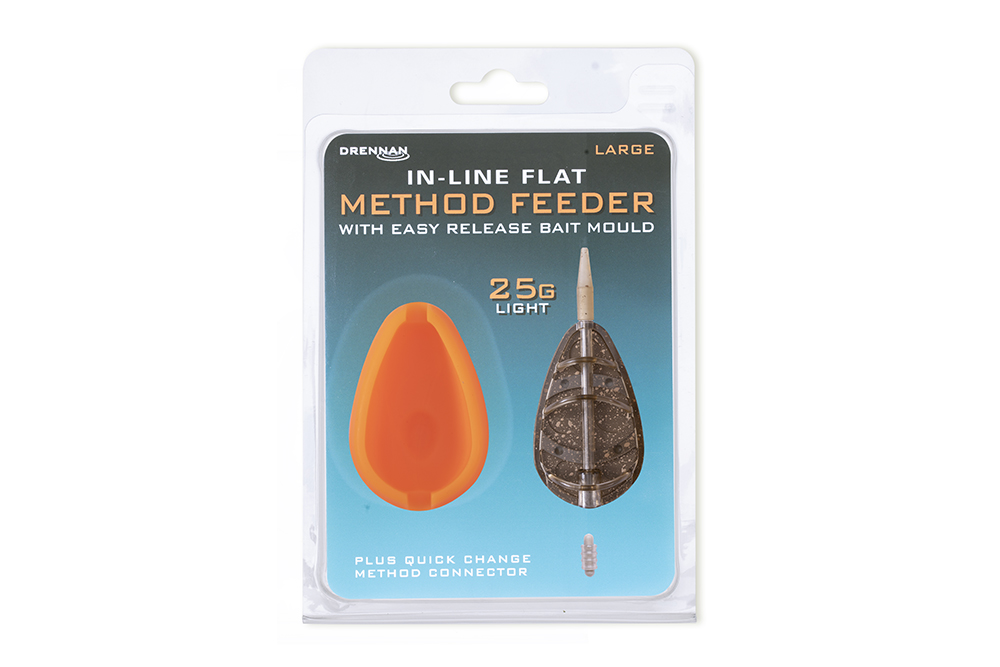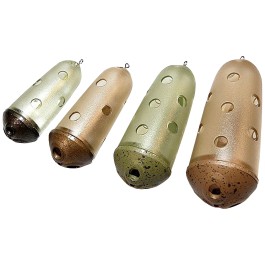
Photos: Drennan · supplied retailer imagery
Feeders · Feeder bombs · Our take
Drennan Feeder Bombs
Mini 15g, Small 25g, Medium 35g and Large 45g
Four size-and-weight options, weight concentrated at the base and two feeders in a packet. A straightforward range for matching your feeder to the swim without making life complicated.
- Four options: Mini 15g, Small 25g, Medium 35g and Large 45g.
- Weight is concentrated at the feeder base.
- Suitable for lakes and slow- to medium-paced rivers.
- Two feeders supplied per blister pack.
Make sure it’s the right one. Drennan Feeder Bombs, supplied as two feeders per blister pack.
Tackle Index Score
Tackle Index score
A useful everyday range with clear choices and a practical two-feeder pack; the main compromise is that extra weight comes with a bigger size.
- Product Quality8.3/10
- Performance8.6/10
- Impact on Fish Catching7.9/10
- Ease of Use9/10
- Value for Money8.3/10
If you buy through our links, we might get a small kickback, but it won’t cost you a penny extra. As an Amazon Associate I earn from qualifying purchases. The full story
Who it suits
Is it right for you?
Great for
- Lake anglers building a practical feeder selection. The four options let you choose around your swim, casting needs and intended feeding approach.
- Coarse anglers on slow- to medium-paced rivers. They're intended for these steadier flows, provided your chosen weight holds the spot properly.
Maybe skip if
- Anglers tackling powerful river flows. A maximum listed weight of 45g won't cover every demanding holding job.
- Anglers wanting more weight without a bigger feeder. Each step up in this range pairs a heavier weight with a larger size.
The lowdown
Introducing the Drennan Feeder Bombs
Four size-and-weight options, weight concentrated at the base and two feeders in a packet. A straightforward range for matching your feeder to the swim without making life complicated.
- Four options: Mini 15g, Small 25g, Medium 35g and Large 45g.
- Weight is concentrated at the feeder base.
- Suitable for lakes and slow- to medium-paced rivers.
- Two feeders supplied per blister pack.
Quick verdict
Proper useful, provided you match them to the job
Drennan Feeder Bombs make sense for lake fishing and slow- to medium-paced rivers. The four size-and-weight options give you a useful starting point, while concentrating the weight at the base puts the casting emphasis where you'd expect it.
The catch? Size and weight increase together, so choosing a heavier option also means choosing a bigger feeder. Pick for the amount of feed you want to introduce as well as the distance and flow, mate.
A useful everyday range with clear choices and a practical two-feeder pack; the main compromise is that extra weight comes with a bigger size.
- Product Quality
- 8.3/10
- Performance
- 8.6/10
- Impact on Fish Catching
- 7.9/10
- Ease of Use
- 9/10
- Value for Money
- 8.3/10
The base-weighted design is purposeful, without enough detail to justify a premium-quality score.
The four weight options cover useful lake and steadier-river work, but stop short of heavier holding jobs.
Matching the feeder to your spot supports consistent presentation, though feeding decisions and location remain crucial.
The clear size-and-weight progression makes selection straightforward without lots of overlapping options.
Two feeders per packet offer practical spare-tackle value, though the final appeal depends on the asking price.
Head to head
How it stacks up
Side by side with the closest kit we've reviewed. This updates as we add more reviews.
Top scorer
Top scorer
Scores are our own, out of 10. Best in each row is in green. Prices change, so check the latest before you buy.
The full rundown
Everything you'll want to know about the Drennan Feeder Bombs
Drennan Feeder Bombs are the sort of tackle purchase that starts with a simple question: what does your swim actually need? Not the biggest thing in the box. Not whatever your mate's just clipped on. A feeder that reaches the spot, behaves sensibly once it's there and fits the way you want to feed. This range gives you four size-and-weight choices for lakes and slow- to medium-paced rivers. That's a useful everyday brief, especially if your fishing switches between stillwaters and a local stretch that isn't charging through like a train.
The choices are dead easy to follow. Mini is 15g, Small is 25g, Medium is 35g and Large is 45g. There's no need to decipher a bewildering list of combinations before you've even got the kettle on. The important bit is that size and weight rise together. You're not simply adding another ten grams to the same feeder body each time. That matters when you're trying to balance the amount of feed going into a swim against the weight needed to get there. Bigger isn't automatically better, even when the extra casting weight looks tempting.
The defining detail here is the weight concentrated at the feeder base. Putting the mass there gives the feeder a clear weighted end, a sensible arrangement for casting. Don't turn that into a promise of magical distance, though. Your rod, mainline, loading and casting technique still have plenty to say about where it lands. For ordinary feeder work, the more useful aim is repeatability: picking a far-bank marker, finding a comfortable distance and putting successive casts into the same area. A manageable cast you can repeat beats an occasional heroic chuck followed by three all over the shop.
On a lake, start by thinking about the distance and how the fish are feeding. If you're working a modest range and bites are hard-earned, there's little sense choosing a larger feeder purely because it's available. When fish are properly on the munch, your feeding approach may need to change, but don't confuse feeder size with feeding rate. How often you cast matters as well. Ten small deliveries and two bigger ones create different rhythms in a swim. Keep an eye on the response rather than deciding before you've tackled up that one size has to stay on all day.
River fishing adds another question: will the feeder stay where you want it? Drennan Feeder Bombs are suitable for slow- to medium-paced rivers, which is a useful guide rather than a guarantee for every swim carrying that description. Depth, current pressure on the line and the bottom all affect the holding job. If the feeder keeps shifting unintentionally, your presentation can wander away from the area you're trying to build. Moving up a weight may help, but the range tops out at 45g. Sometimes the right answer is a different feeder, not another increasingly hopeful cast.
There's a simple tackle-balance point here too, mate. The listed feeder weight isn't the whole casting load once bait is added, so leave sensible headroom within your rod's casting rating. Start with a smooth cast rather than trying to punch everything to the horizon. Once you've found your spot, use your line clip thoughtfully and cushion the feeder's arrival instead of letting it hit a dead stop. Those basics do more for tidy presentation than obsessing over one bit of terminal tackle. Keep your rig appropriate to the venue, and make sure it meets any fishery rules before you settle in.
You get two feeders per blister pack, which is handy in a very ordinary, very real way: losing one doesn't immediately leave you without the same option. Having that spare helps you keep your approach consistent rather than switching size halfway through a promising spell because it's all you've got left. Overall, these make most sense as part of a considered feeder selection. Pick the size around the feeding job, check the weight suits the cast and conditions, and keep alternatives for situations outside their remit. Straightforward stuff, really, but that's often what makes a tackle box properly useful.
Specifications
The nuts and bolts
- Mini
- 15g
- Small
- 25g
- Medium
- 35g
- Large
- 45g
- Weight placement
- Concentrated at the feeder base
- Pack
- Two feeders in blister-pack packaging
Specs checked with Drennan, Oct 2026.
Spot a model or spec change?
Our take
Think feeding job first, casting weight second
It's tempting to grab the heaviest feeder and bosh it out. A better starting point is how much bait the swim needs, then whether that option will reach your spot and stay there.
These cover everyday lake and steadier-river work rather than every possible feeder situation. They're a useful part of the box, not a reason to leave all your other feeders at home.
The tackle
Closer look: four options, one straightforward idea
You're buying Drennan feeders with the weight concentrated at the base, supplied two to a blister pack. The range runs from Mini at 15g through Small at 25g and Medium at 35g to Large at 45g. That gives you a clear progression without a complicated choice of weights within each size.
The base-weighted arrangement is the main design point to focus on. It's a sensible way to position casting mass, but accurate fishing still comes back to balanced tackle and a repeatable action. Choose a weight you can cast comfortably rather than assuming the heaviest option will automatically tidy everything up.
Worth knowing. Feeder size and weight rise together here. If you need extra holding weight but want to keep the feeding package small, another feeder range with multiple weights in the same body size may fit the job better.
Picking your swim
Who it suits: lake regulars and steadier-river anglers
Lake anglers get a useful spread of options for matching tackle to their chosen spot. Don't buy by distance alone, though. Think about how much feed you want going in and how frequently you intend to cast. In colder conditions or during a tricky spell, a restrained feeding approach can matter more than having the biggest feeder available.
For slow- to medium-paced rivers, the key is whether your chosen feeder holds the intended area. Watch for unwanted movement and adjust accordingly. If 45g isn't enough, that's the limit of this range rather than a challenge to keep forcing the issue. A heavier or more specialised river feeder is the sensible next move.
The two-feeder pack also suits anyone who likes carrying a matching backup. That's practical value rather than a claim that these are the cheapest option. Whether they're a cracking buy for you depends on the asking price and, more importantly, whether both feeders fit fishing you actually do.
Quick answers
FAQs in full: sizes, packs and river use
What sizes and weights are available? Mini is 15g, Small is 25g, Medium is 35g and Large is 45g. Choose with both size and weight in mind. Also account for the bait you add when checking the overall casting load against your rod's rating.
How many do you get? Two feeders per blister pack. Carrying the spare means a lost feeder doesn't have to force a change to your chosen size-and-weight setup just as the swim starts looking promising.
Are they suitable for rivers? Yes, for slow- to medium-paced rivers, as well as lakes. Actual holding requirements vary with depth, flow and line pressure. If your feeder won't stay put where intended, rethink the weight or feeder style rather than assuming the venue label tells the whole story.
On paper
Pros & cons
What we like
- Four clearly defined size-and-weight options make choosing straightforward.
- Base-concentrated weight gives the feeder a casting-focused layout.
- Suitable for both stillwaters and steadier river swims.
- Two per pack means you've got a matching spare.
Worth knowing
- Going heavier also means going up a feeder size.
- The range stops at 45g, limiting options when more holding weight is needed.
- Not the obvious choice for hard-pushing river conditions.
Want one?
Add it to your Wanted list or join a Group Buy — shops see anonymous totals only.
Your questions answered
What anglers want to know
The stuff you’d ask your mate on the next peg. Straight answers, no waffle.
01What sizes and weights do Drennan Feeder Bombs come in?
What sizes and weights do Drennan Feeder Bombs come in?
Mini is 15g, Small is 25g, Medium is 35g and Large is 45g. Size and weight step up together.
02How many feeders are in a packet?
How many feeders are in a packet?
You get two feeders per blister pack. That's a handy matching spare if you lose one.
03Can you use them on rivers?
Can you use them on rivers?
Yes. They're suitable for slow- to medium-paced rivers as well as lakes. Choose enough weight to hold your intended spot; stronger flow may call for a different feeder.
What anglers say
The word from the bank
Our read: proper useful, provided you match them to the job. The strongest reasons to choose it are four clearly defined size-and-weight options make choosing straightforward. and base-concentrated weight gives the feeder a casting-focused layout.; the main trade-off is going heavier also means going up a feeder size..
Our take on the feedback
Why it appeals
Checked Sept '26 — “Four clearly defined size-and-weight options make choosing straightforward.”
Best fit
Checked Sept '26 — “Lake anglers building a practical feeder selection: The four options let you choose around your swim, casting needs and intended feeding approach.”
Worth knowing
Checked Sept '26 — “Going heavier also means going up a feeder size.”
Tackle Index’s take from the product details and fishing fit we checked. We haven’t found enough independent public feedback to call this an angler consensus yet.
Angler score
What our readers rate Drennan Feeder Bombs
No angler score yet — nobody's reviewed Drennan Feeder Bombs here. Be the first and get the score started.
Owner reports
Own this? Help the next angler.
Quick multiple-choice reports from people who say they own the Drennan Feeder Bombs. Not verified purchases, and kept separate from our score.
No owner reports yet.
Alternatives & go-withs