Photos: Fulling Mill · supplied retailer imagery
Fly tying · Barbless jig hooks · Our take
Fulling Mill Jig Force Barbless Hooks
FM-5045 · Black nickel · 50-hook pack
A heavy-wire jig hook for nymphs and jig streamers, with a wide bend, claw point and a useful spread of sizes. Match it with a suitable slotted tungsten bead and you’ve got a tidy starting point for fishing down near the stones.
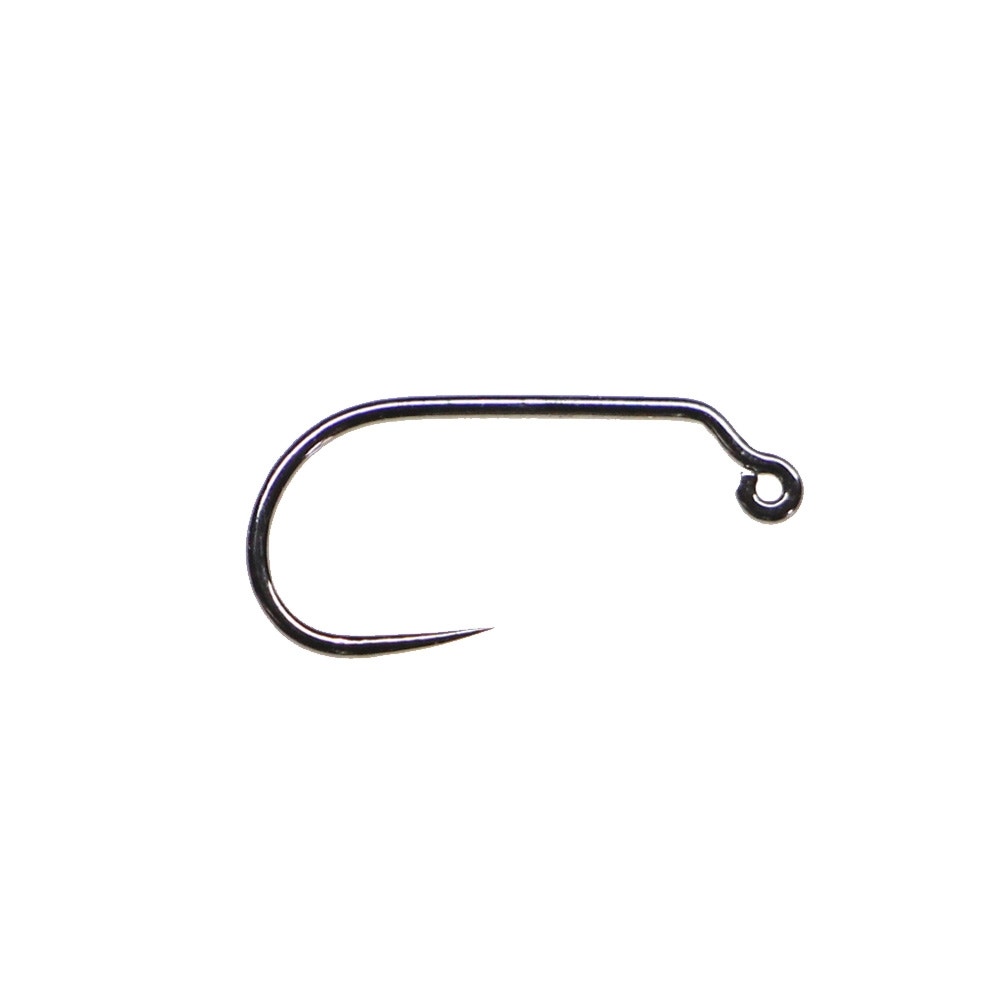
- FM-5045 barbless jig hook with a black nickel finish.
- 50-degree downward-facing eye and 2X-heavy wire.
- Claw point and extra-wide bend; designed for point-up presentation.
- 50 hooks per pack, in sizes 8, 10, 12, 14, 16, 18, 20 and 22.
Make sure it’s the right one. This is the FM-5045 Jig Force Barbless: the 2X-heavy model with a 50-degree downward-facing eye.
Tackle Index Score
Tackle Index score
A strong feature-led choice for weighted fly tying; value is most convincing when you’ll use the full 50-hook pack.
- Product Quality9/10
- Performance9.1/10
- Impact on Fish Catching8.3/10
- Ease of Use8.8/10
- Value for Money8.5/10
If you buy through our links, we might get a small kickback, but it won’t cost you a penny extra. As an Amazon Associate I earn from qualifying purchases. The full story
Who it suits
Is it right for you?
Great for
- River nymph anglers tying their own flies. The jig shape and recommended slotted tungsten pairing suit compact weighted patterns fished near the bed.
- Tiers building nymph and jig-streamer selections. The broad size range and 50-hook packs make repeat tying straightforward.
Maybe skip if
- Dry-fly specialists. The heavy wire and jig geometry aren’t aimed at light, delicate floating flies.
- Occasional tiers trying one small pattern. Fifty hooks in a single size may be more than you need while finding your preferred recipe.
The lowdown
Introducing the Fulling Mill Jig Force Barbless Hooks
A heavy-wire jig hook for nymphs and jig streamers, with a wide bend, claw point and a useful spread of sizes. Match it with a suitable slotted tungsten bead and you’ve got a tidy starting point for fishing down near the stones.
- FM-5045 barbless jig hook with a black nickel finish.
- 50-degree downward-facing eye and 2X-heavy wire.
- Claw point and extra-wide bend; designed for point-up presentation.
- 50 hooks per pack, in sizes 8, 10, 12, 14, 16, 18, 20 and 22.
Quick verdict
A cracking choice for your weighted fly box
The Jig Force Barbless makes plenty of sense for river nymphs and jig streamers. Its heavy wire, extra-wide bend and angled eye give you a purposeful platform for bead-headed patterns, rather than a general hook pressed into jig duties.
Choose it for flies that need to get down, not delicate dries. Bead fit still needs checking, and point-up presentation doesn’t make a fly snag-proof, but there’s plenty here for a regular fly tier to like.
A strong feature-led choice for weighted fly tying; value is most convincing when you’ll use the full 50-hook pack.
- Product Quality
- 9/10
- Performance
- 9.1/10
- Impact on Fish Catching
- 8.3/10
- Ease of Use
- 8.8/10
- Value for Money
- 8.5/10
The heavy-wire build, claw point and purpose-built jig geometry make a well-considered package for subsurface patterns.
Point-up design and compatibility with slotted tungsten beads suit weighted nymph and jig-streamer presentations.
It supports useful fly designs, but feeding depth, drift and pattern choice still matter more than the hook alone.
The wide bend helps bead fitting and the barbless point saves preparation, although bead compatibility needs checking.
The 50-hook format has practical value for regular tiers, but is less appealing if most of the pack will sit unused.
Head to head
How it stacks up
Side by side with the closest kit we've reviewed. This updates as we add more reviews.
Fulling Mill
Fulling Mill Jig Force Barbless Hooks (this one)
Top scorer
Scores are our own, out of 10. Best in each row is in green. Prices change, so check the latest before you buy.
The full rundown
Everything you'll want to know about the Fulling Mill Jig Force Barbless Hooks
If your fly box is full of bead-headed nymphs, the Fulling Mill Jig Force Barbless is aimed squarely at your sort of tying. This is a purpose-built jig hook, not a standard nymph hook with a fancy name. The FM-5045 combines a 50-degree downward-facing eye, 2X-heavy wire and a barbless claw point. That gives you a substantial foundation for weighted flies, whether you’re putting together compact river nymphs or a few jig streamers. Proper fly tackle, this — not a carp hook to drop straight onto a hair rig.
The big attraction is the way the finished fly is intended to travel. With a suitable bead and a balanced dressing, the Jig Force is designed to ride hook-point up. For nymphing close to a stony riverbed, that’s a useful arrangement: you’re trying to put the fly in the feeding lane without constantly offering the point to every obstruction. Don’t read that as snag-proof, though. Rocks, roots and trailing weed can still stop you dead. Presentation helps, but sensible depth control still earns its keep.
Fulling Mill recommends slotted tungsten beads, which are the sensible starting point here. The slot helps accommodate the angled eye, while tungsten lets you add useful weight without turning a small fly into a great big bauble. The extra-wide bend is also intended to let small tying beads slide around the hook. That’s dead handy at the vice, but it doesn’t mean every bead fits every size. Try one first, settle it into position and check you can reach the eye before committing to a whole batch.
That 2X-heavy wire matters too. It puts this hook on the more substantial side of the tying bench, which makes sense for weighted subsurface patterns. You’re not choosing it to hold up a delicate dry fly on a skinny film of water. Equally, don’t treat the heavy-wire description as permission to bully fish on fine tippet. Your leader, knots and rod cushioning all remain part of the picture. Match the complete setup to the water and the fish, rather than asking one sturdy-looking component to do everything.
There’s a useful size spread: 8, 10, 12, 14, 16, 18, 20 and 22. That gives you room to move between larger dressings and properly small nymphs without changing hook family. Just remember that the hook number alone doesn’t decide what a finished fly looks like. Bead size, body length and the amount of material all matter. For a slim nymph, keep the thread work neat and resist that last unnecessary pinch of dubbing. It’s surprisingly easy to crowd a little hook and lose the clear gape you wanted.
The barbless claw point is another practical choice for this sort of fishing. There’s no barb to flatten before tying, and a barbless hook generally makes removal more straightforward when the fish is safely under control. You still need good fish-handling habits and steady contact during the fight. If a trout comes towards you, recover the slack rather than winding yourself into a panic. And check the point after a hard knock against the stones; point-up presentation is useful, but it isn’t a protective force field.
You get 50 hooks in a pack, with a black nickel finish. For anyone topping up reliable patterns through the season, that’s a useful batch: enough to tie a consistent selection and replace losses without immediately running out. The flip side is that fifty of one size can be a fair commitment if you’re still experimenting. Work out which pattern and size you actually need before filling the basket. A box of flies suited to your local water beats a drawer full of hooks bought on a cheeky whim.
Overall, the appeal is straightforward. This is a focused hook for tiers who want weighted nymphs and jig streamers, with features that make sense together rather than a list of unrelated extras. It won’t sort out a dragging drift or magically find feeding fish. What it does offer is a sensible platform around which to build the right fly. Get the bead fit bob on, keep the dressing proportionate and choose your weight for the swim. That’s where this hook earns its place in the tying kit.
Specifications
The nuts and bolts
- Model
- FM-5045 Jig Force Barbless
- Finish and pack
- Black nickel; 50 hooks
- Eye
- 50-degree downward-facing jig eye
- Wire
- 2X-heavy
- Point and bend
- Barbless claw point; extra-wide bend
- Sizes
- 8, 10, 12, 14, 16, 18, 20 and 22
Specs checked with Fulling Mill, Oct 2026.
Spot a model or spec change?
Our take
Build the fly around the hook
The useful bit isn’t simply the bent eye. It’s how the hook, bead and dressing work together: enough weight to reach the feeding lane, a clear gape and a balanced fly that’s designed to travel point-up.
Start with a suitable slotted tungsten bead, check its seating before tying, then keep bulky materials away from the point. A tidy little nymph usually needs less dressing than you think.
At the vice
Closer look: a hook built around weighted patterns
The FM-5045 brings together a 50-degree jig eye, heavy wire and an extra-wide bend. Each has a job: the eye suits the jig layout, the wire provides a substantial base, and the bend helps small beads pass onto the hook. The black nickel finish rounds off a straightforward, purpose-built tying hook.
For nymphs, think about the whole outline rather than cramming material onto the shank. A slim body, restrained thorax and properly seated bead leave room around the point. With jig streamers, pay particular attention to how the wing or tail behaves when wet; a bulky dressing can interfere with the gape or change the fly’s balance.
Worth knowing. A slotted bead isn’t automatically a perfect fit. Check one on the actual hook before starting a batch, and don’t force a tight bead around the bend.
On the water
Who it suits: nymph anglers with a tying habit
This is a natural fit for river anglers tying weighted nymphs for trout and grayling. Whether you fish a tight-line setup or an indicator, the useful question is the same: can you get the fly into the feeding lane while keeping a controlled drift? The hook supports that job, but bead choice and presentation do much of the work.
It also makes sense if you tie jig streamers and want a barbless hook in the larger sizes available here. It’s less convincing as an all-purpose purchase for someone mostly tying dries, or someone who only needs three flies for an occasional outing. Buy for the patterns you actually fish, mate, not just the empty compartments in your box.
Quick answers
FAQs in full: beads, balance and fly choice
Which beads should you use? Slotted tungsten is Fulling Mill’s recommended pairing. There isn’t one bead size that makes sense across this whole hook range, and bore and slot shapes vary. Start with the intended fly size and fishing depth, then check that the bead seats neatly and leaves the eye accessible.
Does it always fish point-up? That’s the intended presentation, not a promise that the point stays upright through every turbulent seam. Weight placement, dressing and current all play a part. Keep checking for weed and damage after bottom contact rather than assuming the jig shape has everything covered.
Is it only for nymphs? No — jig streamers are on the menu too. Choose a size that supports the dressing without burying the point, and check the finished fly wet. A pattern that looks tidy in the vice can behave quite differently once its materials soften and move in the water.
On paper
Pros & cons
What we like
- Purpose-built shape for weighted nymphs and jig streamers.
- Extra-wide bend helps small tying beads pass around the hook.
- Heavy wire suits a more substantial subsurface fly.
- Barbless design saves crushing down a barb at the vice.
- Broad size range for building a varied fly box.
Worth knowing
- Heavy wire isn’t the natural choice for delicate floating patterns.
- Bead slot and bore still need matching to the hook.
- A 50-hook pack is a commitment if you only need a few flies in that size.
Want one?
Add it to your Wanted list or join a Group Buy — shops see anonymous totals only.
Your questions answered
What anglers want to know
The stuff you’d ask your mate on the next peg. Straight answers, no waffle.
01Which beads should you use?
Which beads should you use?
Fulling Mill recommends slotted tungsten beads. Check the individual bead’s slot, bore and seating against your chosen hook size before tying a batch.
02Does it always fish hook-point up?
Does it always fish hook-point up?
It’s designed for point-up presentation, but the bead, dressing and current affect how the finished fly travels. It can still snag.
03Is it only for nymphs?
Is it only for nymphs?
No. It’s suitable for nymphs and jig streamers. Pick the hook size around the finished pattern and leave enough clear gape beneath the dressing.
What anglers say
The word from the bank
Our read: a cracking choice for your weighted fly box. The strongest reasons to choose it are purpose-built shape for weighted nymphs and jig streamers. and extra-wide bend helps small tying beads pass around the hook.; the main trade-off is heavy wire isn’t the natural choice for delicate floating patterns..
Our take on the feedback
Why it appeals
Checked Sept '26 — “Purpose-built shape for weighted nymphs and jig streamers.”
Best fit
Checked Sept '26 — “River nymph anglers tying their own flies: The jig shape and recommended slotted tungsten pairing suit compact weighted patterns fished near the bed.”
Worth knowing
Checked Sept '26 — “Heavy wire isn’t the natural choice for delicate floating patterns.”
Tackle Index’s take from the product details and fishing fit we checked. We haven’t found enough independent public feedback to call this an angler consensus yet.
Angler score
What our readers rate Fulling Mill Jig Force Barbless Hooks
No angler score yet — nobody's reviewed Fulling Mill Jig Force Barbless Hooks here. Be the first and get the score started.
Owner reports
Own this? Help the next angler.
Quick multiple-choice reports from people who say they own the Fulling Mill Jig Force Barbless Hooks. Not verified purchases, and kept separate from our score.
No owner reports yet.
Alternatives & go-withs