Photos: Fulling Mill · product images found via web image search
Fly tying · Barbless jig hooks · Our take
Fulling Mill Jig Force Short Barbless Hooks
FM-5125 · Black nickel · 50-pack
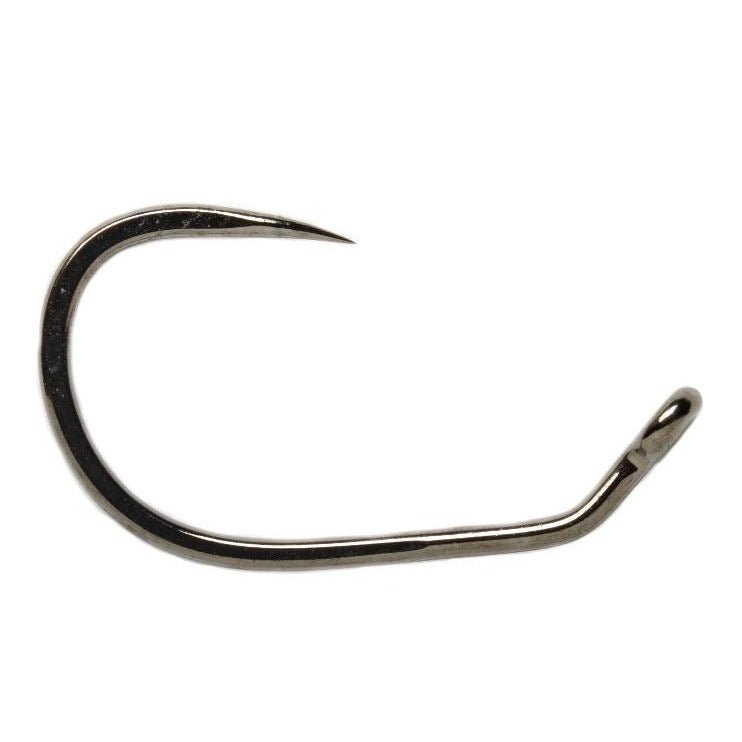
A short-shanked jig hook for compact Euro nymphs, with a wide gape that leaves useful room beneath the dressing. A cracking fit for bead-headed river flies, less so for long-bodied patterns.
- FM-5125 barbless jig hook with a claw point.
- Forged construction with a black nickel finish.
- 2X short shank and 2X wide gape.
- Packs contain 50 hooks; designed for slotted beads within a 2–5.5 mm range, matched to hook size.
Make sure it’s the right one. This is the Jig Force Short Barbless, model FM-5125, with a 2X short shank and 2X wide gape.
Tackle Index Score
Tackle Index score
A focused, well-considered hook shape for compact jig nymphs, with its biggest advantages at the vice rather than any promise of extra fish.
- Product Quality9/10
- Performance9.1/10
- Impact on Fish Catching8.3/10
- Ease of Use8.6/10
- Value for Money8.6/10
If you buy through our links, we might get a small kickback, but it won’t cost you a penny extra. As an Amazon Associate I earn from qualifying purchases. The full story
Who it suits
Is it right for you?
Great for
- Euro nymph anglers tying compact river flies. The short body platform and wide gape suit small-profile jig nymphs with slotted beads.
- Fly tyers filling several rows with a trusted pattern. A 50-pack gives you plenty of hooks for variations in colour, dressing and suitable bead weight.
Maybe skip if
- Tyers making long-bodied nymphs. The 2X short shank leaves less room for extended segmentation and bulky thoraxes.
- Anglers wanting ready-to-fish flies. These are bare hooks; beads and tying materials are separate.
The lowdown
Introducing the Fulling Mill Jig Force Short Barbless Hooks
A short-shanked jig hook for compact Euro nymphs, with a wide gape that leaves useful room beneath the dressing. A cracking fit for bead-headed river flies, less so for long-bodied patterns.
- FM-5125 barbless jig hook with a claw point.
- Forged construction with a black nickel finish.
- 2X short shank and 2X wide gape.
- Packs contain 50 hooks; designed for slotted beads within a 2–5.5 mm range, matched to hook size.
Quick verdict
A tidy foundation for compact jig nymphs
The Jig Force Short makes good sense if you tie compact Euro nymphs and want a useful gape beneath a small body. The short shank, angled eye and slotted-bead compatibility all serve that job rather nicely.
Buy it for that shape, though, not as a do-everything fly hook. Long-bodied patterns need a different starting point, and matching the bead to your chosen hook size still takes a little care.
A focused, well-considered hook shape for compact jig nymphs, with its biggest advantages at the vice rather than any promise of extra fish.
- Product Quality
- 9/10
- Performance
- 9.1/10
- Impact on Fish Catching
- 8.3/10
- Ease of Use
- 8.6/10
- Value for Money
- 8.6/10
Forged construction and a purpose-shaped barbless claw point make a convincing package for its intended tying job.
The short shank, wide gape and angled eye work neatly together for compact slotted-bead jig nymphs.
The shape supports useful fly proportions and presentation, but depth control and a good drift remain far more important.
The barbless design is straightforward, though bead matching and limited tying space require care.
The 50-pack offers useful tying volume for regular users, with less appeal if you're only exploring this hook shape.
Head to head
How it stacks up
Side by side with the closest kit we've reviewed. This updates as we add more reviews.
Fulling Mill
Fulling Mill Jig Force Short Barbless Hooks (this one)
Top scorer
Scores are our own, out of 10. Best in each row is in green. Prices change, so check the latest before you buy.
The full rundown
Everything you'll want to know about the Fulling Mill Jig Force Short Barbless Hooks
If your fly box is filling up with compact jig nymphs, the Fulling Mill Jig Force Short Barbless is aimed squarely at you. This isn't a bait hook with a fancy name, mate. It's a purpose-shaped fly-tying hook for Euro nymph patterns, built around a short shank, a roomy gape and an angled eye. The appeal is simple: a small-looking body doesn't have to mean everything underneath it gets cramped. For river anglers tying their own bead-headed flies, that's a properly useful starting point.
The exact model here is FM-5125, finished in black nickel and supplied in packs of 50. Its headline proportions are a 2X short shank and a 2X wide gape. Those two features belong together. The shorter shank keeps the available body length down, while the wider gape leaves room between the point and the dressed fly. You still need to tie sensibly, of course. Pile on dubbing like you're insulating the loft and you'll undo much of the benefit. Slim and tidy is the better shout.
That shape is particularly handy when you want a compact nymph carrying a slotted bead. You can build a restrained abdomen behind the head without ending up with a long, gangly fly. Think neat thread bodies, a touch of ribbing and a modest collar rather than loads of extra material. There's less shank to work with, so thread control matters from the first turn. Leave your finishing space early and you won't be trying to squeeze a whip finish into a gap that disappeared three stages ago.
The eye sits at 45 degrees and has a horizontal orientation. Paired with a suitable slotted bead, that jig layout helps encourage the finished fly to fish point-up. That's useful when you're working nymphs close to the riverbed, where stones and little bits of woody rubbish are always waiting. Don't read that as snag-proof, though. The bead, dressing, current and tension all influence how the fly travels. A jig hook can help with presentation; it can't rescue every drift that gets dragged through a submerged branch.
Fulling Mill gives a slotted-bead range of 2–5.5 mm for the design, but here's the bit to keep straight: that range isn't universal compatibility for every hook size. A bead needs to suit the particular hook you're tying on, and the slot matters as well as the diameter. Try the pairing before laying out materials for a whole evening's tying. Sizes listed include 18 and 20, so there's scope for small patterns, but don't assume the largest stated bead belongs on either of those.
The hook is forged and uses a barbless claw point. Forging is a useful construction feature, but it isn't an excuse to bully fish on fine tippet or assume a particular breaking strength. Keep the tackle balanced and let the rod cushion sudden lunges. The barbless point makes releasing fish more straightforward, especially with small flies, provided you keep control of the hook during unhooking. While playing a fish, smooth pressure and avoiding slack are sensible habits. No need for wild striking or hauling just because it's a jig pattern.
On the bank, this hook makes most sense as part of a considered selection of nymphs rather than a magic answer to a quiet spell. Tie the same compact body with a few suitable bead weights and you've got options as depth and pace change. A heavier fly may help reach the feeding level in pushier water; a lighter one can be the tidier choice in a shallow glide. Getting the drift right still matters more than admiring the hook shape. That's where your attention wants to be when bites are scarce.
The 50-pack suits anyone who knows this short, wide shape belongs in their tying box. You can build a decent run of favourites without immediately running short. It's less appealing if you're only dabbling, and the abbreviated shank isn't ideal for patterns that genuinely need length. Overall, the attraction is focused rather than flashy: compact bodies, useful gape clearance and a jig layout intended for slotted beads. If that's how you like your river nymphs, it's a sensible hook to have beside the vice.
Specifications
The nuts and bolts
- Model
- FM-5125
- Construction and finish
- Forged; black nickel
- Shank and gape
- 2X short shank; 2X wide gape
- Eye
- 45-degree angle; horizontal orientation
- Point
- Barbless claw point
- Pack quantity
- 50 hooks
Specs checked with Fulling Mill, Oct 2026.
Spot a model or spec change?
Our take
Short body, without squeezing everything underneath
The useful bit is the combination of a 2X short shank and 2X wide gape. You can keep the dressing compact without choosing a hook purely for its overall length.
That gives you options when tying small-looking nymphs with a weighted head. It doesn't make bead weight, dressing bulk or drift control any less important.
Shape and construction
Closer look: a hook built around compact dressings
What you're buying is 50 bare, forged hooks with a black nickel finish and a barbless claw point. Beads aren't included. The defining feature is the relationship between the short shank and wide gape: less length for the body, with useful space underneath. That's the reason to choose this model rather than simply reaching for a smaller conventional nymph hook.
Plan the dressing around that shortened platform. A thin thread base, restrained rib and small collar make better use of it than a bulky abdomen and oversized thorax. Before tying, seat the bead and check how much working shank remains. It's a dead handy habit when switching between bead styles.
Worth knowing. The stated 2–5.5 mm slotted-bead range applies across suitable pairings, not every bead on every hook. Check one assembled hook and bead before committing to a batch.
Your tying box
Who it suits: nymph anglers who like things compact
This is a good match for river fly anglers building a selection of compact Euro nymphs. It makes particular sense if you vary bead weight while keeping body style broadly consistent. That gives you a practical way to adjust depth without changing every part of the fly at once.
It's not the obvious pick for long-bodied stonefly imitations, streamers or patterns whose proportions depend on an extended shank. Nor is it a general-purpose carp or coarse bait hook. Choose it because your fly needs this shape, rather than trying to shoehorn every pattern onto the same hook.
For a regular tyer, 50 hooks is a useful batch. For a beginner still deciding which shapes they like, it's more of a commitment. Start with a straightforward dressing and a checked bead pairing; mastering those proportions is more useful than throwing half the materials drawer at it.
Quick answers
FAQs in full: beads, barbs and patterns
What beads fit? Slotted beads are the intended choice, with a stated range of 2–5.5 mm across suitable hook sizes. Diameter alone doesn't settle the fit: slot dimensions and the hook's bend also matter. Make sure the bead passes into position and seats properly without forcing it.
Are they barbless? Yes, the FM-5125 uses a barbless claw point. There's no need to crush a barb before tying. Check the fishery's remaining rules too, as barbless status doesn't automatically settle restrictions on hook size, weighting or the number of flies.
What should you tie on them? Compact Euro nymph jig flies are the natural fit. Slim thread-bodied patterns and restrained dubbed bodies suit the available shank space. If your chosen recipe needs a long abdomen and several distinct body sections, a longer-shanked hook will save you a fair bit of faff.
On paper
Pros & cons
What we like
- Short shank lends itself to compact Euro nymph bodies.
- Wide gape gives useful clearance beneath a restrained dressing.
- Barbless design makes unhooking more straightforward.
- 50-hook pack suits repeat tying of favourite patterns.
Worth knowing
- Limited shank space for long or heavily segmented bodies.
- Bead size and slot fit need checking against the individual hook size.
- A 50-pack is more commitment than a small trial pack.
Want one?
Add it to your Wanted list or join a Group Buy — shops see anonymous totals only.
Your questions answered
What anglers want to know
The stuff you’d ask your mate on the next peg. Straight answers, no waffle.
01What beads fit the Jig Force Short?
What beads fit the Jig Force Short?
It's designed for slotted beads in the 2–5.5 mm range across appropriate hook sizes. That isn't a promise that every bead in that range fits every hook. Check the bead diameter and slot against your chosen size before tying a batch.
02Are these hooks barbless?
Are these hooks barbless?
Yes. The FM-5125 has a barbless claw point, so there's no barb to flatten. Always check any other hook restrictions on your water.
03What flies are they best for?
What flies are they best for?
Compact Euro nymph jig flies are the main job. Think restrained thread bodies, slim dubbed nymphs and short-bodied bead-head patterns rather than long streamers or extended nymph bodies.
What anglers say
The word from the bank
Our read: a tidy foundation for compact jig nymphs. The strongest reasons to choose it are short shank lends itself to compact euro nymph bodies. and wide gape gives useful clearance beneath a restrained dressing.; the main trade-off is limited shank space for long or heavily segmented bodies..
Our take on the feedback
Why it appeals
Checked Sept '26 — “Short shank lends itself to compact Euro nymph bodies.”
Best fit
Checked Sept '26 — “Euro nymph anglers tying compact river flies: The short body platform and wide gape suit small-profile jig nymphs with slotted beads.”
Worth knowing
Checked Sept '26 — “Limited shank space for long or heavily segmented bodies.”
Tackle Index’s take from the product details and fishing fit we checked. We haven’t found enough independent public feedback to call this an angler consensus yet.
Angler score
What our readers rate Fulling Mill Jig Force Short Barbless Hooks
No angler score yet — nobody's reviewed Fulling Mill Jig Force Short Barbless Hooks here. Be the first and get the score started.
Owner reports
Own this? Help the next angler.
Quick multiple-choice reports from people who say they own the Fulling Mill Jig Force Short Barbless Hooks. Not verified purchases, and kept separate from our score.
No owner reports yet.
Alternatives & go-withs