Photos: Greys · supplied retailer imagery
Fly fishing · Single-handed rods · Our take
Greys Kite Fly Rod
Kite single-handed range; length and line rating vary by model
A four-piece fly rod range with Toreon carbon, tidy fittings and a hard tube included. The trick is choosing a Kite that fits your water—not just grabbing the longest one.
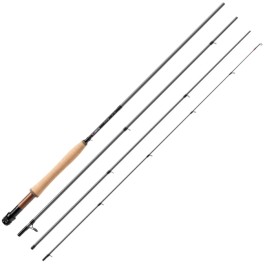
- Four-piece construction with a rod bag and hard tube included.
- High-intermediate-modulus Toreon carbon blank with a high-recovery action.
- AAA-grade cork handle, single-foot snake guides and lined stripper guides.
- Listed models include short 3WT and 4WT options, 9ft 5WT and 6WT options, and 10ft 6WT–8WT options.
Make sure it’s the right one. This covers the single-handed Greys Kite range rather than one specific length and line rating. Reel-seat spacers vary between models.
Tackle Index Score
Tackle Index score
A strong equipment package, with the best fit depending on model choice and line pairing rather than blanket promises about casting distance.
- Product Quality9/10
- Performance8.8/10
- Impact on Fish Catching8/10
- Ease of Use9/10
- Value for Money8.6/10
If you buy through our links, we might get a small kickback, but it won’t cost you a penny extra. As an Amazon Associate I earn from qualifying purchases. The full story
Who it suits
Is it right for you?
Great for
- Trout anglers choosing a rod for a particular water. The range gives you genuinely different length and line-rating options rather than one supposed do-everything setup.
- Anglers who travel with their tackle. Four-piece construction and the included hard tube are dead handy for keeping the rod packed and protected.
Maybe skip if
- Anyone expecting one rod to cover every fly-fishing situation. Small-stream presentation and heavier reservoir work ask very different things of a rod.
- Anglers specifically chasing a deep, leisurely casting feel. The high-recovery design isn’t enough to establish that feel; a comparison cast would be sensible.
The lowdown
Introducing the Greys Kite Fly Rod
A four-piece fly rod range with Toreon carbon, tidy fittings and a hard tube included. The trick is choosing a Kite that fits your water—not just grabbing the longest one.
- Four-piece construction with a rod bag and hard tube included.
- High-intermediate-modulus Toreon carbon blank with a high-recovery action.
- AAA-grade cork handle, single-foot snake guides and lined stripper guides.
- Listed models include short 3WT and 4WT options, 9ft 5WT and 6WT options, and 10ft 6WT–8WT options.
Quick verdict
A well-equipped range with proper practical appeal
The Kite has a convincing kit list: a high-intermediate-modulus Toreon carbon blank, AAA-grade cork, thoughtful reel-seat fittings and a hard tube. It’s a sensible shortlist option if you want a fly rod with useful finishing touches rather than bare-bones hardware.
Choose the model carefully, though. A short 3WT and a 10ft 8WT have very different jobs, and the high-recovery description doesn’t tell you everything about how either bends. Match it to your fishing and fly line first.
A strong equipment package, with the best fit depending on model choice and line pairing rather than blanket promises about casting distance.
- Product Quality
- 9/10
- Performance
- 8.8/10
- Impact on Fish Catching
- 8/10
- Ease of Use
- 9/10
- Value for Money
- 8.6/10
The Toreon carbon blank, AAA-grade cork and detailed reel-seat hardware make a convincing build package.
The high-recovery design offers a sound basis for controlled casting when the model and line are well matched.
Choosing an appropriate model can support presentation and line control, but it won’t replace watercraft or fly selection.
Alignment dots, section identification and practical reel-seat fittings reduce everyday setup faff.
The included bag and hard tube strengthen the package, although the asking price still needs comparing with equivalent outfits.
Head to head
How it stacks up
Side by side with the closest kit we've reviewed. This updates as we add more reviews.

Top scorer
Scores are our own, out of 10. Best in each row is in green. Prices change, so check the latest before you buy.
The full rundown
Everything you'll want to know about the Greys Kite Fly Rod
The Greys Kite is a fly rod range that makes most sense when you start with the fishing, not the shopping. What water are you on? How much room have you got behind you? Are you presenting little dries or shifting a bigger trout fly into a breeze? Those questions matter here because the Kite stretches from short, light-line models to longer rods carrying substantially heavier lines. Same family, very different jobs. Pick the right one and the rest of the package looks nicely thought through.
At its heart is a high-intermediate-modulus Toreon carbon blank, described as having a high-recovery action. Strip away the technical wording and recovery is about how promptly the blank settles after it’s been flexed. That matters to controlled casting, but it isn’t a magic distance button, mate. You still need a sensible stroke, a well-timed stop and a line that suits the rod. Nor does that description, by itself, tell you precisely where each model bends or how demanding it will feel.
The shorter listed options include a 6ft 3WT and an 8ft 4WT. Those are the sort of choices you’d consider for smaller water, lighter flies and places where a long rod becomes a branch-catching device. Lovely when the swim—sorry, pool—is tucked beneath overhanging trees. There’s a trade-off, though: reducing length also reduces reach for steering line around awkward currents. Don’t automatically buy the shortest rod because your river is narrow. Think about bankside cover, wading access and the casts you actually use.
For more general trout fishing, the listed 9ft 5WT and 6WT models are sensible places to start looking. A 5WT is a familiar all-round trout choice, while a 6WT can make sense when your usual flies and conditions call for a heavier line. That’s guidance on choosing tackle, not a claim that either Kite will do every job. The taper and head length of your fly line matter too. Two lines carrying the same nominal rating can load and handle differently, so the number isn’t the whole story.
Then there are the listed 10ft 6WT, 7WT and 8WT options. Extra length can be useful for managing line, fishing from a boat and keeping more line clear of awkward near-bank water. Heavier line ratings also open the door to setups better suited to larger flies and exposed conditions. But bigger isn’t automatically better. If most of your fishing is close-range dry-fly work, buying extra rod just in case can leave you with a setup that doesn’t fit the job you do most often.
The fittings deserve a look because they’re the bits you deal with all day. You get AAA-grade cork, single-foot snake guides and lined stripper guides. The alloy reel seat has wood or alloy spacers depending on the model, so don’t assume every pictured Kite has identical trim. More practically, there are dual locking nuts, a nylon cushion ring and a keyed slide band. That’s a useful set of details around securing the reel, where movement and repeated fiddling can become proper annoying once you’re fishing.
Assembly and transport have had some attention as well. Each rod is four-piece, with model identification and alignment dots on the sections. The dots are dead handy when you’re putting everything together without wanting to squint down the guides for ages. They don’t replace seating the joints properly, though, and it’s sensible to check those joints periodically during a session. A rod bag and hard tube are included, which makes packing for the car or a trip away less of a separate shopping exercise.
The Kite’s appeal, then, is the complete package rather than one flashy claim. You’ve got a clearly described carbon blank, useful hardware and proper transport protection, with enough model choice to target quite different waters. The buying decision still comes back to matching it with your line, flies and casting preferences. If you can compare the exact model with your usual line, brilliant. Otherwise, be honest about where you fish most often. A rod chosen for your everyday water is usually a better bet than one bought for an imaginary monster session.
Specifications
The nuts and bolts
- Construction
- Four-piece
- Blank and action
- High-intermediate-modulus Toreon carbon; high-recovery action
- Handle
- AAA-grade cork
- Guides
- Single-foot snake guides and lined stripper guides
- Reel seat
- Alloy seat; model-dependent wood or alloy spacers; dual locking nuts, nylon cushion ring and keyed slide band
- Included
- Rod bag and hard tube
Specs checked with Greys, Oct 2026.
Spot a model or spec change?
Our take
Buy it for your water, not the biggest number
The Kite range covers very different fishing situations. Short, lighter-line models make sense around confined streams; longer, heavier-line options point towards open-water trout work.
Those distinctions matter more than the badge. Get the length and line rating right and the alignment dots, secure reel seat and protective tube become handy bonuses.
Build and fittings
Useful touches beyond the carbon blank
The Toreon blank is the headline feature, but the everyday hardware gives the Kite much of its practical appeal. AAA-grade cork is a welcome handle detail, while the guide arrangement combines single-foot snake guides with lined strippers. There’s no need to turn that into promises of effortless distance: casting control still comes from the whole outfit and the person holding it.
The keyed reel-seat slide band helps keep the moving part correctly oriented, and the dual nuts give you a means of locking the reel in place. Tighten them sensibly rather than giving everything a heroic wrench. Section identification is another small but useful touch, particularly if you own more than one rod and have several sections laid out.
Worth knowing. Reel-seat spacers vary by model. Check the exact length and line rating you’re buying rather than relying on a range photograph. Once home, dry the rod and bag before putting them back in the tube.
Choosing your outfit
Match the Kite to the water you actually fish
For stream anglers, the decision is about more than squeezing beneath trees. A short rod can be convenient in tight cover, but extra reach helps with mending and keeping unwanted line off conflicting currents. Consider how you approach a pool and whether you fish from the bank or wade before settling on length.
Stillwater trout anglers should start with fly size, line choice and exposure. A 9ft 5WT or 6WT is a useful general starting point; the 10ft options are candidates when reach and heavier-line work take priority. Don’t confuse line rating with the size of fish a rod is guaranteed to handle. Tippet, hook hold and sensible pressure all matter when a decent trout kicks off.
Beginners needn’t rule it out, but buying a well-matched outfit is more useful than chasing a particular carbon label. Put some thought into the fly line and leave room in the budget for tuition if you can. A little help with timing will do more for your casting than expecting the blank to sort every dodgy back cast.
Before you buy
Three things to get straight
Which model should you choose? Begin with the fishing you do most, then narrow down length and line rating. Small-stream anglers can consider the short 3WT and 4WT options; general trout anglers can start with the 9ft 5WT and 6WT. The listed 10ft 6WT, 7WT and 8WT models provide longer, heavier-line alternatives. None of those suggestions replaces checking your preferred flies and line setup.
Is a tube included? Yes, along with a rod bag. Four-piece construction makes the rod easier to transport than an equivalent one-piece rod, but a hard tube isn’t permission to chuck heavy kit on top of it. Keep the sections clean, avoid trapping grit in the joints and store everything dry.
Is high recovery the same as fast action? No. A blank’s recovery and its bending profile are related aspects of its behaviour, not the same description. Line choice and how much line you carry also change the casting feel. If you’re particular about a soft presentation rod or a firm distance tool, compare the exact model rather than buying on that phrase alone.
On paper
Pros & cons
What we like
- Broad choice of lengths and line ratings for different fly-fishing jobs.
- Four-piece format and included hard tube make transport straightforward.
- Alignment dots take some faff out of assembly.
- Dual locking nuts and a nylon cushion ring are useful reel-seat details.
Worth knowing
- No single model covers everything from tiny streams to exposed reservoirs.
- High-recovery wording alone won’t tell you whether the casting feel suits you.
- Four sections mean three joints to seat properly and check during a session.
Want one?
Add it to your Wanted list or join a Group Buy — shops see anonymous totals only.
Your questions answered
What anglers want to know
The stuff you’d ask your mate on the next peg. Straight answers, no waffle.
01Which Greys Kite model should I choose?
Which Greys Kite model should I choose?
Start with your water and flies. Short 3WT or 4WT options are candidates for smaller streams; a 9ft 5WT or 6WT is a sensible starting point for general trout fishing. The listed 10ft 6WT–8WT models lean towards longer-reach and heavier-line work.
02Does the Kite come with a protective tube?
Does the Kite come with a protective tube?
Yes. It comes with a rod bag and hard tube, and breaks down into four sections. Let the rod and bag dry before storing them away.
03Does high recovery mean a stiff, fast-action rod?
Does high recovery mean a stiff, fast-action rod?
Not necessarily. Recovery describes how readily the blank settles after being flexed; action describes where and how it bends. Don’t treat those as interchangeable, or assume every Kite model feels identical.
What anglers say
The word from the bank
Our read: a well-equipped range with proper practical appeal. The strongest reasons to choose it are broad choice of lengths and line ratings for different fly-fishing jobs. and four-piece format and included hard tube make transport straightforward.; the main trade-off is no single model covers everything from tiny streams to exposed reservoirs..
Our take on the feedback
Why it appeals
Checked Sept '26 — “Broad choice of lengths and line ratings for different fly-fishing jobs.”
Best fit
Checked Sept '26 — “Trout anglers choosing a rod for a particular water: The range gives you genuinely different length and line-rating options rather than one supposed do-everything setup.”
Worth knowing
Checked Sept '26 — “No single model covers everything from tiny streams to exposed reservoirs.”
Tackle Index’s take from the product details and fishing fit we checked. We haven’t found enough independent public feedback to call this an angler consensus yet.
Angler score
What our readers rate Greys Kite Fly Rod
No angler score yet — nobody's reviewed Greys Kite Fly Rod here. Be the first and get the score started.
Owner reports
Own this? Help the next angler.
Quick multiple-choice reports from people who say they own the Greys Kite Fly Rod. Not verified purchases, and kept separate from our score.
No owner reports yet.
Alternatives & go-withs