Photos: Guru · supplied retailer imagery
Coarse & match · Feeder rods · Our take
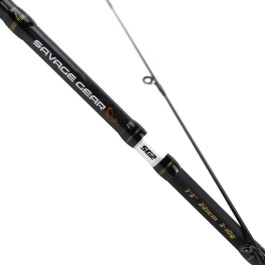
Guru A-Class Feeder Rod
Range overview: 11ft Light, 12ft Medium and 13ft Heavy Feeder
Three feeder options with progressive power and sensible fittings. The trick is matching the A-Class to your usual swim, rather than buying more rod than you need.
- 24T tensile carbon blanks with a progressive-power action.
- Stainless-steel guide frames with titanium-oxide rings.
- Down-locking DPS-style reel seat and cork handle with ergonomic EVA rear grip.
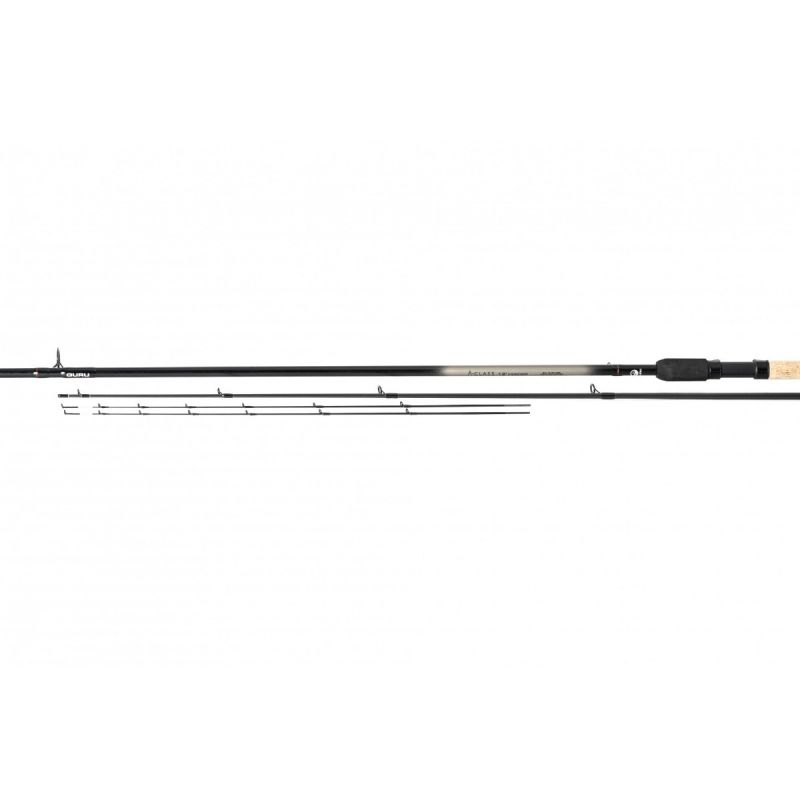
- Three-section 11ft Light, 12ft Medium and 13ft Heavy models, each supplied with two tips.
Make sure it’s the right one. Casting weights, line ratings, rod weights and supplied tips below are kept separate for each model.
Tackle Index Score
Tackle Index score
A balanced feeder range with practical fittings and useful model choices; these scores reflect its design and intended role, with value dependent on the asking price.
- Product Quality8.8/10
- Performance8.8/10
- Impact on Fish Catching8/10
- Ease of Use9/10
- Value for Money8.6/10
If you buy through our links, we might get a small kickback, but it won’t cost you a penny extra. As an Amazon Associate I earn from qualifying purchases. The full story
Who it suits
Is it right for you?
Great for
- Coarse anglers buying for a regular venue. The three versions let you match rod length and casting allowance to the swims and feeders you normally fish.
- Club-match anglers building a feeder setup. Progressive power, practical fittings and two tips per rod make a sensible starting package without unnecessary complication.
Maybe skip if
- Anglers wanting one rod for every feeder job. The difference between light close-in fishing and heavier open-water work still calls for a compromise.
- Heavy-river and extreme-distance specialists. Even the 13ft Heavy has a 90g casting ceiling; a heavily loaded feeder can require a more powerful tool.
The lowdown
Introducing the Guru A-Class Feeder Rod
Three feeder options with progressive power and sensible fittings. The trick is matching the A-Class to your usual swim, rather than buying more rod than you need.
- 24T tensile carbon blanks with a progressive-power action.
- Stainless-steel guide frames with titanium-oxide rings.
- Down-locking DPS-style reel seat and cork handle with ergonomic EVA rear grip.
- Three-section 11ft Light, 12ft Medium and 13ft Heavy models, each supplied with two tips.
Quick verdict
A sensible feeder range with clear jobs to do
The Guru A-Class Feeder makes sense if you want a straightforward coarse-fishing rod with progressive power, familiar fittings and a choice of lengths. The 11ft favours lighter work, the 12ft covers broader duties and the 13ft brings extra reach and casting allowance.
Buy for the fishing you actually do, mate. The Heavy isn't automatically the best option, and the Light isn't a dedicated tool for every commercial-carp situation. Match the rod to your loaded feeder, distance and swim, and this is a tidy shortlist.
A balanced feeder range with practical fittings and useful model choices; these scores reflect its design and intended role, with value dependent on the asking price.
- Product Quality
- 8.8/10
- Performance
- 8.8/10
- Impact on Fish Catching
- 8/10
- Ease of Use
- 9/10
- Value for Money
- 8.6/10
The carbon blank, stainless-steel guide frames and cork-and-EVA handle make a sensible build package.
Progressive power and three distinct casting ranges give the design useful scope when matched to the right job.
A suitable rod and tip support presentation and bite reading, but feeding and accuracy still matter more.
Clear model ratings, familiar fittings and two supplied tips keep the setup straightforward.
The practical feature set and included tips make a credible value case if the asking price is competitive.
Head to head
How it stacks up
Side by side with the closest kit we've reviewed. This updates as we add more reviews.
Guru
Guru A-Class Feeder Rod (this one)

Top scorer
Scores are our own, out of 10. Best in each row is in green. Prices change, so check the latest before you buy.
The full rundown
Everything you'll want to know about the Guru A-Class Feeder Rod
Buying a feeder rod gets a lot easier when you stop asking which one is most powerful and start asking where you'll actually fish it. That's the useful way into the Guru A-Class Feeder range. You've got an 11ft Light, a 12ft Medium and a 13ft Heavy, rather than one supposedly magic rod for every peg. For coarse and match fishing, that distinction matters. A little feeder dropped onto a nearby spot asks something quite different from a loaded cage sent across open water.
The common starting point is a 24T tensile carbon blank with a progressive-power action. In plain bank talk, the idea is that more of the blank comes into play as the load builds, rather than everything happening at the tip. That's a sensible approach for a feeder rod, where casting and playing fish both matter. You want enough support to send the rig out, but you also need some give when a fish changes direction near the net. Power alone doesn't make a balanced setup.
The 11ft Light is the one to look at first for lighter feeder work and swims where extra rod length would just become a faff. It's rated for 1–50g casting weights and 3–10lb line, weighs 195g and comes with 1oz and 1.5oz tips. Think modest feeders, manageable distances and a setup that isn't unnecessarily long for the peg. That doesn't mean every short-range job belongs to the Light, though. A chunky loaded Method feeder can still ask more of a rod than the distance suggests.
Step up to the 12ft Medium and you get a 1–70g casting rating, a 4–10lb line rating and a stated rod weight of 210g. Its supplied tips are 1.5oz and 2oz. This is the logical middle option if your fishing changes between venues and you want a starting point for mixed feeder duties. The extra length can help with line management and casting, provided you've got room to use it. Don't read 'Medium' as a promise that it'll cover absolutely everything; there's still a ceiling on the load.
The 13ft Heavy gives you the longest blank here, a 1–90g casting rating and a 4–12lb line rating. It weighs 245g and includes 2oz and 3oz tips. That's the version to consider when more reach and a higher casting allowance have a proper job to do. Bigger open swims spring to mind, rather than a tight little peg beneath overhanging branches. Equally, 'Heavy' is a name within this range, not permission to launch any river feeder you fancy. Loaded weight still needs checking before you give it some welly.
Across the range, the fittings are straightforward: stainless-steel guide frames with titanium-oxide rings, a down-locking DPS-style reel seat, and cork with an ergonomic EVA rear grip. No need to turn that into a grand story. These are familiar features with clear practical jobs: guide the line, secure the reel and give your hands somewhere sensible to work. All three models have three sections, too. When assembling one, line the guides up carefully and check the joints are properly seated before the first cast.
Tip choice deserves a bit more thought than simply fitting the lightest one in the bag. You need a tip that settles under the pull of your feeder setup and the conditions, without being dragged right over by flow or tow. Those ounce ratings describe the tips, not what the whole rod can cast. Likewise, remember to count the bait in your feeder when choosing a model. Pellets or groundbait can make a meaningful difference, especially if you're already close to the blank's stated casting limit.
The appeal, then, is a clearly divided feeder range without much mystery about what you're buying. For a regular club match or a relaxed day chasing skimmers, bream and carp, start with the weight you cast most often, then consider distance, space and line control. Once you're clipped up, a consistent cast and a tidy feeding rhythm matter more than owning the longest rod on the lake. Get the A-Class version that fits that routine, mate, rather than the one with the biggest number on it.
Specifications
The nuts and bolts
- Blank and action
- 24T tensile carbon; progressive-power action.
- Guides
- Stainless-steel frames with titanium-oxide rings.
- Handle and reel seat
- Cork handle with ergonomic EVA rear grip; down-locking DPS-style reel seat.
- 11ft Light Feeder
- Three sections; 195g; 1–50g casting weight; 3–10lb line rating; supplied with 1oz and 1.5oz tips.
- 12ft Medium Feeder
- Three sections; 210g; 1–70g casting weight; 4–10lb line rating; supplied with 1.5oz and 2oz tips.
- 13ft Heavy Feeder
- Three sections; 245g; 1–90g casting weight; 4–12lb line rating; supplied with 2oz and 3oz tips.
Specs checked with Guru, Oct 2026.
Spot a model or spec change?
Our take
The right model beats spare power
Most of the buying decision sits between those three lengths and casting ratings. A manageable rod that suits your regular spot is more useful than extra capacity you rarely call on.
Remember that groundbait and pellets count towards the cast load. A feeder's stamped weight isn't necessarily what you're asking the blank to send out.
Build and setup
Closer look: straightforward kit, with useful choices
The progressive-power blank is the central feature here. It gives the range a sensible design direction for feeder work, where the rod needs to support a cast and then cushion a hooked fish. It doesn't replace a properly set clutch or a balanced hooklength, though. Keep the whole outfit working together rather than asking the blank to rescue heavy-handed fish playing.
The cork-and-EVA handle and down-locking reel seat keep the layout familiar. Check your chosen reel sits securely before heading out, and keep grit away from the seat threads and section joints. The guide rings deserve a quick look now and again too, especially after a knock against a platform or rod rest.
Worth knowing. A 2oz quivertip doesn't mean a 2oz casting allowance. Use the rod's stated casting range for the total loaded feeder, then choose the tip to suit the conditions and bite indication.
Match it to your peg
Who it suits: anglers buying for a real job
If most of your fishing is lighter work at manageable range, the 11ft deserves a look before you automatically reach for the 12ft. Shorter length can be dead handy on a restricted peg. For mixed venues and a broader spread of feeder weights, the 12ft Medium is the natural comparison point, not a guaranteed one-rod answer.
The 13ft is more relevant when extra length helps your line management or you've genuinely got heavier casting duties. It's less appealing when branches limit the backswing. For powerful flows requiring feeders beyond its loaded casting allowance, move to a rod built for that job rather than pushing this one past its rating.
Before you buy
FAQs in full: length, tips and Method feeders
Which length should you buy? Start with your usual fully loaded feeder, then think about range and the space around your peg. The 11ft, 12ft and 13ft models top out at 50g, 70g and 90g respectively. Extra length can help, but it isn't a shortcut to accurate distance casting; a repeatable action and a balanced outfit still do the graft.
What tips are included? You get 1oz and 1.5oz with the Light, 1.5oz and 2oz with the Medium, and 2oz and 3oz with the Heavy. That's two choices per rod. If you're buying extras, confirm compatibility with the exact A-Class model rather than assuming another Guru tip will fit.
Is Method feeder fishing on the cards? Yes, with a suitable model and a sensible total cast load. Choose around feeder weight and the demands of the swim, not just the size of carp you hope will turn up. Fish a venue-approved rig that can release the feeder if the mainline breaks, and let the clutch give line when a fish surges under the tip.
On paper
Pros & cons
What we like
- Three clearly separated options for different feeder jobs.
- Progressive power offers a sensible balance between cushioning and control.
- Two supplied tips give you a useful starting choice for conditions.
- Cork and EVA handle layout keeps things familiar and practical.
Worth knowing
- Only two tips supplied per model; a wider selection may mean an extra purchase.
- No single version neatly covers delicate short-range work and heavier distance fishing.
- The 13ft model's extra length can be awkward under trees or on cramped pegs.
Want one?
Add it to your Wanted list or join a Group Buy — shops see anonymous totals only.
Your questions answered
What anglers want to know
The stuff you’d ask your mate on the next peg. Straight answers, no waffle.
01Which A-Class Feeder length should I choose?
Which A-Class Feeder length should I choose?
Look at the 11ft Light for lighter, shorter-range work, the 12ft Medium for mixed feeder duties and the 13ft Heavy when extra reach and casting allowance matter. Your loaded feeder weight and available casting space should lead the decision.
02Which quivertips come with each rod?
Which quivertips come with each rod?
The 11ft Light includes 1oz and 1.5oz tips, the 12ft Medium includes 1.5oz and 2oz tips, and the 13ft Heavy includes 2oz and 3oz tips. Those tip ratings aren't casting weights.
03Can I use it for Method feeder fishing?
Can I use it for Method feeder fishing?
Yes, provided the chosen model suits the fully loaded feeder and the swim. Keep the total cast load within the rod's rating, balance your line and hooklength, and follow any venue rules on rigs.
What anglers say
The word from the bank
Our read: a sensible feeder range with clear jobs to do. The strongest reasons to choose it are three clearly separated options for different feeder jobs. and progressive power offers a sensible balance between cushioning and control.; the main trade-off is only two tips supplied per model; a wider selection may mean an extra purchase..
Our take on the feedback
Why it appeals
Checked Sept '26 — “Three clearly separated options for different feeder jobs.”
Best fit
Checked Sept '26 — “Coarse anglers buying for a regular venue: The three versions let you match rod length and casting allowance to the swims and feeders you normally fish.”
Worth knowing
Checked Sept '26 — “Only two tips supplied per model; a wider selection may mean an extra purchase.”
Tackle Index’s take from the product details and fishing fit we checked. We haven’t found enough independent public feedback to call this an angler consensus yet.
Angler score
What our readers rate Guru A-Class Feeder Rod
No angler score yet — nobody's reviewed Guru A-Class Feeder Rod here. Be the first and get the score started.
Owner reports
Own this? Help the next angler.
Quick multiple-choice reports from people who say they own the Guru A-Class Feeder Rod. Not verified purchases, and kept separate from our score.
No owner reports yet.
Alternatives & go-withs