Photos: Snowbee · supplied retailer imagery
Fly fishing · Double-handed rods · Our take
Snowbee Spectre Fly Rod
13ft #8/9 and 14ft #9/10 double-handed models
The Spectre double-handers pair a powerful progressive action with a travel-friendly six-piece build. Pick between the 13ft #8/9 and 14ft #9/10 to suit your river, rather than simply buying the bigger stick.
- 13ft double-hander: #8/9 line rating, weighing 236g / 8.3oz.
- 14ft double-hander: #9/10 line rating, weighing 273g / 9.6oz.
- Both models use six-piece Tri-Modulus carbon blanks.
- Portuguese cork handles and a powerful progressive Spey action.
Make sure it’s the right one. This review covers the two six-piece Spectre double-handed Spey rods, not other rods carrying the Spectre name.
Tackle Index Score
Tackle Index score
A promising, purpose-built Spey option with a useful travel angle; value depends on the asking price and getting the right model and line pairing.
- Product Quality8.8/10
- Performance8.8/10
- Impact on Fish Catching7.9/10
- Ease of Use8.3/10
- Value for Money8.3/10
If you buy through our links, we might get a small kickback, but it won’t cost you a penny extra. As an Amazon Associate I earn from qualifying purchases. The full story
Who it suits
Is it right for you?
Great for
- Salmon anglers travelling to different rivers. Six-piece construction makes these long rods less awkward to transport between trips.
- Fly anglers choosing a dedicated double-hander. The two lengths and ratings offer a sensible choice based on river size, line management and preferred tackle.
Maybe skip if
- Small-stream trout anglers. The length and line ratings are a poor match for close, delicate work in tight little swims.
- Anglers who want minimal assembly. Six sections mean more joints to line up and keep an eye on than a rod with fewer sections.
The lowdown
Introducing the Snowbee Spectre Fly Rod
The Spectre double-handers pair a powerful progressive action with a travel-friendly six-piece build. Pick between the 13ft #8/9 and 14ft #9/10 to suit your river, rather than simply buying the bigger stick.
- 13ft double-hander: #8/9 line rating, weighing 236g / 8.3oz.
- 14ft double-hander: #9/10 line rating, weighing 273g / 9.6oz.
- Both models use six-piece Tri-Modulus carbon blanks.
- Portuguese cork handles and a powerful progressive Spey action.
Quick verdict
A sensible shout for travelling salmon anglers
The Spectre double-handers make a strong case if you want a proper Spey rod without an awkwardly long bundle to transport. Six-piece blanks, Portuguese cork handles and a powerful progressive action give these models a clear job.
Choose the 13ft #8/9 for the shorter, lighter option, or the 14ft #9/10 when extra reach fits your fishing. Just get the line pairing right: the printed rating isn't a complete shopping list for every shooting-head system.
A promising, purpose-built Spey option with a useful travel angle; value depends on the asking price and getting the right model and line pairing.
- Product Quality
- 8.8/10
- Performance
- 8.8/10
- Impact on Fish Catching
- 7.9/10
- Ease of Use
- 8.3/10
- Value for Money
- 8.3/10
Tri-Modulus carbon blanks and Portuguese cork handles make a credible material package for a dedicated double-hander.
The powerful progressive-action design is well suited to Spey work when paired with an appropriate line system.
Suitable reach and line control can help presentation, but reading the water and controlling the swing remain crucial.
Six-piece portability is handy, although extra joints and careful line matching add some preparation.
The travel-friendly build adds useful versatility for regular river trips, though the asking price should guide your final comparison.
Head to head
How it stacks up
Side by side with the closest kit we've reviewed. This updates as we add more reviews.
Snowbee
Snowbee Spectre Fly Rod (this one)

Top scorer
Scores are our own, out of 10. Best in each row is in green. Prices change, so check the latest before you buy.
The full rundown
Everything you'll want to know about the Snowbee Spectre Fly Rod
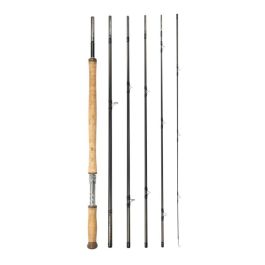
The Snowbee Spectre covered here is a proper double-handed fly rod, so forget carp leads and feeder work for a moment. This is about working a fly across moving water, managing the swing and putting a controlled Spey cast into the next likely bit of a pool. There are two models in focus: a 13ft #8/9 and a 14ft #9/10. Both break into six pieces, which is the detail that'll catch your eye if getting to the river involves more than chucking tackle in the boot.
That six-piece build gives the Spectre a clear practical appeal. Long salmon rods can be a right faff to transport, particularly when you're juggling luggage, waders and everything else for a few days away. Splitting the blank into more sections makes the individual pieces shorter than an equivalent rod built in fewer sections. It doesn't automatically mean it'll fit your airline's cabin allowance, mind. Check the actual packed dimensions before booking anything, rather than having an expensive argument at the gate with a rod bag under your arm.
The 13ft model carries a #8/9 line rating and weighs 236g. It's the shorter and lighter of these two options, which makes it the sensible starting point if you don't need the extra reach of a 14-footer. Think about the pools you actually fish, not the enormous river you might visit one day. If most of your fishing happens at manageable distances, buying extra length just because it looks more serious can leave you handling more rod than the job really calls for.
Step up to the 14ft version and you're looking at a #9/10 rating and a weight of 273g. That extra foot can be useful when you're managing line over moving water, lifting line clear of awkward currents or controlling a swing farther out. It's not a magic distance button, though. Good timing, a tidy anchor and a suitable line still do the heavy lifting. The longer model makes most sense when the water and your approach genuinely benefit from the additional reach, rather than simply because bigger sounds better.
Snowbee describes these as powerful progressive-action Spey rods, built with Tri-Modulus carbon blanks. The useful part for your fishing is the progressive-action brief: the rod is intended to bring more of its bend into play as load builds. That's a sensible foundation for controlled two-handed casting, where smoothly applied power matters far more than a last-second wallop. Don't read the carbon name as a promise that every line will feel spot on, either. Your head length, casting style and chosen tips all affect how the outfit behaves.
Line choice deserves a proper conversation before you part with your quid. A #8/9 or #9/10 marking tells you the rod's stated line class, but it doesn't give you one guaranteed shooting-head weight for every setup. Different head styles load a rod differently, and tips complicate the picture further. Ask for a recommendation for the exact model and system you want to fish. That's especially useful if you're moving into double-handed fishing from a single-hander and all the talk of heads, bodies and tips sounds like a tackle-shop riddle.
Both models have Portuguese cork handles, a familiar and welcome choice for a fly rod. More importantly, think about the whole outfit in your hands rather than judging comfort from the bare rod weight alone. Reel weight and balance matter when you're casting repeatedly through a long pool. With six sections, there's also a small setup routine to get right: assemble everything carefully, align the rings and check the joints during the day. A quick check between pools is much less bother than carrying on with a joint that's worked loose.
So, who should have the Spectre on their shortlist? Primarily salmon anglers wanting a dedicated double-hander that's easier to transport, with a choice between two useful lengths. It isn't the answer for little brook trout, delicate dry-fly work under branches or someone after one rod for every fishing job going. Its appeal is much more focused than that. Match the model to your river, sort a suitable line and keep the connections tidy. That's a far better route to a balanced outfit than chasing length or line rating for the sake of it.
Specifications
The nuts and bolts
- 13ft model
- 13ft; #8/9; 236g / 8.3oz; SKU 735-10022
- 14ft model
- 14ft; #9/10; 273g / 9.6oz; SKU 735-10023
- Blank layout
- Six pieces on both double-handed models
- Blank construction
- Tri-Modulus carbon
- Handle material
- Portuguese cork
- Action and purpose
- Powerful progressive-action Spey rods
Specs checked with Snowbee, Oct 2026.
Spot a model or spec change?
Our take
Buy for the river, not bragging rights
The extra foot on the 14ft model can help with line management, but it also brings more rod to handle. Bigger isn't automatically better when your usual pools are fairly modest.
The six-piece layout is the standout practical feature. It's dead handy for travelling, provided you're happy to spend a little longer aligning sections and checking the joints.
The build
Closer look: long rods, shorter sections
Both Spectre double-handers combine six-piece Tri-Modulus carbon blanks with Portuguese cork handles. Their powerful progressive-action brief puts them firmly in dedicated Spey territory. The six-piece layout is particularly useful if a conventional long rod bundle makes your travel arrangements awkward.
The 13ft #8/9 weighs 236g, while the 14ft #9/10 weighs 273g. Those are bare rod weights, not a measure of how a complete outfit will balance. Pairing the reel and line sensibly matters more than getting fixated on a few grams before you've considered the job.
Worth knowing. Six-piece doesn't automatically mean cabin-bag friendly. Check packed dimensions and your carrier's rules. On the river, keep the joints clean, seat them correctly and check them periodically during casting.
Picking your model
Who it suits: buy for your usual pools
The travelling salmon angler is the clearest fit. You get a dedicated double-handed layout without such long individual sections to carry. If you regularly move between rivers, that practical benefit could matter more than another fancy-sounding blank label.
Start with the 13ft #8/9 if shorter length and lower rod weight suit your fishing. Consider the 14ft #9/10 if larger water and line control call for extra reach. Neither choice replaces lessons or practice: a relaxed casting stroke and consistent anchor placement are still your best mates.
For small streams, close dry-fly fishing or general stillwater trout work, look towards a suitable single-handed rod instead. These Spectres have a specific purpose, and trying to make one do everything is likely to turn a pleasant session into unnecessary faff.
Before you buy
FAQs in full: length, lines and luggage
Which length should you buy? Choose around your regular water, not just maximum casting ambition. The 13ft model is shorter and lighter; the 14ft gives extra reach. River width, your wading position and the currents between you and the fly all influence how useful that extra length will be.
Which shooting head fits? Get advice for the exact rod and head system. A traditional Spey line, a Scandi-style head and a Skagit-style setup aren't interchangeable simply because a label mentions a similar line class. Include your intended tips in that conversation so you're buying a matched outfit.
Are both models six-piece? Yes, and that's a genuine transport advantage over equivalent-length rods with fewer sections. Just don't confuse section count with a confirmed packed length. If you're squeezing tackle into a particular case, check the packed measurements before committing.
On paper
Pros & cons
What we like
- Six-piece construction makes a long double-hander easier to transport.
- Two lengths let you match the rod more sensibly to your water.
- Progressive action is a useful fit for controlled, two-handed casting.
- Portuguese cork handles are a welcome traditional touch.
Worth knowing
- More section joints to assemble, align and check.
- No universal shooting-head weight can be chosen from the line rating alone.
- These long double-handers are excessive for most small-stream trout fishing.
Want one?
Add it to your Wanted list or join a Group Buy — shops see anonymous totals only.
Your questions answered
What anglers want to know
The stuff you’d ask your mate on the next peg. Straight answers, no waffle.
01Which should I choose: the 13ft or 14ft Spectre?
Which should I choose: the 13ft or 14ft Spectre?
The 13ft #8/9 is the shorter, lighter option. The 14ft #9/10 gives more reach for line management on larger water. Match the choice to your usual river and line system rather than assuming the longer rod is better.
02What shooting-head weight does it need?
What shooting-head weight does it need?
Don't choose a precise grain or gram weight from the #8/9 or #9/10 marking alone. Ask Snowbee or a knowledgeable fly shop for a match to the exact model, head style and tips you plan to use.
03Are both double-handed models six-piece rods?
Are both double-handed models six-piece rods?
Yes. Both the 13ft #8/9 and 14ft #9/10 have six-piece blanks. That helps with transport, though exact packed dimensions should be checked separately if luggage space is tight.
What anglers say
The word from the bank
Our read: a sensible shout for travelling salmon anglers. The strongest reasons to choose it are six-piece construction makes a long double-hander easier to transport. and two lengths let you match the rod more sensibly to your water.; the main trade-off is more section joints to assemble, align and check..
Our take on the feedback
Why it appeals
Checked Sept '26 — “Six-piece construction makes a long double-hander easier to transport.”
Best fit
Checked Sept '26 — “Salmon anglers travelling to different rivers: Six-piece construction makes these long rods less awkward to transport between trips.”
Worth knowing
Checked Sept '26 — “More section joints to assemble, align and check.”
Tackle Index’s take from the product details and fishing fit we checked. We haven’t found enough independent public feedback to call this an angler consensus yet.
Angler score
What our readers rate Snowbee Spectre Fly Rod
No angler score yet — nobody's reviewed Snowbee Spectre Fly Rod here. Be the first and get the score started.
Owner reports
Own this? Help the next angler.
Quick multiple-choice reports from people who say they own the Snowbee Spectre Fly Rod. Not verified purchases, and kept separate from our score.
No owner reports yet.
Alternatives & go-withs