Photos: Westin · supplied retailer imagery
Predator rods · Finesse lure fishing · Our take
Westin W3 Finesse T&C 2nd Generation Rod
Medium-light 5–15g and medium 7–21g
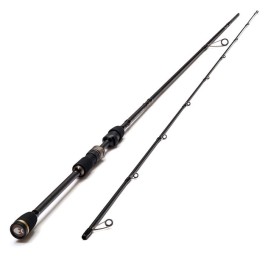
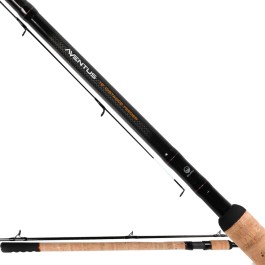
A two-piece predator rod aimed at controlled soft-plastic work, with medium-light and medium options to match the rigs you actually chuck.
- Two-section construction.
- Medium-light casting range: 5–15g.
- Medium casting range: 7–21g.
- Torayca High Performance Carbon blank with 1K woven carbon reinforcement.
Make sure it’s the right one. Covers the listed W360-0712-ML-OEM and W360-0712-M-OEM versions. The length is advertised as 7ft1 / 2.13m, although those measurements aren't exact equivalents.
Tackle Index Score
Tackle Index score
A focused finesse option with useful version choices; its strongest case is matching a defined lure-fishing job rather than covering every predator tactic.
- Product Quality8.8/10
- Performance8.7/10
- Impact on Fish Catching8.1/10
- Ease of Use8.9/10
- Value for Money8.5/10
If you buy through our links, we might get a small kickback, but it won’t cost you a penny extra. As an Amazon Associate I earn from qualifying purchases. The full story
Who it suits
Is it right for you?
Great for
- Perch anglers fishing Texas and Carolina rigs. The two casting ranges let you match the rod to lighter or slightly heavier complete presentations.
- Roving lure anglers. The roughly seven-foot format and two-piece construction make sense for moving between swims and travelling light.
Maybe skip if
- Ultralight lure specialists. If most of your complete rigs weigh below 5g, look for a rod rated for that lighter work.
- Heavy-lure pike anglers. Even the medium tops out at a listed 21g casting weight; this isn't a big-shad or heavy-jerkbait rod.
The lowdown
Introducing the Westin W3 Finesse T&C 2nd Generation Rod
A two-piece predator rod aimed at controlled soft-plastic work, with medium-light and medium options to match the rigs you actually chuck.
- Two-section construction.
- Medium-light casting range: 5–15g.
- Medium casting range: 7–21g.
- Torayca High Performance Carbon blank with 1K woven carbon reinforcement.
Quick verdict
A sensible fit for focused finesse fishing
The W3 Finesse T&C 2nd Generation makes sense if perch and lighter predator lure work are your thing. The two casting ranges give you a useful choice without dragging you into heavyweight lure territory.
Choose by the complete rig weight, not just the sinker. The medium-light suits the lighter approach; the medium offers more room for heavier presentations. Neither is the answer for big pike lures.
A focused finesse option with useful version choices; its strongest case is matching a defined lure-fishing job rather than covering every predator tactic.
- Product Quality
- 8.8/10
- Performance
- 8.7/10
- Impact on Fish Catching
- 8.1/10
- Ease of Use
- 8.9/10
- Value for Money
- 8.5/10
The reinforced carbon blank and clearly identified fittings make a convincing build package.
The two casting ranges offer sensible coverage for lighter rigs without pretending to serve heavy-lure fishing.
Matching the rod to your presentation supports controlled lure work, but location and rig choice still do the heavy lifting.
Two-piece construction and a straightforward split-handle layout suit a mobile lure outfit.
The focused build offers a sensible buying case for regular finesse anglers, provided the asking price suits your budget.
Head to head
How it stacks up
Side by side with the closest kit we've reviewed. This updates as we add more reviews.
Westin
Westin W3 Finesse T&C 2nd Generation Rod (this one)

Top scorer
Scores are our own, out of 10. Best in each row is in green. Prices change, so check the latest before you buy.
The full rundown
Everything you'll want to know about the Westin W3 Finesse T&C 2nd Generation Rod
If your idea of a cracking afternoon is walking a canal with a pocketful of plastics and trying to tempt a proper perch, this Westin is in the right lane. The W3 Finesse T&C 2nd Generation is about lighter predator presentations, rather than launching huge lures towards the far bank. Its appeal is fairly straightforward: a two-piece rod, two useful casting ranges and a build that keeps the focus on working your rig. No need to turn a roving session into a trolley-load of tackle.
The T&C part points you towards Texas and Carolina rigs. Both earn their place when you want to fish a soft plastic around cover or spend a bit longer picking apart a likely spot. A Texas rig keeps the weight near the hook, while a Carolina arrangement separates the weight from the lure with a hooklength. They're different tools, not magic fish catchers. Used thoughtfully, though, they let you vary how a plastic moves and how long it stays near a perch's nose.
Your first proper decision is which version to buy. The medium-light is rated at 5–15g, while the medium covers 7–21g. Don't read that as a competition where the bigger number wins, mate. If your everyday presentations are light, buying extra casting capacity for the occasional heavier rig can miss the point. Equally, if you're regularly fishing deeper water or using chunkier plastics, the medium gives you more room within its stated range. Start with what's in your lure box, not what sounds beefiest.
Here's the bit that catches people out: the casting weight applies to the complete load you're casting. A bullet weight, offset hook and soft plastic all contribute, and a chunky lure can add more than you might expect. A quick check on a small set of scales is dead handy if you're unsure. You don't need to weigh every rig forever. Just get a feel for your usual combinations, then choose the version that accommodates them without constantly nudging its upper limit.
The blank uses Torayca High Performance Carbon, with 1K woven carbon reinforcement. That's a clear part of the build, but the carbon name alone can't tell you exactly how every bite or patch of gravel will feel. Your line, rig weight, casting distance and the amount of slack all play their part. For bottom-contact fishing, aim for enough connection to understand what the rig is doing without dragging it about unnecessarily. Sometimes the useful move is a short lift followed by a proper pause.
Elsewhere, you get an SKS reel seat, LTS ring guides and a split handle using premium-grade EVA with a rubber cork insert. It's a practical-looking arrangement for an outfit you'll be holding while you cast, twitch and retrieve. Pair it with a sensibly sized reel rather than assuming the smallest reel available will automatically balance best. If you can handle the combination before buying, check where your fingers settle and whether the grip feels natural. Comfort matters when you're covering plenty of water.
The two-section construction is useful when you're chucking the tackle in the car or hopping between stretches. Length is listed as 7ft1 / 2.13m, which places it around the seven-foot mark, although those two measurements don't exactly match. Check the marked length if that small difference matters to you. Broadly, this is the sort of format that makes sense for controlled lure work, rather than choosing a long rod specifically to reach over awkward marginal growth or manage line at considerable distance.
The sensible buying case is therefore quite focused. You want a rod for perch-led finesse fishing, you know roughly what your rigs weigh, and you'd rather buy for those sessions than chase an imaginary do-everything outfit. That's where this W3 belongs. It won't turn a quiet swim into a screaming take by itself, and it isn't a replacement for proper heavy predator gear. Match the version to your usual presentations, keep your rig changes purposeful, and you've got a much more coherent starting point.
Specifications
The nuts and bolts
- Construction
- Two sections
- Listed length
- 7ft1 / 2.13m as advertised; these aren't exact equivalents
- Versions
- Medium-light: 5–15g, W360-0712-ML-OEM; medium: 7–21g, W360-0712-M-OEM
- Blank
- Torayca High Performance Carbon with 1K woven carbon reinforcement
- Reel seat and guides
- SKS reel seat; LTS ring guides
- Handle
- Split premium-grade EVA with rubber cork insert
Specs checked with Westin, Oct 2026.
Spot a model or spec change?
Our take
Pick the rod around the whole rig
A Texas or Carolina rig weighs more than the number stamped on its bullet weight. Add the hook, plastic and other fittings before deciding which version fits your fishing.
That's the useful distinction here: 5–15g for lighter presentations, or 7–21g when your complete rigs need a bit more headroom.
The build
Closer look: a focused two-piece lure rod
The buying choice centres on the medium-light 5–15g and medium 7–21g versions. Both sit within lighter predator fishing, with a Torayca High Performance Carbon blank and 1K woven reinforcement. Don't mistake the reinforcement for permission to high-stick a fish or yank a snag free with the rod.
The SKS seat, LTS guides and split EVA handle complete a straightforward lure-fishing layout. Keep grit out of the joint, check the guides for damage and use a landing net rather than swinging a decent fish up a steep bank. Boring advice? A bit. Cheaper than a broken tip? Absolutely.
Worth knowing. The advertised 7ft1 / 2.13m length contains a small conversion mismatch. Treat it as roughly seven feet and confirm the marked length if you're buying around a particular storage space or rod-length preference.
Your fishing
Who it suits: anglers who enjoy working a spot
This is a sensible shortlist option for perch anglers using soft plastics around canals, stillwaters and suitable river swims. Texas rigs can help you work through cover with a protected hook point; Carolina rigs give you another way to separate the lure's movement from the weight. Neither is completely snag-proof, so keep your casts realistic.
It makes less sense if your fishing lives at either extreme: tiny sub-5g presentations or heavy pike lures. Where pike are likely, use suitable bite protection even if perch are the target. And don't choose the medium simply because bigger fish exist in the venue; rig weight, cover and the demands of landing fish all matter.
Before you buy
FAQs in full: get the version right
Which casting range should you pick? Add up the complete presentation first. If your regular rigs fit comfortably within 5–15g, the medium-light is the more relevant starting point. If heavier combinations are routine, look at 7–21g. Where the ranges overlap, think about your broader lure selection rather than choosing by one favourite sinker.
Can you fish other lures with it? Yes, the T&C brief doesn't lock you into two rigs. Suitably weighted jighead-and-plastic combinations are an obvious alternative. Just remember that a lure's resistance through the water matters as well as its casting weight, so don't assume every lure of the same weight will suit equally well.
Is it easy to transport? The two-piece build helps, but don't assume that means it fits every small bag or boot. Protect both sections, especially the tip, and check the joint during a session. A clean, securely seated joint is a small bit of faff that's well worth doing.
On paper
Pros & cons
What we like
- Two useful casting ranges for lighter predator presentations.
- Two-piece build is handy for travelling between waters.
- Carbon blank includes 1K woven reinforcement.
- Split EVA handle with a rubber cork insert gives a practical grip layout.
Worth knowing
- The 5g minimum listed rating puts genuinely ultralight rigs outside the range.
- Neither version covers heavy lures or demanding big-pike work.
- The advertised imperial and metric lengths don't quite agree.
Want one?
Add it to your Wanted list or join a Group Buy — shops see anonymous totals only.
Your questions answered
What anglers want to know
The stuff you’d ask your mate on the next peg. Straight answers, no waffle.
01Should I choose the 5–15g or 7–21g version?
Should I choose the 5–15g or 7–21g version?
Choose around the combined weight of your lure, hook, sinker and fittings. The 5–15g version suits lighter rigs; the 7–21g version gives heavier presentations more room within the stated range.
02Is it only for Texas and Carolina rigs?
Is it only for Texas and Carolina rigs?
No. Those are its main brief, but appropriately weighted jigheads and other light soft-plastic presentations are sensible uses too. Match the whole presentation to the chosen version.
03Does it break down for transport?
Does it break down for transport?
Yes, it has two sections. Keep the joint clean and properly seated, and protect the tips and guides when travelling.
What anglers say
The word from the bank
Our read: a sensible fit for focused finesse fishing. The strongest reasons to choose it are two useful casting ranges for lighter predator presentations. and two-piece build is handy for travelling between waters.; the main trade-off is the 5g minimum listed rating puts genuinely ultralight rigs outside the range..
Our take on the feedback
Why it appeals
Checked Sept '26 — “Two useful casting ranges for lighter predator presentations.”
Best fit
Checked Sept '26 — “Perch anglers fishing Texas and Carolina rigs: The two casting ranges let you match the rod to lighter or slightly heavier complete presentations.”
Worth knowing
Checked Sept '26 — “The 5g minimum listed rating puts genuinely ultralight rigs outside the range.”
Tackle Index’s take from the product details and fishing fit we checked. We haven’t found enough independent public feedback to call this an angler consensus yet.
Angler score
What our readers rate Westin W3 Finesse T&C 2nd Generation Rod
No angler score yet — nobody's reviewed Westin W3 Finesse T&C 2nd Generation Rod here. Be the first and get the score started.
Owner reports
Own this? Help the next angler.
Quick multiple-choice reports from people who say they own the Westin W3 Finesse T&C 2nd Generation Rod. Not verified purchases, and kept separate from our score.
No owner reports yet.
Alternatives & go-withs