Photos: Abu Garcia · supplied retailer imagery
Predator lures · Metal spoons · Our take
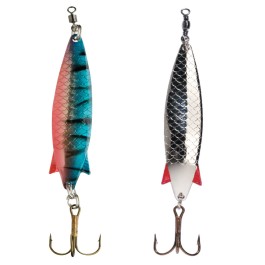
Abu Garcia Toby Spoon
Toby Spoon range — choose weight and finish
A straightforward metal spoon with plenty of flash and a fluttering wobble. The Toby makes sense for covering open water, provided you pick the right weight and keep that exposed treble away from the rough stuff.
- Solid metal spoon with a curved body.
- Fluttering and wobbling action.
- Fitted with one treble hook; one lure per pack.
- Available in multiple weights for freshwater and saltwater fishing.
Make sure it’s the right one. This covers the Toby Spoon range rather than one particular weight or colour. Body length varies between versions, and some share a length despite weighing quite differently.
Tackle Index Score
Tackle Index score
A straightforward, versatile spoon with sensible weight options; its main limitations are snag exposure and the need to manage depth.
- Product Quality8.8/10
- Performance8.9/10
- Impact on Fish Catching8.5/10
- Ease of Use9/10
- Value for Money8.6/10
If you buy through our links, we might get a small kickback, but it won’t cost you a penny extra. As an Amazon Associate I earn from qualifying purchases. The full story
Who it suits
Is it right for you?
Great for
- Mobile predator anglers. A useful option for fan-casting open swims and searching different depths as you move along the bank.
- Anglers who prefer straightforward lure work. A controlled steady retrieve is a sensible starting point, with pauses and speed changes available when you want them.
Maybe skip if
- Anglers fishing thick weed or snaggy cover. The exposed treble can collect weed and catch branches; a suitably rigged weedless lure is better suited.
- Anyone wanting a lure that hangs still on the pause. The Toby sinks rather than suspends, so a long pause changes its depth and increases snag risk.
The lowdown
Introducing the Abu Garcia Toby Spoon
A straightforward metal spoon with plenty of flash and a fluttering wobble. The Toby makes sense for covering open water, provided you pick the right weight and keep that exposed treble away from the rough stuff.
- Solid metal spoon with a curved body.
- Fluttering and wobbling action.
- Fitted with one treble hook; one lure per pack.
- Available in multiple weights for freshwater and saltwater fishing.
Quick verdict
Simple lure, plenty of scope
The Abu Garcia Toby is a cracking fit for anglers who want to cast, explore and get a spoon working without loads of rod-tip choreography. Its solid metal body and fluttering, wobbling action give you a straightforward way to search open water for predators.
Just don't mistake simple for foolproof. Weight choice, retrieve speed and how long you let it sink all matter. That exposed treble also makes it a less cheerful option around thick weed and submerged branches.
A straightforward, versatile spoon with sensible weight options; its main limitations are snag exposure and the need to manage depth.
- Product Quality
- 8.8/10
- Performance
- 8.9/10
- Impact on Fish Catching
- 8.5/10
- Ease of Use
- 9/10
- Value for Money
- 8.6/10
Solid metal construction keeps the body straightforward and robust, while the hook and fittings still need routine care.
The fluttering, wobbling action and choice of weights offer useful scope for searching open water.
Flash and movement provide useful attraction, but location and controlled presentation remain the deciding factors.
A steady retrieve is easy to get started with, although sink time and snag avoidance take judgement.
Its reusable metal body and varied applications make a sensible value case, subject to the asking price and lure losses.
Head to head
How it stacks up
Side by side with the closest kit we've reviewed. This updates as we add more reviews.
Abu Garcia
Abu Garcia Toby Spoon (this one)
Top scorer
Scores are our own, out of 10. Best in each row is in green. Prices change, so check the latest before you buy.
The full rundown
Everything you'll want to know about the Abu Garcia Toby Spoon
The Abu Garcia Toby Spoon is about as far from a complicated lure as you can get. A curved metal body, a bit of flash and a treble at the business end: that's the basic idea. But simple doesn't mean there's nothing going on. The body produces a fluttering, wobbling action that gives predators something moving and visible to home in on. For you, that means a lure you can cast across an open swim and start working without learning a whole routine of flicks, taps and fancy rod movements.
Its natural place is in a mobile predator angler's box. Think stretches of river with room to retrieve, open lake margins and reservoir swims where you want to search rather than keep dropping a lure into one tiny hole. Fan your casts across the water and change the angle before marching off to the next spot. A spoon gives you a handy way to explore, but it still needs putting near fish. Plenty of winding across empty water is still just plenty of winding, mate.
The big buying decision is weight, and this is where the Toby range deserves a proper look. The 7g and 10g versions are both 5.7cm long, while the 15g and 20g versions measure 7.5cm. Step up again and the 18g, 28g and 40g options all share a 9cm length. That's useful because a heavier Toby doesn't necessarily mean a longer target. You can choose more weight while keeping a similar body length, although the way that lure travels through the swim will change.
Don't just grab the heaviest one because the far bank looks tempting. Check your rod's casting range first, then think about depth, current and how slowly you want to retrieve. Too much weight in a shallow swim can turn the session into a bottom-scraping exercise. Too little weight in stronger flow can make it harder to work the water you intended. The sensible choice is the one that lets you control the lure comfortably, not the one that looks most impressive sitting in the tackle box.
Getting started is refreshingly low-faff. Make a short cast or draw the lure through clear water close in so you can see how it behaves at different speeds. You're looking for that appealing wobble, not simply winding as fast as your reel allows. Once you've found a useful pace, cast out and keep things controlled. Small changes of speed and brief pauses give you something else to try if a straight retrieve draws no interest. No need to throw every trick at it on the first cast.
Depth is part of the retrieve, not a promise stamped on the packet. The listed running depths are 1–3m for the 7–28g versions and 2–4m for the 40g and 60g versions, but a sinking spoon doesn't stay inside those bands by magic. Letting it sink longer, altering your rod position or changing your retrieve will affect its path. On clear ground, counting it down consistently helps you repeat a useful depth. Around unknown snags, start higher and explore cautiously rather than donating a lure straight away.
That fitted treble is the main compromise. In open water it's a straightforward arrangement, but bring it through thick weed or a tangle of branches and there's plenty for it to grab. Work alongside cover rather than blindly dragging through it. Where pike might turn up, use a suitable wire trace and carry proper unhooking tools, including long forceps and cutters. Have your net and unhooking area ready too. A lure's easy to cast; dealing with a lively predator and an exposed treble needs a bit more thought.
The appeal, then, is versatility without a load of clutter. You get one lure per pack, a solid metal body and an action you can influence with fairly simple retrieve changes. It's suitable for freshwater and saltwater, though a freshwater rinse and proper drying after sea use are sensible habits. It won't replace a weedless lure in heavy cover or a suspending plug when you want something to hang still. For searching open water with a straightforward spoon, though, the Toby makes a very tidy case.
Specifications
The nuts and bolts
- Construction
- Solid metal, curved spoon body
- Action
- Fluttering and wobbling
- Hook and pack
- One treble hook fitted; one lure per pack
- Smaller versions
- 7g and 10g: 5.7cm; 15g and 20g: 7.5cm
- Larger versions
- 18g, 28g and 40g: 9cm; 60g: 11.5cm
- Listed running depths
- 7–28g: 1–3m; 40g and 60g: 2–4m. Actual depth depends on how you fish them.
Specs checked with Abu Garcia, Oct 2026.
Spot a model or spec change?
Our take
Pick the weight, not just the length
The 18g, 28g and 40g versions all measure 9cm. That's dead handy when you want a similar-sized target but a different amount of weight for casting and working through the water.
More weight doesn't automatically mean more bites. Start with the fish's likely depth, the flow and your rod's casting range, then choose a Toby that lets you work the swim without constantly dragging bottom.
The lure
Closer look: metal, movement and a single treble
You're buying one solid metal spoon fitted with one treble hook. The curved body creates the wobbling and fluttering movement; your retrieve controls how you put that movement to work. There's no complicated rig to assemble, but use a secure connection and tackle suited to the chosen weight.
The useful distinction is between body length and weight. A 40g Toby is the same listed length as the 18g version, not a much longer lure. That gives you options when you need more weight without stepping up the length of the target. The 60g model moves up to 11.5cm and needs appropriately rated tackle.
Worth knowing. Treat the listed depth bands as a starting guide, not a fixed diving depth. Sink time, current, line, rod position and retrieve speed all play a part. A long pause over rough ground can put that treble straight into trouble.
On the bank
Who it suits: anglers who like to keep moving
If your sort of session involves walking, checking likely swims and giving each one a sensible spread of casts, the Toby fits nicely. Search across the swim before altering depth, and keep track of what you're changing. It's much easier to repeat a productive presentation when every cast isn't completely different.
It's also approachable if you're building confidence with lures. Begin with a steady retrieve and learn what speed keeps it working properly. You can add pauses later, rather than worrying that you need specialist lure tricks just to get started.
It makes less sense for picking through dense weed or holding almost motionless beside cover. The exposed treble and sinking body work against those jobs. Keep a weedless option or a suitable suspending lure alongside it, rather than asking one spoon to handle every swim.
Quick bank chat
FAQs in full: choosing and fishing your Toby
Which weight should you buy? Start with your rod rating and the swims you actually fish. Shallower water generally calls for less weight than deep or strongly flowing water, but retrieve speed matters too. If you're choosing between equal-length versions, remember that the extra weight changes how you can present the lure, not just how it casts.
What's the best retrieve? A steady wind is the sensible baseline. Check the action where you can see it and adjust your speed before launching long casts. Then try small speed changes or short pauses, keeping enough contact to notice an unexpected stop or knock. There's no single pace that suits every weight and flow.
Is it suitable for saltwater, and what about traces? The Toby can be used in fresh or salt water. After sea fishing, rinse it with fresh water and let it dry before closing the tackle box; check the hook and fittings regularly. For freshwater predator fishing where pike are possible, a suitable wire trace is part of the setup, even if you're hoping for something else.
On paper
Pros & cons
What we like
- Straightforward retrieve gets you fishing without complicated lure work.
- Weight choices let you tailor the lure to your tackle and swim.
- Metal body offers flash alongside its wobbling action.
- Useful for searching open water at different depths.
Worth knowing
- Exposed treble is vulnerable to weed and snags.
- Running depth needs managing rather than simply winding at any speed.
- Solid metal construction doesn't protect the hook and fittings from corrosion.
Want one?
Add it to your Wanted list or join a Group Buy — shops see anonymous totals only.
Your questions answered
What anglers want to know
The stuff you’d ask your mate on the next peg. Straight answers, no waffle.
01Which Toby weight should I choose?
Which Toby weight should I choose?
Match it to your rod's casting range, the water depth and the flow. Don't choose by length alone: the 18g, 28g and 40g versions are all 9cm long but offer different amounts of weight.
02How do you retrieve a Toby Spoon?
How do you retrieve a Toby Spoon?
Start with a steady wind that produces a controlled wobble. Watch it close in, adjust your speed, then try short pauses where there's enough clearance for it to sink without snagging.
03Can you use it in saltwater, and do you need a trace?
Can you use it in saltwater, and do you need a trace?
It's suitable for freshwater and saltwater use. Rinse with fresh water after sea fishing and dry it before storage. Wherever pike are a realistic possibility, use a suitable wire trace.
What anglers say
The word from the bank
Our read: simple lure, plenty of scope. The strongest reasons to choose it are straightforward retrieve gets you fishing without complicated lure work. and weight choices let you tailor the lure to your tackle and swim.; the main trade-off is exposed treble is vulnerable to weed and snags..
Our take on the feedback
Why it appeals
Checked Sept '26 — “Straightforward retrieve gets you fishing without complicated lure work.”
Best fit
Checked Sept '26 — “Mobile predator anglers: A useful option for fan-casting open swims and searching different depths as you move along the bank.”
Worth knowing
Checked Sept '26 — “Exposed treble is vulnerable to weed and snags.”
Tackle Index’s take from the product details and fishing fit we checked. We haven’t found enough independent public feedback to call this an angler consensus yet.
Angler score
What our readers rate Abu Garcia Toby Spoon
No angler score yet — nobody's reviewed Abu Garcia Toby Spoon here. Be the first and get the score started.
Owner reports
Own this? Help the next angler.
Quick multiple-choice reports from people who say they own the Abu Garcia Toby Spoon. Not verified purchases, and kept separate from our score.
No owner reports yet.
Alternatives & go-withs