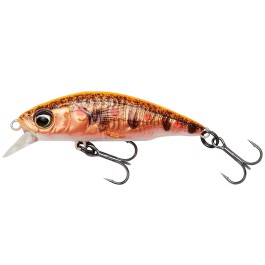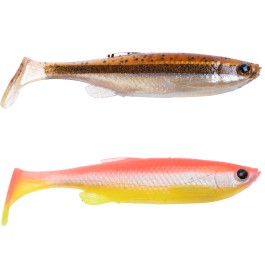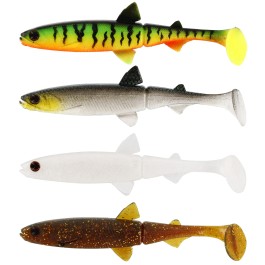
Photos: Westin · supplied retailer imagery
Predator lures · Soft-plastic shads · Our take
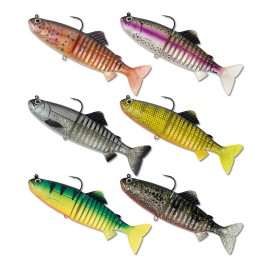
Westin HypoTeez
9cm / 5g / 6-pack and 13cm / 14g / 5-pack
A flexible, smelt-style paddle tail for predator anglers who want a believable baitfish profile without loads of rod work. Pick your size, rig it straight and let that tail do the chatting.
- Smelt-imitation soft lure with a flexible, tapered body.
- Tail joint and easy-action paddle tail.
- 9cm version weighs 5g and comes in packs of six.
- 13cm version weighs 14g and comes in packs of five.
Make sure it’s the right one. This review covers the two sizes listed here. Weights refer to the lure itself; your finished casting weight also includes the jighead and any other rigging.
Tackle Index Score
Tackle Index score
A useful, straightforward shad design with clear presentation strengths; rigging, durability and depth control remain the practical trade-offs.
- Product Quality8.8/10
- Performance8.9/10
- Impact on Fish Catching8.4/10
- Ease of Use8.8/10
- Value for Money8.3/10
If you buy through our links, we might get a small kickback, but it won’t cost you a penny extra. As an Amazon Associate I earn from qualifying purchases. The full story
Who it suits
Is it right for you?
Great for
- Predator anglers who like simple shad tactics. The paddle tail gives a steady retrieve a clear purpose without needing a complicated twitch-and-pause routine.
- Anglers matching a slim baitfish profile. The smelt-style shape offers a slender alternative to chunkier shads, with two sizes to adjust the mouthful.
Maybe skip if
- Anyone wanting a ready-rigged lure. Plan on choosing and fitting suitable hooks or jigheads rather than treating these as a complete setup.
- Anglers prioritising maximum durability. A flexible soft lure is a compromise when sharp teeth and repeated re-rigging are involved.
The lowdown
Introducing the Westin HypoTeez
A flexible, smelt-style paddle tail for predator anglers who want a believable baitfish profile without loads of rod work. Pick your size, rig it straight and let that tail do the chatting.
- Smelt-imitation soft lure with a flexible, tapered body.
- Tail joint and easy-action paddle tail.
- 9cm version weighs 5g and comes in packs of six.
- 13cm version weighs 14g and comes in packs of five.
Quick verdict
A tidy choice for straightforward shad fishing
The HypoTeez makes sense if you like a slim baitfish silhouette and a paddle tail that doesn't demand constant twitching. Its flexible body, tapered shape and tail joint are the main attractions; the detailed finish is a nice extra.
Choose the 9cm for a smaller mouthful or the 13cm for more presence. Just budget for suitable rigging, expect tooth damage eventually and remember that finding the right depth matters more than a lovely paint job.
A useful, straightforward shad design with clear presentation strengths; rigging, durability and depth control remain the practical trade-offs.
- Product Quality
- 8.8/10
- Performance
- 8.9/10
- Impact on Fish Catching
- 8.4/10
- Ease of Use
- 8.8/10
- Value for Money
- 8.3/10
The flexible body and detailed finish offer a tidy package, with the usual vulnerability of soft plastic to damage.
The easy-action paddle tail and tapered profile suit uncomplicated baitfish presentations with appropriately matched rigging.
The slim profile adds a useful presentation option, but location and depth control will matter more than cosmetic detail.
A steady retrieve is an accessible starting point, although straight rigging and sensible jighead selection need care.
Multi-body packs provide useful replacements, though the price you pay and damage from fish will determine lasting value.
Head to head
How it stacks up
Side by side with the closest kit we've reviewed. This updates as we add more reviews.
Westin
Westin HypoTeez (this one)
Top scorer
Scores are our own, out of 10. Best in each row is in green. Prices change, so check the latest before you buy.
The full rundown
Everything you'll want to know about the Westin HypoTeez
The Westin HypoTeez is the sort of soft lure that keeps predator fishing pleasantly straightforward. It's a smelt imitation with a slim, tapered body, a flexible build and an easy-action paddle tail. No need to turn every cast into a frantic display of rod-tip gymnastics, mate. The appeal is a recognisable baitfish shape with movement built into the tail, leaving you to concentrate on where you're putting it. That's a sensible starting point whether you're searching open water or working along the edge of a likely holding area.
There are two versions covered here, and the numbers matter when you're sorting your lure box. The 9cm weighs 5g and comes in a pack of six; the 13cm weighs 14g and comes five to a pack. Those are lure weights, not your complete rigged casting weights. Add a jighead and the total climbs, so check it against your rod's casting range rather than assuming the figure on the soft-plastic packet tells the whole story. A little thought here saves a proper mismatch later.
The shape is the main reason to give it a look. A smelt-style body offers a narrower silhouette than a chunky, deep-bellied shad, which can be useful when you want something that resembles slender prey. That doesn't mean predators need to be eating actual smelt before they'll have it. Think of it as a general baitfish suggestion rather than a strict menu match. The realistic eyes and hand-painted detail add to that impression, though finding fish and presenting the lure well still come before picking a pretty colour.
At the business end, the tapered body and tail joint give way to that easy-action paddle. The point is straightforward: the tail supplies movement while you supply direction, pace and depth. A steady wind is a perfectly sensible opening move. Once you've covered some water, try a brief pause or a gentle lift rather than immediately throwing every trick in the book at it. Keep changes deliberate. If you're swapping retrieve speed, colour and jighead weight after every cast, it's hard to work out what's actually helping.
Rigging deserves a bit of care, because even a nicely shaped shad can look a bit naff when it's threaded on crooked. Offer the hook alongside the body first and mark where it needs to emerge. Then thread the lure centrally, keeping the body straight rather than bunched behind the head. You want a suitable hook gape without an unnecessarily long hook taking over the flexible rear section. Give it a short pull through the margins before casting out; that's a dead handy check for twisting or a poor fit.
Head weight is your depth-control tool, not something to choose on autopilot. Shallow, sheltered water and deeper, flowing water ask different things of the same lure. Start with enough weight to maintain useful contact and reach the layer you want to fish, then adjust as conditions demand. Too heavy and you can spend more time crashing into the bottom than presenting a baitfish. Too light and you may struggle to tell where the lure is. Countdowns and repeatable retrieves help you search properly instead of just covering distance.
For perch work, the 9cm is the more restrained starting point of these two sizes, while the 13cm offers a bigger mouthful for larger predators. That's a guide to presentation, not a rule about what can eat what. Bigger perch can take sizeable prey, and pike certainly won't ignore a smaller lure. Where pike are a realistic possibility, use a suitable bite-resistant trace, whatever species you're hoping for. Match the rest of the setup to the rigged weight and carry the right unhooking kit before worrying about a cheeky colour change.
The compromise is the usual soft-lure one: flexibility is useful for movement, but teeth and repeated rigging can take their toll. Multiple bodies in a pack are handy, though pack count alone doesn't settle value; size, lifespan and the price you're paying all matter. The HypoTeez looks most at home with anglers who enjoy making a simple shad presentation work rather than chasing a magic lure. Get it straight on the hook, find the right depth and fish it with purpose. That's the sensible route, not expecting detailed paint to rescue a blank.
Specifications
The nuts and bolts
- Lure type
- Soft-plastic paddle-tail shad
- Profile
- Smelt imitation with a tapered body and tail joint
- 9cm version
- 5g; six lures per pack
- 13cm version
- 14g; five lures per pack
- Body
- Flexible soft plastic
- Finish
- Realistic eyes and hand-painted detailed colours
Specs checked with Westin, Oct 2026.
Spot a model or spec change?
Our take
Get the depth right before changing the colour
This is a lure to build a simple search routine around: count it down, retrieve steadily and vary the depth until you find where the fish are sitting.
An easy-action tail is useful, but it doesn't make every jighead a good match. Balance the head weight against depth and flow, and avoid an unnecessarily long hook that stiffens the flexible rear section.
Shape and setup
Closer look: a slender shad, not a complete rig
What you're buying is a flexible baitfish body with a paddle tail, realistic eyes and hand-painted detail. The tapered rear section and tail joint are the useful design features to focus on. Leave that area free to move when choosing your hook rather than squeezing the lure onto whatever happens to be in the tackle box.
A conventional jighead is a straightforward starting point. Match its hook dimensions to the body and its weight to the swim. Don't assume a larger body automatically needs a heavy head: you might want the 13cm profile higher in the water, just as you might need extra weight to control the 9cm in flow.
Worth knowing. The quoted 5g and 14g weights aren't finished rig weights. Include the jighead and other rigging when checking your rod's casting range.
Picking your presentation
Who it suits: anglers who like to keep things simple
If your approach is to fan a few casts across a swim, explore different depths and move on when there's nothing doing, this style of lure fits nicely. The tail provides the movement, while you work out the route and speed. It's also a sensible way into soft-lure fishing without learning an elaborate retrieve first.
It's less appealing if you want something ready to clip on with no rigging decisions. Thick weed is another consideration: a standard exposed-hook jighead will collect it. The HypoTeez isn't automatically a snag-proof answer just because the body is soft, so choose your presentation around the swim rather than forcing it through unsuitable cover.
On-the-bank pointers
FAQs in full: size, retrieve and jighead choice
Which size should you buy? Start with the profile you want to show the fish. The 9cm, 5g version gives you six bodies and a smaller offering; the 13cm, 14g version gives you five and a larger silhouette. Neither size belongs exclusively to one species. Available prey, water conditions and your tackle are better guides than a rigid perch-versus-pike split.
What's the best retrieve? Begin with a steady wind after a controlled countdown. If you need a change, introduce short pauses or gentle lifts while watching the line and maintaining useful contact. In colder conditions, slowing the presentation is a sensible option to explore, but don't assume every fish wants the slowest possible retrieve.
How heavy should the jighead be? Heavy enough to reach and control your chosen depth, not simply the heaviest your rod will cast. Flow, wind and retrieve speed all affect that choice. If you're constantly dragging bottom when you mean to swim above it, lighten up or adjust the retrieve; if you can't track the lure, reassess the weight and line control.
On paper
Pros & cons
What we like
- Slim baitfish shape offers a less bulky mouthful than a deep-bodied shad.
- Easy-action paddle tail suits uncomplicated retrieve work.
- Two useful sizes for changing the size of your offering.
- Realistic eyes and hand-painted detail give it a convincing finish.
Worth knowing
- Flexible soft plastic is vulnerable to teeth and repeated hook damage.
- Needs suitable rigging; the lure weight alone doesn't tell you the finished casting weight.
- An exposed jighead hook can be a nuisance around thick weed and snaggy cover.
Want one?
Add it to your Wanted list or join a Group Buy — shops see anonymous totals only.
Your questions answered
What anglers want to know
The stuff you’d ask your mate on the next peg. Straight answers, no waffle.
01What's the difference between the 9cm and 13cm HypoTeez?
What's the difference between the 9cm and 13cm HypoTeez?
The 9cm weighs 5g and comes six to a pack. The 13cm weighs 14g and comes five to a pack. Choose by the baitfish profile you want to present, then match the rigging and tackle to the finished lure.
02How should you retrieve it?
How should you retrieve it?
Start with a steady retrieve at a controlled depth. Add short pauses or gentle lifts if needed, keeping enough contact to spot takes as it drops. Change one thing at a time so you can work out what matters.
03Which jighead weight should you use?
Which jighead weight should you use?
There's no single right weight. Use enough to control the lure at your chosen depth in the current conditions, without making it plummet unnecessarily. Pick a hook that fits the body without crowding the tail joint.
What anglers say
The word from the bank
Our read: a tidy choice for straightforward shad fishing. The strongest reasons to choose it are slim baitfish shape offers a less bulky mouthful than a deep-bodied shad. and easy-action paddle tail suits uncomplicated retrieve work.; the main trade-off is flexible soft plastic is vulnerable to teeth and repeated hook damage..
Our take on the feedback
Why it appeals
Checked Sept '26 — “Slim baitfish shape offers a less bulky mouthful than a deep-bodied shad.”
Best fit
Checked Sept '26 — “Predator anglers who like simple shad tactics: The paddle tail gives a steady retrieve a clear purpose without needing a complicated twitch-and-pause routine.”
Worth knowing
Checked Sept '26 — “Flexible soft plastic is vulnerable to teeth and repeated hook damage.”
Tackle Index’s take from the product details and fishing fit we checked. We haven’t found enough independent public feedback to call this an angler consensus yet.
Angler score
What our readers rate Westin HypoTeez
No angler score yet — nobody's reviewed Westin HypoTeez here. Be the first and get the score started.
Owner reports
Own this? Help the next angler.
Quick multiple-choice reports from people who say they own the Westin HypoTeez. Not verified purchases, and kept separate from our score.
No owner reports yet.
Alternatives & go-withs