Photos: Fulling Mill · supplied retailer imagery
Fly fishing · Bloodworm nymphs · Our take
Fulling Mill Apps Bloodworm
App's Bloodworm Red · Size 10
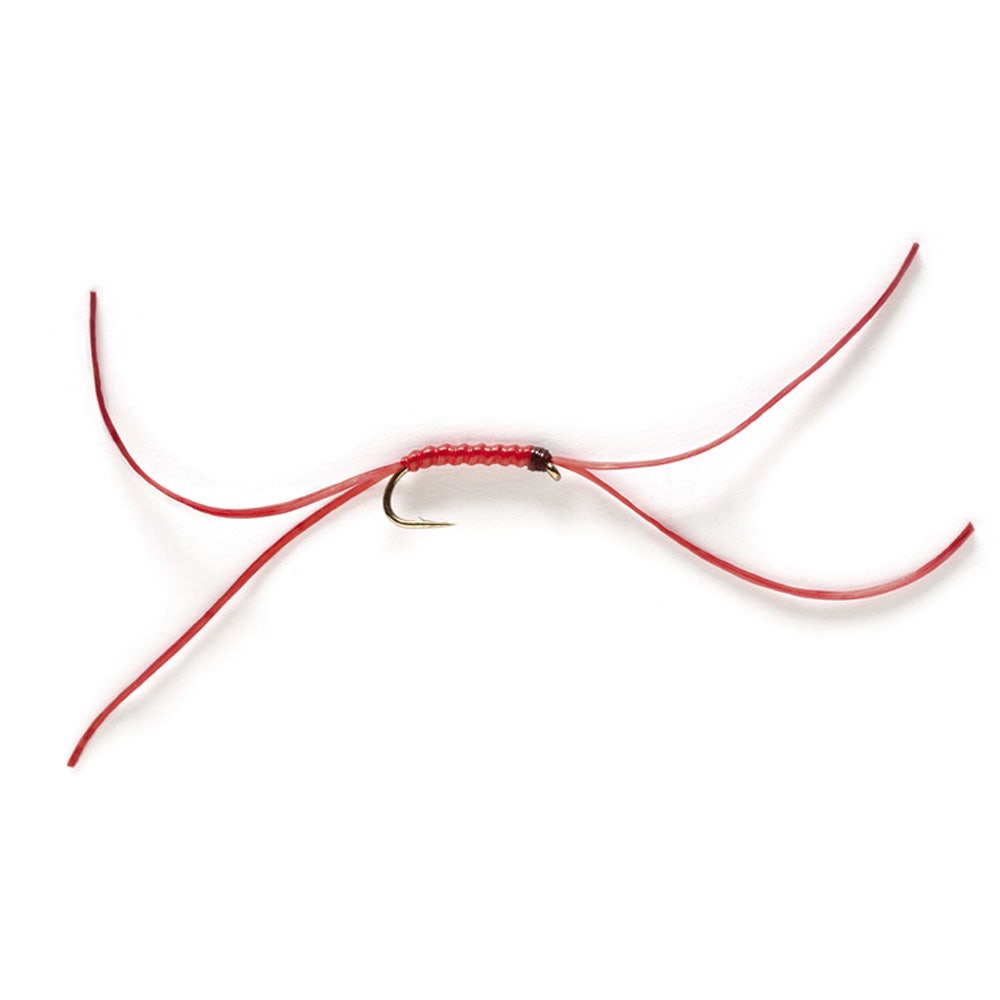
A red size 10 trout nymph with flexi-floss legs that keep working on very slow retrieves. A handy option when you want to fish patiently without presenting something completely lifeless.
- Red bloodworm-style nymph intended for trout fishing.
- Tied on a size 10 hook.
- Flexi-floss legs move even on very slow retrieves.
- Fulling Mill pattern 2310; sold individually.
Make sure it’s the right one. This is Fulling Mill's red App's Bloodworm, pattern code 2310, sold individually. Despite sitting in the lures category, it's a trout fly rather than a conventional spinning lure.
Tackle Index Score
Tackle Index score
A useful slow-retrieve trout pattern with a clear purpose; its strongest feature is mobile legs, while results still depend on depth and presentation.
- Product Quality8.8/10
- Performance9/10
- Impact on Fish Catching8.3/10
- Ease of Use8.8/10
- Value for Money8.3/10
If you buy through our links, we might get a small kickback, but it won’t cost you a penny extra. As an Amazon Associate I earn from qualifying purchases. The full story
Who it suits
Is it right for you?
Great for
- Stillwater trout anglers fishing slowly. The flexible legs provide movement while you keep forward travel gentle and controlled.
- Anglers building a varied nymph selection. It adds a leggy bloodworm-style presentation alongside slimmer buzzers and other subsurface patterns.
Maybe skip if
- Coarse anglers after a conventional lure. This is a trout nymph for fly tackle, not a weighted soft lure or spinner.
- Fly anglers needing a tiny, restrained imitation. A size 10 pattern with mobile legs isn't a direct substitute for a small, slim buzzer.
The lowdown
Introducing the Fulling Mill Apps Bloodworm
A red size 10 trout nymph with flexi-floss legs that keep working on very slow retrieves. A handy option when you want to fish patiently without presenting something completely lifeless.
- Red bloodworm-style nymph intended for trout fishing.
- Tied on a size 10 hook.
- Flexi-floss legs move even on very slow retrieves.
- Fulling Mill pattern 2310; sold individually.
Quick verdict
A proper slow-and-steady option
The App's Bloodworm makes good sense for stillwater trout fishing when you want movement without pulling the fly along at a rate of knots. Its flexible legs are the main attraction, keeping the presentation lively on a very slow retrieve.
Pick it for patient subsurface work, not as a shortcut around finding the fish. Depth, leader control and a sensible retrieve still matter more than having a bright red fly on the end.
A useful slow-retrieve trout pattern with a clear purpose; its strongest feature is mobile legs, while results still depend on depth and presentation.
- Product Quality
- 8.8/10
- Performance
- 9/10
- Impact on Fish Catching
- 8.3/10
- Ease of Use
- 8.8/10
- Value for Money
- 8.3/10
Flexi-floss legs are a purposeful material choice for a pattern built around movement at low speed.
Movement on very slow retrieves gives it a useful role in controlled subsurface presentations.
It adds a distinct bloodworm-style option, but finding the feeding depth remains essential.
A simple single-fly setup and slow retrieve make it approachable, with occasional checks for wrapped legs.
Individual sale lets you add just what you need, though the appeal depends on how often you fish this style.
Head to head
How it stacks up
Side by side with the closest kit we've reviewed. This updates as we add more reviews.
Fulling Mill
Fulling Mill Apps Bloodworm (this one)
Top scorer
Scores are our own, out of 10. Best in each row is in green. Prices change, so check the latest before you buy.
The full rundown
Everything you'll want to know about the Fulling Mill Apps Bloodworm
The Fulling Mill Apps Bloodworm is one for the fly box, mate, not the spinning wallet. More precisely, this is the red size 10 App's Bloodworm: a trout nymph built around a bloodworm-style presentation and mobile flexi-floss legs. That last bit is the draw. You can bring it back slowly and still have those legs moving, rather than needing to give it a hefty pull every few seconds. For patient stillwater fishing, that's a genuinely useful feature rather than just something that looks lively in the packet.
Bloodworm are the larval stage of chironomid midges, so there's a proper food connection behind the pattern. Don't confuse that with a promise that every trout will recognise it and have a chew, though. The App's is a leggy interpretation, not a tiny anatomical model. Think of it as combining a familiar food theme with a bit of extra movement. That gives you a different option from a slim buzzer when you're sorting through presentations and trying to work out what the fish will actually respond to.
The obvious starting point is a slow figure-of-eight retrieve. Keep things gentle, maintain useful contact and let the fly have some time in the water. The manufacturer specifically describes the flexible legs as moving even on very slow retrieves, which is exactly why charging it back isn't necessary. You can experiment with a pause or a slightly different pace, but don't turn every cast into a completely new routine. Give one approach a fair go, then make a deliberate change you can actually learn something from.
Depth is the bigger job. A cracking pattern travelling above or below feeding trout can still leave you scratching your head. Choose your line and leader arrangement for the water in front of you, then explore the layers rather than assuming bloodworm fishing means dragging along the bottom. With the same cast length and retrieve, a repeatable countdown helps you compare presentations. Wind, line choice and retrieve speed all affect where the fly travels, so treat that countdown as a useful reference, not a depth gauge.
For a straightforward setup, fishing one fly keeps the faff down and makes it easier to see what a change of depth or speed achieves. Choose a tippet suitable for the trout and any snags, rather than going needlessly fine just because you're fishing a nymph. On breezy days, watch the belly in your fly line. A big uncontrolled bow can tow the fly quicker than intended and hide a gentle take. A little line management can do more good here than another frantic rummage through the box.
The size 10 hook gives you a clear reference when buying, but it doesn't tell you the fly's exact overall length or how quickly your whole setup will sink. Those flexible legs are part of the presentation, and they're also worth a quick glance after a scruffy cast or missed take. If a leg has wrapped around the hook, straighten it before sending it out again. It's a tiny job, but there's not much point choosing a mobile pattern and then fishing it with everything tangled into a knot.
This is the sort of fly that makes sense when you're deliberately slowing things down, including colder spells when a restrained presentation is worth exploring. It isn't restricted to winter, mind. Trout location and feeding behaviour should drive the choice, not a date in the diary. If fish are clearly feeding at the surface, don't stubbornly keep this down below just because bloodworm ought to be on the menu. Likewise, if repeated follows suggest hesitation, try adjusting pace or changing to a less leggy pattern.
The buying decision is refreshingly simple: you get an individual Fulling Mill fly in the stated red size 10 version. That makes adding one to an existing selection easy, although a spare is sensible if you're relying on it for a session. Its appeal isn't some magic promise of bagging up. It's the practical combination of a bloodworm theme and legs that work at low speed. If your fly box needs something for slow, controlled subsurface fishing, this is a tidy option to have ready.
Specifications
The nuts and bolts
- Brand
- Fulling Mill
- Pattern
- App's Bloodworm Red
- Hook size
- 10
- Fly type
- Nymph for trout fishing
- Leg material
- Flexi floss
- Pattern code / sale unit
- 2310 / individual fly
Specs checked with Fulling Mill, Oct 2026.
Spot a model or spec change?
Our take
Let the legs do the chatting
The useful trick here is separating movement from forward speed. Flexi-floss legs let you keep a bit of life in the fly while giving trout time to inspect it.
Start with a slow figure-of-eight, explore different depths and resist changing everything after a handful of casts. A controlled drift can be just as useful as another retrieve.
The pattern
Closer look: a nymph with movement built in
You're buying Fulling Mill's App's Bloodworm Red on a size 10 hook, pattern code 2310. It's sold individually and intended for trout fishing. The key material is flexi floss in the legs, giving the fly movement even when your retrieve is barely ticking along.
The natural reference is chironomid larvae. The useful distinction from a slim, restrained nymph is the mobile leggy profile: it offers something different without demanding a fast retrieve. Keep a slimmer alternative handy, though. Extra movement is an option to try, not an automatic upgrade.
Worth knowing. Hook size isn't a sink-rate guide. Use your line choice, leader arrangement and a consistent countdown to explore depth, and check the legs haven't wrapped around the hook after a messy cast.
On the water
Who it suits: anglers happy to slow things down
Stillwater trout anglers who enjoy working through depth and retrieve changes should find a clear role for this pattern. It suits a methodical approach: cover the water, keep your presentation controlled and change one thing at a time. Those mobile legs give you a reason to stick with a slow retrieve rather than constantly adding bigger pulls.
It's also an approachable addition for someone expanding a basic trout fly selection. Fish it singly to start with and concentrate on line control. You don't need a complicated team of flies to make use of the pattern's main feature.
It makes less sense if you're shopping for a coarse-fishing lure or need a tiny imitation for fish refusing anything bulky. Nor is it a reason to ignore a clear surface-feeding opportunity. Match the job first; pick the fly second.
Quick answers
FAQs in full: tackle, retrieve and buying
Is it a lure or a fly? In this case, a fly. Fulling Mill classifies the App's Bloodworm Red as a nymph, and it's intended for trout. Use it as a subsurface fly presentation rather than expecting the casting weight or action of a conventional spinning lure.
How should you retrieve it? A slow figure-of-eight is a sensible first move. Stay in useful contact without constantly dragging the fly faster, then adjust depth and pace according to the response. The legs move on very slow retrieves, but that doesn't mean leaving a huge slack loop and hoping for the best.
How many do you get? One fly per unit ordered. The version covered here is red, size 10, with manufacturer pattern code 2310. If you want a backup for a lost fly or damaged leg, add another individually rather than assuming you're buying a pack.
On paper
Pros & cons
What we like
- Flexible legs give movement without needing a fast retrieve.
- Offers a clear bloodworm-style option for a stillwater trout fly box.
- Straightforward to fish singly while you work out depth and pace.
- Sold individually, so you can try the pattern without buying a whole pack.
Worth knowing
- Trailing flexible legs can wrap around the hook and need checking.
- The leggy profile won't suit every situation calling for a small, neat imitation.
- Buying one fly leaves no spare if you lose it when trout start responding.
Want one?
Add it to your Wanted list or join a Group Buy — shops see anonymous totals only.
Your questions answered
What anglers want to know
The stuff you’d ask your mate on the next peg. Straight answers, no waffle.
01Is the Fulling Mill Apps Bloodworm a lure or a fly?
Is the Fulling Mill Apps Bloodworm a lure or a fly?
It's a trout fly, classified as a nymph. This version is the red size 10 App's Bloodworm, designed to imitate natural chironomid larvae.
02What's a sensible way to retrieve it?
What's a sensible way to retrieve it?
Start with a slow figure-of-eight, keeping enough contact to spot or feel a take. The flexi-floss legs move even at very slow speeds, so there's no need to haul it back to create action.
03Does it come as a pack?
Does it come as a pack?
No, it's sold individually. Order additional flies separately if you want spares.
What anglers say
The word from the bank
Our read: a proper slow-and-steady option. The strongest reasons to choose it are flexible legs give movement without needing a fast retrieve. and offers a clear bloodworm-style option for a stillwater trout fly box.; the main trade-off is trailing flexible legs can wrap around the hook and need checking..
Our take on the feedback
Why it appeals
Checked Sept '26 — “Flexible legs give movement without needing a fast retrieve.”
Best fit
Checked Sept '26 — “Stillwater trout anglers fishing slowly: The flexible legs provide movement while you keep forward travel gentle and controlled.”
Worth knowing
Checked Sept '26 — “Trailing flexible legs can wrap around the hook and need checking.”
Tackle Index’s take from the product details and fishing fit we checked. We haven’t found enough independent public feedback to call this an angler consensus yet.
Angler score
What our readers rate Fulling Mill Apps Bloodworm
No angler score yet — nobody's reviewed Fulling Mill Apps Bloodworm here. Be the first and get the score started.
Owner reports
Own this? Help the next angler.
Quick multiple-choice reports from people who say they own the Fulling Mill Apps Bloodworm. Not verified purchases, and kept separate from our score.
No owner reports yet.
Alternatives & go-withs