Photos: Fulling Mill · product images found via web image search
Trout flies · Damsel nymphs · Our take
Fulling Mill Blue Flash Damsel
Gold-bead Blue Flash Damsel · Medium olive
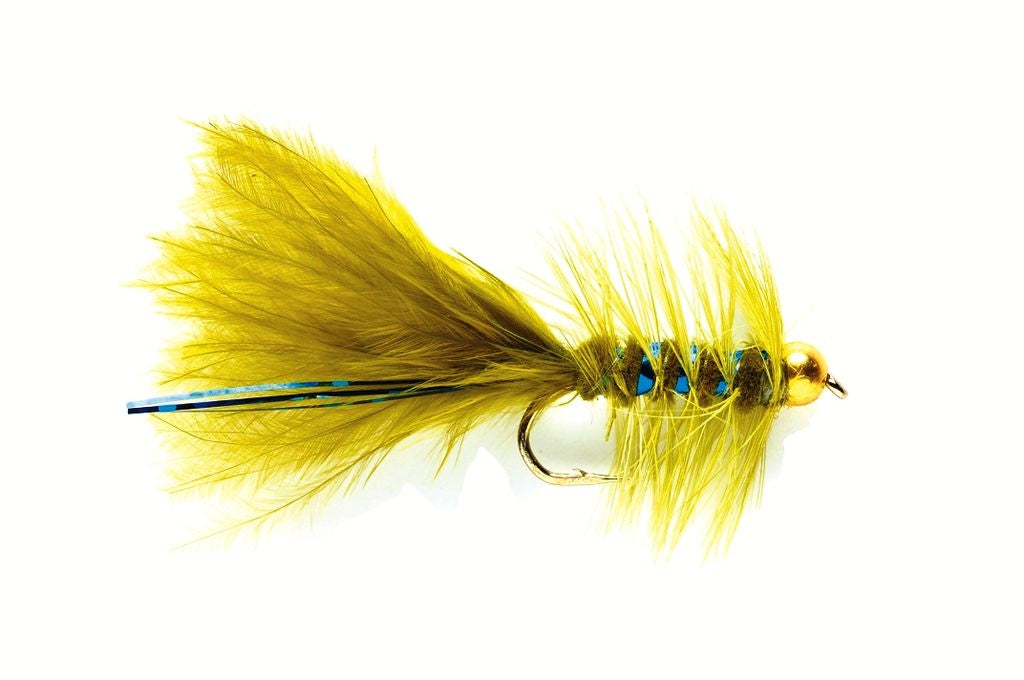
Olive marabou, a cheeky streak of blue and a weighted gold head. This damsel nymph gives trout something food-like to follow, with enough flash to help it get noticed.
- Damsel fly nymph imitation in medium olive.
- Marabou tail with blue tinsel flash.
- Gold bead adds weight at the head.
- Sold individually; hook sizes listed are 10 and 12.
Make sure it’s the right one. This review covers the gold-bead pattern identified in the supplied details as PC114, with an olive dressing, marabou tail and blue tinsel.
Tackle Index Score
Tackle Index score
A versatile stillwater pattern with a sensible mix of movement, attraction and weight. Its appeal is adaptability, not a promise to outfish everything else.
- Product Quality8.8/10
- Performance9/10
- Impact on Fish Catching8.6/10
- Ease of Use9.2/10
- Value for Money8.3/10
If you buy through our links, we might get a small kickback, but it won’t cost you a penny extra. As an Amazon Associate I earn from qualifying purchases. The full story
Who it suits
Is it right for you?
Great for
- Stillwater trout anglers. A useful searching pattern around weed edges, margins and open-water patrol routes.
- Fly anglers building a practical starter box. It works with straightforward retrieves and offers a handy bridge between nymphs and attractor patterns.
Maybe skip if
- Anglers targeting surface-feeding trout. The weighted bead takes it below the surface rather than keeping it in the film.
- Anglers needing a very subtle presentation. Blue tinsel and a gold head may be less suitable than a plain, lightly dressed nymph.
The lowdown
Introducing the Fulling Mill Blue Flash Damsel
Olive marabou, a cheeky streak of blue and a weighted gold head. This damsel nymph gives trout something food-like to follow, with enough flash to help it get noticed.
- Damsel fly nymph imitation in medium olive.
- Marabou tail with blue tinsel flash.
- Gold bead adds weight at the head.
- Sold individually; hook sizes listed are 10 and 12.
Quick verdict
A sensible fly to have ready
The Fulling Mill Blue Flash Damsel blends a recognisable nymph outline with movement and a little attraction. It's a cracking fit for stillwater trout fishing when you want a searching pattern without going straight to something big and brash.
The weighted head helps you work below the surface, but it isn't the answer to every depth or mood. Give it room to move, vary your retrieve and don't mistake that blue flash for a guarantee of a screaming take.
A versatile stillwater pattern with a sensible mix of movement, attraction and weight. Its appeal is adaptability, not a promise to outfish everything else.
- Product Quality
- 8.8/10
- Performance
- 9/10
- Impact on Fish Catching
- 8.6/10
- Ease of Use
- 9.2/10
- Value for Money
- 8.3/10
The marabou, tinsel and bead make a purposeful dressing with each component doing a useful job.
Soft-tail movement and head weight offer several presentation options across sensible stillwater setups.
Its food-like profile and flash can encourage interest, but depth and trout behaviour remain decisive.
Straightforward retrieves make it approachable without demanding specialist handling.
Individual sale and broad usefulness make it a practical fly-box addition, though value depends on the asking price.
Head to head
How it stacks up
Side by side with the closest kit we've reviewed. This updates as we add more reviews.
Fulling Mill
Fulling Mill Blue Flash Damsel (this one)
Top scorer
Scores are our own, out of 10. Best in each row is in green. Prices change, so check the latest before you buy.
The full rundown
Everything you'll want to know about the Fulling Mill Blue Flash Damsel
The Fulling Mill Blue Flash Damsel is one of those flies that makes immediate sense when you look at what it's trying to do. There's an olive, nymph-like body, a soft marabou tail and a streak of blue tinsel to catch the eye. A gold bead adds weight up front. Nothing wildly complicated, mate, and that's part of the appeal. This is a stillwater trout pattern built around a useful balance: enough resemblance to underwater food to look plausible, with a little extra sparkle to stand out when you're searching for a response.
First, let's clear up the category. Although it's listed here under lures, this is a fly for fly tackle, not a little metal spinner or something you'd normally chuck on a lure rod. The pattern imitates a damsel fly nymph, a familiar food item in many weedy stillwaters. That makes weed edges, clear lanes through vegetation and the water beside marginal growth sensible places to start looking. Don't become welded to the greenery, though. Trout patrol beyond it, and an olive fly with a bit of movement can be useful away from the obvious features too.
The marabou tail is a big part of the attraction. Its soft fibres can open, close and shift as the fly moves through the water, so you don't have to belt it back to give it some life. A slow figure-of-eight retrieve is a sensible starting point. Then try a few short pulls with little pauses between them. You're looking for a pace the fish will commit to, not putting on a speed demonstration. If a trout follows without taking, changing the rhythm can be more useful than immediately swapping to a completely different pattern.
Then there's the blue flash. It isn't there to make this a perfect copy of every damsel nymph in the lake. Think of it as an extra visual trigger running through an otherwise food-like package. That's handy when you want something livelier than a plain olive nymph but don't fancy going full bright-coloured attractor. There is a trade-off, mind. In very clear water, or with fish that have seen plenty of flies, sparkle isn't automatically your friend. A quieter pattern still deserves a place beside this one in the box.
The gold bead gives you weight at the head, which helps the fly get below the surface and influences how it moves between pulls. It doesn't give you a fixed fishing depth. Your line, leader, retrieve and how long you let everything settle all play a part. For shallower work, a floating line with a suitable leader is a straightforward place to begin. Count the fly down consistently, then change that countdown in small steps. It's a dead handy way to search the water properly rather than making the same cast and hoping harder.
Damsel patterns are an obvious shout when the water warms and activity around weed beds picks up, but don't treat this as a fly with a tiny seasonal window. Its movement and attraction also let you fish it as a searching pattern when you haven't spotted a clear feeding preference. Watch what the trout are actually doing. If they're confidently sipping food off the top, a weighted damsel may be the wrong tool. If they're cruising beneath the surface or following subsurface flies, it makes much more sense to give it a proper look.
The listed hook sizes are 10 and 12, and the fly is sold individually. That keeps it simple if you want to add the pattern to an existing selection rather than buy a whole assortment. Just remember that choosing a smaller hook size doesn't, by itself, settle how deep or delicately your whole setup will fish. Presentation still matters. Overall, this is a sensible option for the angler who wants one adaptable nymph-style attractor ready to go. Sort your depth, leave that tail free to move and keep an eye on the last few feet of the retrieve.
Specifications
The nuts and bolts
- Pattern
- Damsel fly nymph imitation
- Colour
- Medium olive
- Hook sizes listed
- 10 and 12
- Tail and flash
- Marabou tail; blue tinsel
- Head
- Weighted gold bead
- Pack format
- Sold individually
Specs checked with Fulling Mill, Oct 2026.
Spot a model or spec change?
Our take
Food-like, but not shy
The olive dressing and marabou tail do the natural-looking work; the blue tinsel and gold bead add visual triggers. That puts it neatly between a restrained nymph and an outright attractor.
Its biggest practical strength is flexibility. Change your countdown and retrieve before changing the fly, and you can explore different parts of the swim without constant faff.
The dressing
Closer look: movement, flash and a weighted head
You're buying an individual medium-olive damsel nymph pattern with a marabou tail, blue tinsel and a gold bead. Those ingredients have distinct jobs: the olive dressing provides the food-like impression, the tail adds movement, and the tinsel gives a flash of colour as the fly changes angle.
The head weight also makes pauses part of the presentation, rather than simply a break in retrieving. Let the fly settle briefly between movements, but stay in touch with the line. Too much slack makes subtle takes harder to spot. Check the tail after an awkward cast as well; fouled fibres won't move as freely.
Worth knowing. A gold bead tells you there's weight up front, not an exact sink rate or bead material. Use repeatable countdowns to judge where your setup is fishing.
Your fishing
Who it suits: stillwater anglers who like to keep moving
This suits bank anglers covering likely trout water with a floating or intermediate line, particularly where there's room to work a fly alongside vegetation without dragging straight into it. Fan your casts across the available water and change depth methodically. There's more to searching a swim than chucking farther.
It's also approachable for newer fly anglers. A steady retrieve is enough to get started; you don't need fancy rod work. More experienced anglers can vary line choice, countdown and pace to broaden its use. Either way, keep a plainer nymph and a surface option handy rather than asking this one pattern to do every job.
It's less suitable when trout are fixed on tiny food, feeding right in the surface film, or shying away from conspicuous patterns. And if you need to reach deep fish quickly, think about the whole line-and-leader setup. The bead isn't a shortcut around choosing tackle for the depth.
Bank-side pointers
FAQs in full: tackle, retrieve and depth
Is it a spinning lure or a fly? It's a fly. The bead supplies weight for its underwater presentation, but this isn't a conventional casting lure for spinning tackle. Fish it on an appropriate fly outfit and choose your leader to suit the water, the fly and the fish you're targeting.
What's the best retrieve? Start with a controlled, slow figure-of-eight. If there's no interest, try short pulls with pauses or a steadier draw. Change one thing at a time so you can recognise what's helping. Bring it back attentively, too; a following trout can turn up surprisingly close to the bank.
Do you need a sinking line? Not automatically. A floating line lets you explore shallower water, while an intermediate or sinking line can help keep the fly working deeper. Choose around fish location and retrieve speed. If you're constantly finding weed, shorten the countdown or adjust the setup rather than simply hauling harder.
On paper
Pros & cons
What we like
- Soft marabou gives useful movement on a restrained retrieve.
- Olive dressing combines a food-like outline with blue attraction.
- Weighted head helps the fly fish below the surface.
- Suits several straightforward stillwater retrieves.
Worth knowing
- The flash and gold head can be too conspicuous for wary trout.
- The weighted head is less suited to hovering just beneath the surface.
- One fly alone won't cover every depth or feeding situation.
Want one?
Add it to your Wanted list or join a Group Buy — shops see anonymous totals only.
Your questions answered
What anglers want to know
The stuff you’d ask your mate on the next peg. Straight answers, no waffle.
01Is this a spinning lure or a fly?
Is this a spinning lure or a fly?
It's a weighted trout fly intended for fly tackle, despite sitting under the broad lures category.
02How should you retrieve a Blue Flash Damsel?
How should you retrieve a Blue Flash Damsel?
Start with a slow figure-of-eight retrieve, then try short pulls and pauses. Adjust the countdown to explore depth rather than automatically retrieving faster.
03Does the gold bead mean you need a sinking line?
Does the gold bead mean you need a sinking line?
No. A floating line and suitable leader are a sensible starting point for shallower water. An intermediate or sinking line helps when the fish are holding deeper.
What anglers say
The word from the bank
Our read: a sensible fly to have ready. The strongest reasons to choose it are soft marabou gives useful movement on a restrained retrieve. and olive dressing combines a food-like outline with blue attraction.; the main trade-off is the flash and gold head can be too conspicuous for wary trout..
Our take on the feedback
Why it appeals
Checked Sept '26 — “Soft marabou gives useful movement on a restrained retrieve.”
Best fit
Checked Sept '26 — “Stillwater trout anglers: A useful searching pattern around weed edges, margins and open-water patrol routes.”
Worth knowing
Checked Sept '26 — “The flash and gold head can be too conspicuous for wary trout.”
Tackle Index’s take from the product details and fishing fit we checked. We haven’t found enough independent public feedback to call this an angler consensus yet.
Angler score
What our readers rate Fulling Mill Blue Flash Damsel
No angler score yet — nobody's reviewed Fulling Mill Blue Flash Damsel here. Be the first and get the score started.
Owner reports
Own this? Help the next angler.
Quick multiple-choice reports from people who say they own the Fulling Mill Blue Flash Damsel. Not verified purchases, and kept separate from our score.
No owner reports yet.
Alternatives & go-withs