Photos: Fulling Mill · supplied retailer imagery
Fly fishing · Dry flies · Our take
Fulling Mill F-Fly Black
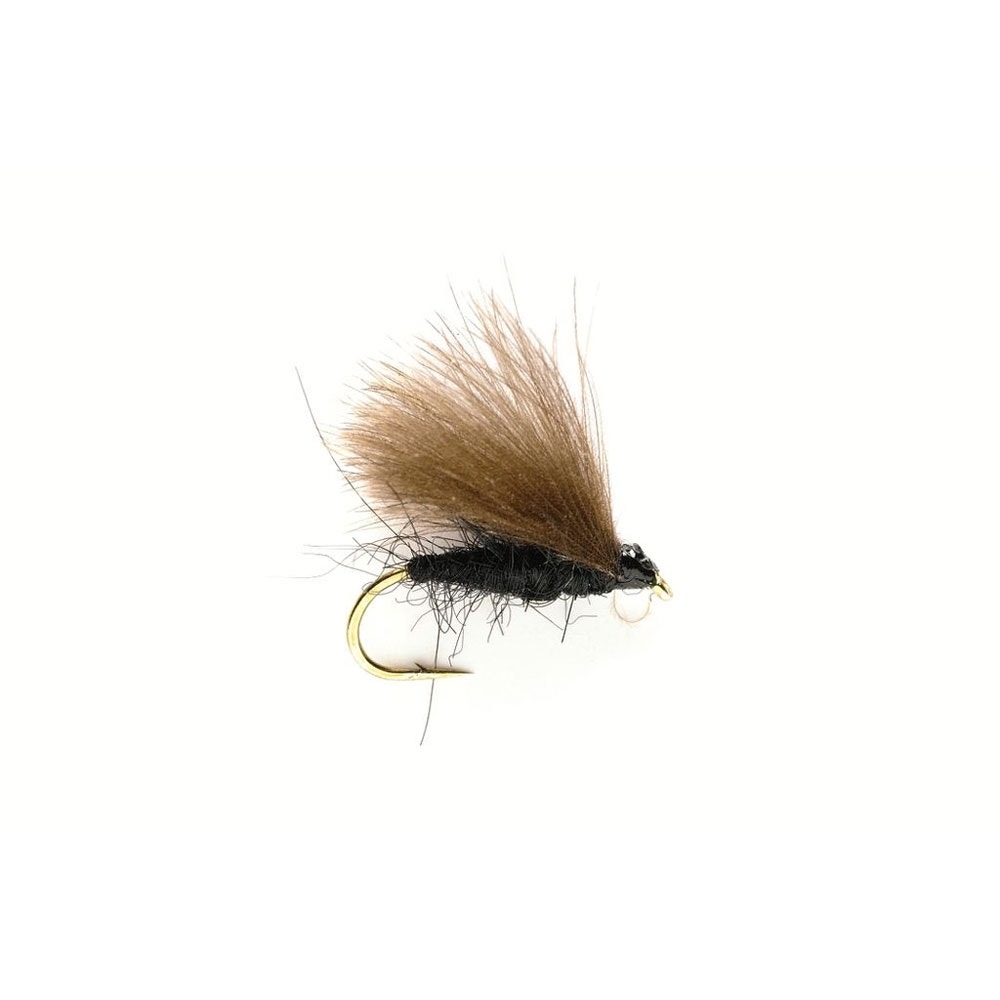
Black CDC F Fly
A black body, a buoyant CDC wing and no unnecessary fuss. This little dry fly covers small sedges, olives and midges — provided you give it a tidy drift and look after that wing.
- Fulling Mill product code 651; sold individually.
- Black dry-fly pattern with a naturally buoyant CDC feather wing.
- Sizes listed by Farlows: 14, 16 and 18.
- Also known as the Fratnik Midge, after inventor Marjan Fratnik.
Make sure it’s the right one. This is Fulling Mill’s F-Fly Black, product code 651, sold individually. It’s a dry fly, rather than a lure you’d fish on spinning tackle.
Tackle Index Score
Tackle Index score
A useful, versatile small dry with sensible material choices. These scores reflect its design and intended role; value depends on the price you’re offered.
- Product Quality8.8/10
- Performance8.9/10
- Impact on Fish Catching8.6/10
- Ease of Use7.9/10
- Value for Money8.5/10
If you buy through our links, we might get a small kickback, but it won’t cost you a penny extra. As an Amazon Associate I earn from qualifying purchases. The full story
Who it suits
Is it right for you?
Great for
- River anglers covering gently rising trout and grayling. Its small-insect profile suits careful drifts through glides, softer seams and other quieter feeding lanes.
- Stillwater anglers fishing small insects at the surface. It offers an understated option when fish are sipping rather than chasing something pulled through the water.
Maybe skip if
- Anglers wanting a highly visible dry for turbulent water. A small CDC pattern is harder to follow and keep fishing neatly among waves and boily currents.
- Anyone after a maintenance-free fly. Keeping the CDC clean and dry is part of the job, particularly after a fish.
The lowdown
Introducing the Fulling Mill F-Fly Black
A black body, a buoyant CDC wing and no unnecessary fuss. This little dry fly covers small sedges, olives and midges — provided you give it a tidy drift and look after that wing.
- Fulling Mill product code 651; sold individually.
- Black dry-fly pattern with a naturally buoyant CDC feather wing.
- Sizes listed by Farlows: 14, 16 and 18.
- Also known as the Fratnik Midge, after inventor Marjan Fratnik.
Quick verdict
A cracking little all-round dry
The F-Fly Black makes plenty of sense when trout are picking off small insects at the surface. Its CDC wing brings natural buoyancy, while the understated pattern can suggest several different food items without getting overly fussy.
The trade-off is wing care and visibility. You’ll need to dry it properly when it gets waterlogged or slimed, and it isn’t the easiest fly to follow in awkward light. For gentle water and careful presentation, though, it’s a handy pattern to carry.
A useful, versatile small dry with sensible material choices. These scores reflect its design and intended role; value depends on the price you’re offered.
- Product Quality
- 8.8/10
- Performance
- 8.9/10
- Impact on Fish Catching
- 8.6/10
- Ease of Use
- 7.9/10
- Value for Money
- 8.5/10
The simple dressing and naturally buoyant CDC wing are well suited to a subtle small-insect dry.
It offers useful surface coverage on quieter water, with wing condition and presentation setting the limits.
Its ability to suggest several insects gives it useful scope, but it still needs to match the feeding situation.
Fishing it is straightforward, although tracking a small dry and maintaining CDC add some faff.
Coverage of several small insects makes it a useful individual purchase, though the asking price determines the final bargain.
Head to head
How it stacks up
Side by side with the closest kit we've reviewed. This updates as we add more reviews.
Fulling Mill
Fulling Mill F-Fly Black (this one)
Top scorer
Scores are our own, out of 10. Best in each row is in green. Prices change, so check the latest before you buy.
The full rundown
Everything you'll want to know about the Fulling Mill F-Fly Black
Some dry flies try to do an awful lot. The Fulling Mill F-Fly Black keeps things refreshingly simple: a small black pattern with a CDC feather wing, intended to sit at the surface and suggest something edible. No great bush of materials, no flashy distraction. Just the sort of understated offering that makes sense when fish are rising gently and anything too bulky looks out of place. If you enjoy watching a trout quietly sip down a dry, rather than hammering a pulled fly, this is very much your sort of territory.
First, let’s clear up the category. Although it’s sitting under lures here, this is a proper dry fly for fly fishing, not something to clip onto a spinning trace. Fulling Mill identifies it as product code 651, and it’s sold individually. Farlows lists the black version in sizes 14, 16 and 18, giving you a useful spread for small surface insects. It’s also known as the Fratnik Midge, after Marjan Fratnik. That name hints at one use, but the pattern isn’t restricted to midge fishing.
The useful bit is how broadly it can suggest food. Small sedges, olives and midges are all within its intended brief, so you’re not buying a fly that only earns a swim during one very specific hatch. That doesn’t mean it magically matches everything, mind. If the fish are taking much bigger insects, or feeding below the surface, a little black dry could be the wrong answer entirely. Think of it as a versatile suggestion of a small insect, then let what’s happening in front of you guide the choice.
That CDC wing is the main feature. CDC feathers have natural buoyancy, helping a relatively sparse fly stay afloat without needing a big, heavily hackled outline. On quieter water, that’s a lovely starting point for a subtle presentation. You’re offering something small and unobtrusive, rather than parking a floating brush over the fish’s head. The flip side is that CDC benefits from a bit of care. Once it’s clogged with slime or properly soaked, simply thrashing out more casts isn’t a great plan. Stop, sort the wing, then carry on.
On a river, start with the drift rather than getting obsessed with the dressing. Pick a feeding fish, work out its lane and put the fly far enough upstream for it to arrive naturally. Enough slack to prevent immediate drag helps; a great pile of it makes setting the hook a faff. Softer seams and smooth glides are sensible places to use a little pattern like this. If the fly starts skating across the current while everything else drifts straight, changing hook size probably isn’t your first fix. Sort the presentation first, mate.
On stillwaters, it makes more sense around fish sipping small insects than as a fly to pull back briskly. Watch the direction a cruising fish is travelling and offer it a quiet interception, rather than dropping the leader across its nose. A breeze can help move the fly naturally, though awkward light and surface ripple can make the smaller sizes tricky to follow. Keep track of where it landed and watch that patch of water. Don’t assume every nearby rise is yours, but be ready when a fish rises right over it.
Size choice needn’t turn into homework. Look at the insects you can actually see, and start with a broadly similar footprint. Among the listed options, a 14 offers a larger target, while an 18 gives you a smaller offering when that’s what the fish appear to want. Choose a tippet that lets the fly settle naturally without being needlessly fragile for the fish and surroundings. Going finer for the sake of it isn’t clever if there are weeds, snags or a decent trout ready to make life interesting.
The overall appeal is straightforward: useful coverage from a simple pattern, with no claim that fancy materials will rescue a poor cast. It suits anglers who enjoy watching, adjusting and getting the little details bob on. The drawbacks are equally straightforward — a small fly can disappear against the surface, and CDC asks for occasional housekeeping. Carry a suitable drying treatment and a spare so you can swap rather than faff through a feeding spell. For careful small-insect dry-fly fishing, the F-Fly Black has a clear and worthwhile job.
Specifications
The nuts and bolts
- Brand
- Fulling Mill
- Product code
- 651
- Fly type and colour
- Dry fly; black
- Wing
- CDC feathers
- Listed sizes
- 14, 16 and 18 at Farlows
- Pack format
- Sold individually
Specs checked with Fulling Mill, Oct 2026.
Spot a model or spec change?
Our take
Presentation first, fancy dressing second
This fly’s appeal is its simplicity. It can cover small sedges, olives or midges, leaving you to concentrate on matching the size and getting the drift right.
Treat it as a subtle surface offering, not a chunky searching dry for every bit of water. A well-placed cast and a drag-free drift are the real business here.
The dressing
Closer look: what you’re buying
This is an individually sold black dry fly with a CDC feather wing. Its appeal lies in a sparse, general-purpose small-insect profile rather than a complicated collection of triggers. The Fratnik Midge name refers to the pattern’s inventor, Marjan Fratnik; it doesn’t limit the fly to imitating midges.
Natural buoyancy is the CDC wing’s selling point, but buoyancy and visibility aren’t the same thing. A fly can still be afloat while you struggle to pick it out. The listed 14, 16 and 18 sizes give you room to adjust the footprint, though choosing a bigger fly purely to see it better can be a poor bargain when fish want something tiny.
Worth knowing. Don’t plaster the CDC wing with ordinary floatant. Use a CDC-compatible treatment as directed. After a fish, gently rinse away slime, blot the fly dry and restore the wing before sending it back out. Having a spare ready is dead handy.
On the water
Who it suits: anglers who like a quiet take
River trout and grayling anglers have an obvious use for this pattern when small insects are being taken from the surface. Quieter feeding lanes let you make the most of its subtle outline. Get into a sensible casting position before you start: a shorter, controlled drift often beats an ambitious cast across three different currents.
Stillwater anglers can use it for surface-feeding trout too, especially where a modest offering fits the insects about. It’s less appealing if you want to retrieve something aggressively, fish deep or keep a highly visible dry riding through rough water. There are better tools for those jobs.
For a newcomer, it’s a useful lesson in how much presentation matters. Just accept that small dries take concentration and CDC needs care. Buying individual flies lets you choose your sizes, but allow for a spare of the useful ones rather than relying on a single fly through a feeding spell.
Quick answers
FAQs in full: insects, sizes and wing care
What does it imitate? Small sedges, olives or midges. It’s a suggestive pattern, not an exact copy of one insect in every detail. Match the approximate size of what the fish are eating, then concentrate on keeping the fly’s movement natural.
Which sizes are listed? Farlows lists 14, 16 and 18 for the black CDC F Fly. Start with the insects and rise behaviour you’re seeing rather than assuming the smallest option is always best. A smaller fly won’t automatically cure drag or a leader landing over the fish.
How should you treat the wing? Keep it clean, dry it gently and only use treatments intended for CDC. If it won’t recover promptly, swap flies and give it time to dry. That’s usually a better use of a short feeding window than repeatedly casting a bedraggled fly.
On paper
Pros & cons
What we like
- Suggests several small insects, so it earns its place in a compact fly box.
- CDC wing provides natural buoyancy without a bulky dressing.
- Listed sizes cover useful small-fly options.
- Simple surface presentation suits selective fish on quieter water.
Worth knowing
- CDC needs drying and attention after slime or repeated soaking.
- The small profile can be difficult to track in glare or broken water.
- Less suited to turbulent runs than a more conspicuous, heavily supported dry.
Want one?
Add it to your Wanted list or join a Group Buy — shops see anonymous totals only.
Your questions answered
What anglers want to know
The stuff you’d ask your mate on the next peg. Straight answers, no waffle.
01What does the Fulling Mill F-Fly Black imitate?
What does the Fulling Mill F-Fly Black imitate?
It suggests small sedges, olives or midges rather than copying just one insect. Size and presentation help you make the most of that versatility.
02What sizes does it come in?
What sizes does it come in?
Farlows lists this black CDC F Fly in sizes 14, 16 and 18. Those are the confirmed listed options here, rather than a claim about every size Fulling Mill may offer.
03Can you put floatant on the CDC wing?
Can you put floatant on the CDC wing?
Use a product specifically marked as suitable for CDC, following its instructions. Avoid smothering the wing in ordinary grease; gently rinse off fish slime, blot the fly and use a suitable drying treatment when needed.
What anglers say
The word from the bank
Our read: a cracking little all-round dry. The strongest reasons to choose it are suggests several small insects, so it earns its place in a compact fly box. and cdc wing provides natural buoyancy without a bulky dressing.; the main trade-off is cdc needs drying and attention after slime or repeated soaking..
Our take on the feedback
Why it appeals
Checked Sept '26 — “Suggests several small insects, so it earns its place in a compact fly box.”
Best fit
Checked Sept '26 — “River anglers covering gently rising trout and grayling: Its small-insect profile suits careful drifts through glides, softer seams and other quieter feeding lanes.”
Worth knowing
Checked Sept '26 — “CDC needs drying and attention after slime or repeated soaking.”
Tackle Index’s take from the product details and fishing fit we checked. We haven’t found enough independent public feedback to call this an angler consensus yet.
Angler score
What our readers rate Fulling Mill F-Fly Black
No angler score yet — nobody's reviewed Fulling Mill F-Fly Black here. Be the first and get the score started.
Owner reports
Own this? Help the next angler.
Quick multiple-choice reports from people who say they own the Fulling Mill F-Fly Black. Not verified purchases, and kept separate from our score.
No owner reports yet.
Alternatives & go-withs