Photos: Fulling Mill · supplied retailer imagery
Fly fishing · Hackled dry flies · Our take
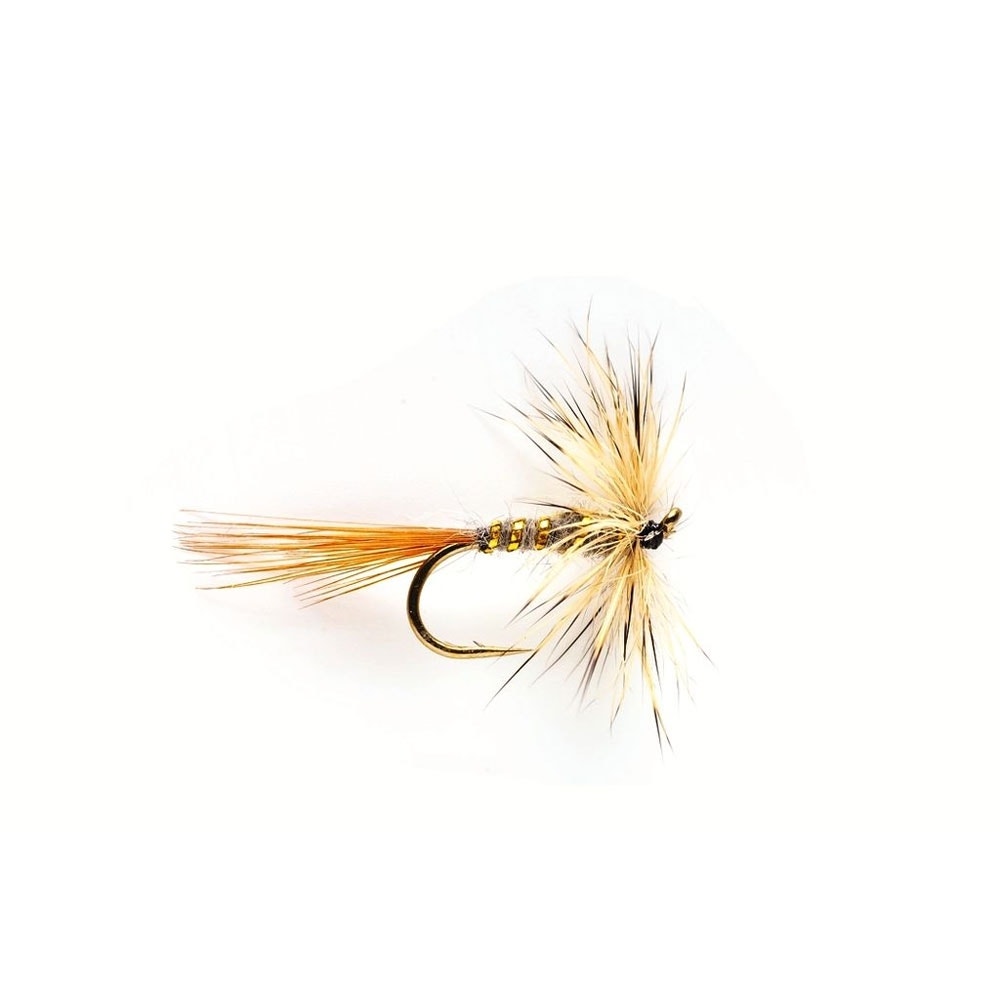
Fulling Mill Gold Ribbed Hare's Ear
Hackled dry fly · Product code 610 · Sizes 14 and 16
This is the hackled dry-fly version, mate — not the familiar nymph. A handy little option for trout taking insects off the top on lakes and rivers.
- Fulling Mill product code 610.
- Hackled dry fly for trout fishing.
- Available in hook sizes 14 and 16; sold individually.
- Suitable for surface fishing on lakes and rivers.
Make sure it’s the right one. This review covers Fulling Mill’s Gold Ribbed Hare’s Ear hackled dry fly, product code 610, rather than a submerged Hare’s Ear nymph.
Tackle Index Score
Tackle Index score
A useful, clearly focused dry-fly option. These scores reflect its design and intended role; value depends on the individual selling price.
- Product Quality8.3/10
- Performance8.6/10
- Impact on Fish Catching8.1/10
- Ease of Use8/10
- Value for Money8.3/10
If you buy through our links, we might get a small kickback, but it won’t cost you a penny extra. As an Amazon Associate I earn from qualifying purchases. The full story
Who it suits
Is it right for you?
Great for
- River anglers targeting rising trout. It offers a general surface-insect impression when a controlled, natural drift is the priority.
- Lake anglers building a practical dry-fly box. The two sizes give you a straightforward option for fish visibly feeding at the surface.
Maybe skip if
- Anglers looking for a Hare’s Ear nymph. This exact version is a hackled dry, so it doesn’t fill that underwater role.
- Anglers facing fish locked onto a very specific hatch. A closer match in size, silhouette or riding position may be needed when a general pattern gets refused.
The lowdown
Introducing the Fulling Mill Gold Ribbed Hare's Ear
This is the hackled dry-fly version, mate — not the familiar nymph. A handy little option for trout taking insects off the top on lakes and rivers.
- Fulling Mill product code 610.
- Hackled dry fly for trout fishing.
- Available in hook sizes 14 and 16; sold individually.
- Suitable for surface fishing on lakes and rivers.
Quick verdict
A sensible shout when the trout are looking up
The Gold Ribbed Hare’s Ear dry gives you a straightforward surface pattern for river and lake trout. Its appeal is simple: a general insect impression, a hackled profile and two useful small hook sizes.
Buy it for visible surface feeding, not because the Hare’s Ear name sounds like an all-round answer. If the fish are feeding underneath, this is the wrong tool for that particular job.
A useful, clearly focused dry-fly option. These scores reflect its design and intended role; value depends on the individual selling price.
- Product Quality
- 8.3/10
- Performance
- 8.6/10
- Impact on Fish Catching
- 8.1/10
- Ease of Use
- 8/10
- Value for Money
- 8.3/10
The established hackled pattern is a sound choice, without needing claims about premium materials or exceptional durability.
Its surface-insect role fits rising trout on both lakes and rivers, provided the presentation suits the conditions.
It provides a relevant offering for surface feeders, but feeding depth and drag control matter more than the name.
The pattern choice is straightforward, though small dry flies need careful tracking, presentation and maintenance.
Individual sale and usefulness across two water types make it a practical box addition, subject to the price you pay.
Head to head
How it stacks up
Side by side with the closest kit we've reviewed. This updates as we add more reviews.
Fulling Mill
Fulling Mill Gold Ribbed Hare's Ear (this one)
Top scorer
Scores are our own, out of 10. Best in each row is in green. Prices change, so check the latest before you buy.
The full rundown
Everything you'll want to know about the Fulling Mill Gold Ribbed Hare's Ear
First things first, mate: this Gold Ribbed Hare’s Ear belongs on top. Say “Hare’s Ear” beside a trout lake and plenty of anglers will picture a nymph heading down through the water. Fair enough, but that’s not what you’re buying here. Fulling Mill’s product code 610 is a hackled dry fly, intended to imitate insects on the surface. Get that distinction straight and the whole purchase makes more sense. It’s a fly for those moments when a trout gives the game away with a rise, rather than something you send searching through the depths.
The attraction is its general insect character. You’re not buying a promise that it perfectly copies every hatch, and you don’t need to treat it like one. A pattern like this gives you a sensible starting point when fish are taking something off the top but you haven’t pinned down every detail. Watch before you cast, though. A swirl just beneath the surface isn’t automatically a fish eating a floating adult. If nothing is actually being taken on top, changing the fishing depth may help more than endlessly changing dry flies.
On a river, the big job is getting it to travel with the current rather than skate across it. Pick a rising fish, look at the pace of the water between you and its feeding line, then make the shortest useful cast. Chucking across three different currents might look impressive, but it gives the line plenty of chances to drag your fly. A quieter approach and a manageable drift are often the better shout. Give the fish a natural-looking mouthful, not a tiny insect apparently trying to waterski past its nose.
On a lake, there’s a different rhythm to it. Instead of following one fixed feeding station, you may be working out where a cruising trout will show next. Resist the urge to land the fly straight on its last rise. Look for a direction of travel and put your offering ahead of the fish, with room for everything to settle. That’s especially useful in clear, calm water where a splashy delivery can undo the good work. A dry fly sitting quietly in the right place is a better proposition than one being constantly recast.
The listed hook sizes are 14 and 16, so you’ve got a simple choice rather than a bewildering wall of options. The 16 is the smaller of the two; use the insects you can see and the fish’s response to guide you. Don’t automatically assume smaller is cleverer. If the naturals are a better match for the 14, start there. Likewise, repeated refusals are a reason to check your drift and leader before blaming size alone. A badly presented smaller fly is still a badly presented fly, however neat it looks in the box.
The hackled dry-fly style is part of its surface presentation, but sensible fly care still matters. Follow the directions on any suitable dry-fly treatment, keep the application light and clear away slime after a fish. You want the fly fishing as intended, not carrying a soggy coating into the next cast. Drying it out or swapping to a fresh one can save a load of faff when there’s another trout rising within reach. This isn’t a claim of endless flotation; all dry-fly fishing benefits from a bit of attention between opportunities.
It’s sold individually, which is dead handy if you want to pick your own balance of sizes rather than buy a fixed selection. Just remember that a single fly is exactly that. Trees, awkward casts and worn tippet can all leave a gap in the box, so a spare makes sense if this is a pattern you plan to rely on. Check the hook point and knot regularly, too. There’s no need to turn it into a ritual, but discovering a damaged point after a missed chance is a properly avoidable bit of grief.
Where does that leave it? As a useful, uncomplicated option for trout anglers who enjoy watching the water and making a careful cast count. It suits rivers and lakes, but the feeding situation matters more than the venue label or the month. When the trout are looking up, it gives you a credible surface offering. When they aren’t, don’t force it. Keep a few different fly types available, respond to what’s happening and let this one do its actual job. Familiar name, clear purpose, no need to make it more complicated.
Specifications
The nuts and bolts
- Brand
- Fulling Mill
- Product code
- 610
- Fly type
- Hackled dry fly
- Hook sizes
- 14 and 16
- Target fish and water
- Trout; lakes and rivers
- Pack format
- Sold individually
Specs checked with Fulling Mill, Oct 2026.
Spot a model or spec change?
Our take
Same familiar name. Different bit of water.
The important distinction is where it fishes. Fulling Mill product code 610 is a dry fly intended to represent insects on the surface, rather than a nymph worked below it.
That makes observation and presentation the big deal. Find a feeding trout, work out its line and get the fly there without the leader towing it about.
The fly itself
What you’re actually buying
This is an individually sold Fulling Mill hackled dry fly in size 14 or 16. Its intended role is surface-insect imitation for trout, with both lakes and rivers in its remit. Think of it as a general dry-fly option, not a lure to retrieve through the water column.
The hackled profile is a meaningful part of the choice. Trout can respond differently to flies sitting in different positions at the surface, so a refusal doesn’t necessarily mean you need another colour. Check presentation first, then consider whether a different silhouette or a lower-riding pattern would better match the food.
Worth knowing. Check the dry-fly description and product code 610 when ordering. The Gold Ribbed Hare’s Ear name is also associated with nymphs, and those do a different job.
Picking your moment
For anglers who’d rather watch a rise than cast blind
River anglers with a visible feeding fish have the clearest use for it. You can judge the drift, see whether the trout commits and make a considered adjustment. Start within a comfortable casting distance and keep unnecessary line off conflicting currents where possible.
Lake anglers get a useful surface option too, particularly when fish show a repeatable cruising route. It’s less appealing if you struggle to see small dries or mostly fish when trout are feeding deeper. There’s nothing wrong with switching methods rather than staring at an untouched dry all afternoon.
Quick answers
The bits to settle before you buy
Is it a nymph? No — this exact product is a hackled dry fly. If your plan is to search below the surface with a Hare’s Ear, choose a nymph version instead. The shared pattern name doesn’t make the two interchangeable.
Which sizes are available, and how many do you get? Sizes 14 and 16 are listed, and each fly is sold individually. Choose size around the insects and feeding you can observe, rather than expecting one size to cover every rise.
Will it work on lakes as well as rivers? Both are intended uses. On moving water, a natural drift is usually the starting point. On stillwater, accurate placement ahead of a feeding trout matters more than continually moving the fly. Neither approach guarantees a take, but both give the pattern a sensible chance.
On paper
Pros & cons
What we like
- A general surface-insect pattern rather than a narrowly specialised imitation.
- Suitable for both river and lake trout fishing.
- Two useful small sizes for adjusting to the insects fish are taking.
- Individual sale lets you choose your own mix of sizes.
Worth knowing
- No substitute for a subsurface fly when trout aren’t feeding on top.
- Small dry flies can be tricky to track in glare, broken water or at distance.
- The familiar Hare’s Ear name makes it easy to confuse this version with a nymph.
Want one?
Add it to your Wanted list or join a Group Buy — shops see anonymous totals only.
Your questions answered
What anglers want to know
The stuff you’d ask your mate on the next peg. Straight answers, no waffle.
01Is this Gold Ribbed Hare’s Ear a nymph?
Is this Gold Ribbed Hare’s Ear a nymph?
No. Fulling Mill product code 610 is the hackled dry-fly version, intended to imitate insects on the surface.
02What sizes does it come in, and is it a multipack?
What sizes does it come in, and is it a multipack?
The listed hook sizes are 14 and 16. It’s sold individually, not as a multipack.
03Can you fish it on both lakes and rivers?
Can you fish it on both lakes and rivers?
Yes. It’s intended for trout on both. On rivers, concentrate on avoiding drag; on lakes, place it ahead of feeding fish and avoid unnecessary disturbance.
What anglers say
The word from the bank
Our read: a sensible shout when the trout are looking up. The strongest reasons to choose it are a general surface-insect pattern rather than a narrowly specialised imitation. and suitable for both river and lake trout fishing.; the main trade-off is no substitute for a subsurface fly when trout aren’t feeding on top..
Our take on the feedback
Why it appeals
Checked Sept '26 — “A general surface-insect pattern rather than a narrowly specialised imitation.”
Best fit
Checked Sept '26 — “River anglers targeting rising trout: It offers a general surface-insect impression when a controlled, natural drift is the priority.”
Worth knowing
Checked Sept '26 — “No substitute for a subsurface fly when trout aren’t feeding on top.”
Tackle Index’s take from the product details and fishing fit we checked. We haven’t found enough independent public feedback to call this an angler consensus yet.
Angler score
What our readers rate Fulling Mill Gold Ribbed Hare's Ear
No angler score yet — nobody's reviewed Fulling Mill Gold Ribbed Hare's Ear here. Be the first and get the score started.
Owner reports
Own this? Help the next angler.
Quick multiple-choice reports from people who say they own the Fulling Mill Gold Ribbed Hare's Ear. Not verified purchases, and kept separate from our score.
No owner reports yet.
Alternatives & go-withs