Photos: Fulling Mill · supplied retailer imagery
Fly fishing · Emerger flies · Our take
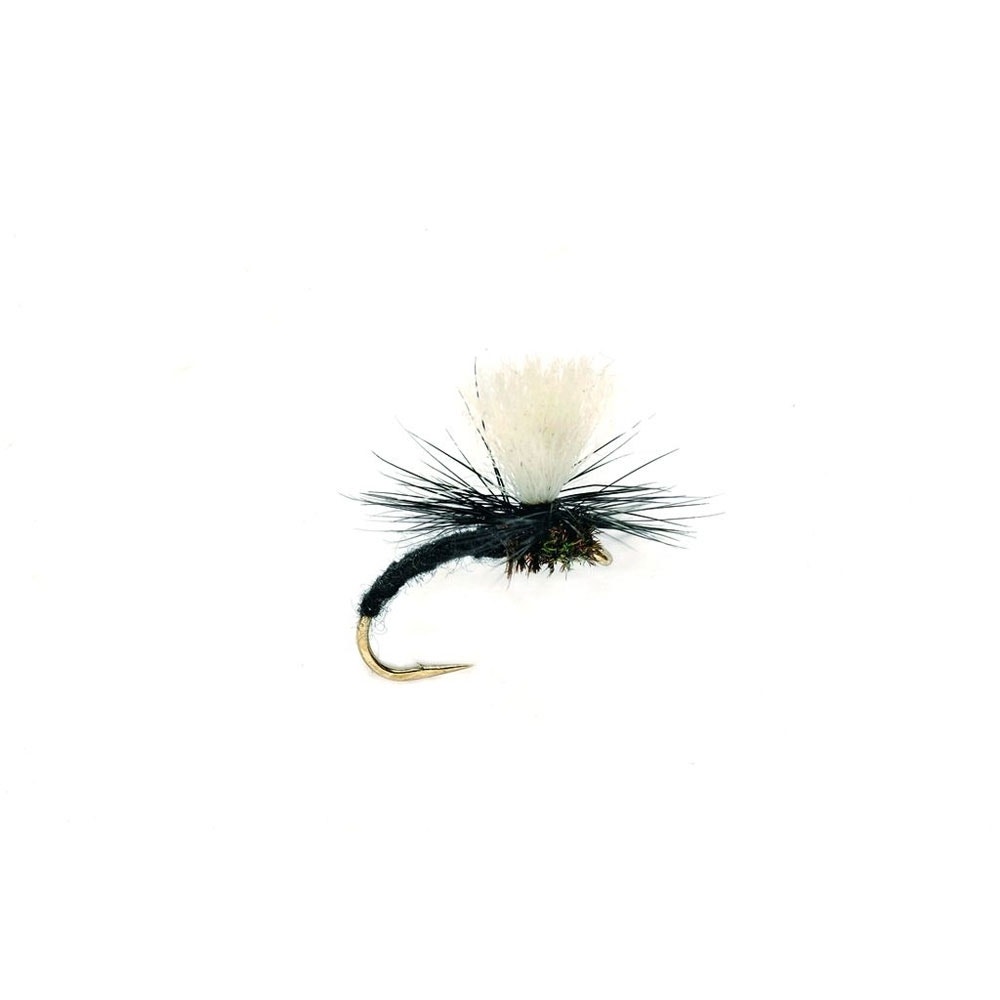
Fulling Mill Klinkhammer Black
Black Klinkhammer
A black parachute emerger for trout feeding in the surface film. Easy to keep an eye on, useful on rivers and stillwaters, and a cracking pattern to have ready when a high-floating dry isn’t getting a look.
- Black Klinkhammer emerger from Fulling Mill, product code 548.
- Parachute-style construction with the abdomen and tail designed to drop into the water.
- Listed in hook sizes 12, 14 and 16; sold individually.
- Intended for trout fishing on running water and stillwaters.
Make sure it’s the right one. Fulling Mill product code 548. This is an artificial trout fly, rather than a conventional spinning lure.
Tackle Index Score
Tackle Index score
A useful, well-conceived emerger with broad trout-fishing appeal; its main strengths are posture and visibility, rather than any promise of automatic takes.
- Product Quality8.8/10
- Performance9.1/10
- Impact on Fish Catching8.6/10
- Ease of Use8.8/10
- Value for Money8.3/10
If you buy through our links, we might get a small kickback, but it won’t cost you a penny extra. As an Amazon Associate I earn from qualifying purchases. The full story
Who it suits
Is it right for you?
Great for
- River trout anglers fishing to rising fish. The emerger posture is useful when trout are taking insects in the film, while the visible upper section helps you follow a drag-free drift.
- Stillwater anglers faced with quiet surface feeding. It gives you a low-riding alternative to a fully floating dry when trout are cruising and sipping near the top.
Maybe skip if
- Anglers targeting trout feeding at depth. This is a surface-film pattern, not a substitute for a nymph or another subsurface approach.
- Anyone wanting a lure to cast on spinning tackle. It’s a lightweight artificial fly intended for a fly-fishing setup, not a weighted casting lure.
The lowdown
Introducing the Fulling Mill Klinkhammer Black
A black parachute emerger for trout feeding in the surface film. Easy to keep an eye on, useful on rivers and stillwaters, and a cracking pattern to have ready when a high-floating dry isn’t getting a look.
- Black Klinkhammer emerger from Fulling Mill, product code 548.
- Parachute-style construction with the abdomen and tail designed to drop into the water.
- Listed in hook sizes 12, 14 and 16; sold individually.
- Intended for trout fishing on running water and stillwaters.
Quick verdict
A sensible fly-box staple
The Fulling Mill Klinkhammer Black makes plenty of sense for trout picking food out of the surface film. Its parachute construction supports the fly while the abdomen hangs down into the water, putting the business end where an emerging insect would be.
It’s a useful option for running water and stillwaters, with sizes 12, 14 and 16 covering a handy spread. Just don’t expect the pattern to rescue a dragging leader or tempt fish feeding well below the surface.
A useful, well-conceived emerger with broad trout-fishing appeal; its main strengths are posture and visibility, rather than any promise of automatic takes.
- Product Quality
- 8.8/10
- Performance
- 9.1/10
- Impact on Fish Catching
- 8.6/10
- Ease of Use
- 8.8/10
- Value for Money
- 8.3/10
The parachute construction and balanced surface posture make this a thoughtfully designed trout pattern.
Visible support and a hanging lower body are a useful combination for presenting an emerger on rivers or stillwaters.
It offers a worthwhile alternative for film-feeding trout, though natural presentation and suitable conditions still do the heavy lifting.
The visible construction helps you follow the fly, with only sensible floatant placement and routine drying to think about.
Individual sale and usefulness across both water types support its practical value, although the buying price determines the final bargain.
Head to head
How it stacks up
Side by side with the closest kit we've reviewed. This updates as we add more reviews.
Fulling Mill
Fulling Mill Klinkhammer Black (this one)
Top scorer
Scores are our own, out of 10. Best in each row is in green. Prices change, so check the latest before you buy.
The full rundown
Everything you'll want to know about the Fulling Mill Klinkhammer Black
Some rising trout make the whole thing look dead easy. There’s a nose, a little ring, another nose a few feet away — and then your dry drifts through untouched. Lovely. The Fulling Mill Klinkhammer Black is the sort of pattern that makes sense in that situation, especially when the fish are feeding in the surface film rather than taking insects sitting cleanly on top. It’s a parachute-style emerger intended for trout, with a black pattern and a posture that puts part of the fly beneath the surface. Simple idea, but a useful one.
The important bit is how it sits. Fulling Mill describes the abdomen and tail as dropping into the water, while the parachute construction supports the fly at the surface. That gives you something quite different from a dry designed to keep its whole body up and out of the drink. Emerging insects can be vulnerable as they work through that surface layer, and the Klinkhammer shape offers a general impression of that stage. You’re not buying a magic hatch-matcher here. You’re buying a recognisable emerger style that earns its place through presentation as much as appearance.
On running water, think about the drift before you start blaming the fly. A black Klinkhammer pulled sideways by the leader is still being pulled sideways, however promising the pattern looks. Put it upstream of the feeding fish, leave enough slack for a natural passage and keep an eye on what the currents are doing between you and the fly. Shorter, controlled casts are often more useful than chucking the whole lot across three different flows. The visible, well-balanced construction is handy here because following the fly helps you spot both a take and the first signs of drag.
There’s a place for it on stillwaters too. If trout are cruising near the top and making those quiet, measured rises, a film-hanging emerger is a sensible thing to put in their path. Start by letting it sit rather than immediately giving it a retrieve. Watch the fish, work out its likely route and try to land the fly ahead without dropping the leader over its head. A small adjustment can come later if the fish suggest it, but this isn’t a lure that needs constant movement to make sense. Sometimes doing less is the clever bit.
The listed sizes are 12, 14 and 16, so you’ve got a useful choice without disappearing into a bewildering pattern catalogue. Let the visible insects and the trout’s response guide you. A smaller offering can be worth a go when fish inspect a larger fly and refuse it, though size alone won’t fix a poor drift or clumsy cast. Equally, there’s no prize for fishing the smallest fly in the box if a larger one suits what’s happening. Carrying a couple of sizes lets you make a meaningful change while keeping the same general shape and fishing approach.
A bit of care with floatant helps preserve the point of the pattern. If you’re using a suitable dry-fly treatment, keep it focused on the supporting hackle and upper section rather than coating the hanging body indiscriminately. You want that lower section to enter the water, not sit stubbornly above it. After a fish, rinse away any slime and dry the fly before deciding it’s finished for the day. That’s general Klinkhammer housekeeping rather than anything complicated, and it’s less faff than repeatedly fishing a sodden fly that you can barely follow across the surface.
As a buying choice, this is a straightforward addition to a trout fly box, not a replacement for everything already in it. Fulling Mill sells it individually under product code 548, so you can pick the sizes you actually need. The black profile won’t cover every hatch, and fish feeding well down call for a different approach altogether. But for river or stillwater trout taking food at the film, the combination of visibility and a submerged lower body is properly useful. Keep a few alongside your conventional dries and nymphs, and you’ve got another sensible answer when the rises look promising but the takes aren’t coming.
Specifications
The nuts and bolts
- Brand
- Fulling Mill
- Pattern
- Klinkhammer Black
- Product code
- 548
- Fly type
- Parachute-style emerger
- Listed hook sizes
- 12, 14 and 16
- Pack quantity
- One fly
Specs checked with Fulling Mill, Oct 2026.
Spot a model or spec change?
Our take
The trick is where it sits
This isn’t about keeping every bit of the fly perched above the water. The Klinkhammer’s appeal is that partly submerged posture, with the lower body hanging through the surface film.
You get a visible fly to follow and an emerger-shaped offering underneath. That’s a handy combination when trout are sipping rather than making splashy rises.
The pattern
Closer look: support above, attraction below
You’re buying a single Fulling Mill Black Klinkhammer, a parachute-style emerger intended for trout. The design supports the fly at the surface while allowing the abdomen and tail to enter the water. That split between the floating support and hanging body is the main reason to choose it over a conventional high-riding dry.
Visibility and balance are useful practical features, not just nice extras. Being able to follow the fly helps you judge its drift and react when a fish takes it. It doesn’t mean it’ll stand out equally well against every glare patch or broken current, so position yourself sensibly where the swim allows.
Worth knowing. Don’t treat the whole fly as something that must stay bone dry. Its lower body is meant to hang in the water. Apply any suitable floatant sparingly to the supporting parts.
On the water
Who it suits: anglers watching the rise forms
River anglers fishing to rising trout are the obvious audience. When fish are feeding at the film, this is a sensible alternative to changing endlessly between fully floating dries. Give it a clean drift through the feeding lane before deciding whether the size or pattern needs changing.
Stillwater anglers get a useful option too, especially for visible cruisers feeding near the surface. Lead the fish, keep disturbance down and avoid lifting off for another cast just as it reaches your fly. Patience can matter more than adding a cheeky twitch.
It’s less useful if nothing suggests surface feeding and the trout are holding deep. Don’t force a dry-fly solution just because it’s the most enjoyable way to fish. Equally, anyone browsing the lures category for a spinner or plug should clock that this is a fly-fishing pattern.
Quick answers
FAQs in full: fishing it without the faff
Dry fly or emerger? Emerger is the more useful description. You fish it at the surface, but the abdomen and tail are designed to drop into the water. Don’t mistake that partly submerged posture for the fly failing to float properly.
Rivers or stillwaters? Both. On rivers, concentrate on avoiding drag and putting the fly through the right feeding lane. On stillwaters, a static starting presentation gives cruising trout a chance to find it naturally. Let the fish’s behaviour guide any changes rather than retrieving it automatically.
What sizes and pack quantity? The listed choices are 12, 14 and 16, sold individually. Size 16 is the smaller hook-size option of those three. Match the apparent food size where you can, and remember that a change of size is only one possible answer to a refusal.
On paper
Pros & cons
What we like
- Partly submerged posture suits trout feeding on emerging insects.
- Visible parachute construction helps you track the drift.
- Useful across both rivers and stillwaters.
- Three listed sizes let you adjust the offering without changing pattern.
Worth knowing
- Not the right approach when trout are feeding well down.
- Needs sensible floatant placement to preserve its intended posture.
- The black profile won’t match every hatch or satisfy every picky fish.
Want one?
Add it to your Wanted list or join a Group Buy — shops see anonymous totals only.
Your questions answered
What anglers want to know
The stuff you’d ask your mate on the next peg. Straight answers, no waffle.
01Is the Klinkhammer Black a dry fly or an emerger?
Is the Klinkhammer Black a dry fly or an emerger?
It’s an emerger fished at the surface. The parachute construction supports it while the abdomen and tail drop into the water, rather than the whole fly riding above it.
02Can you use it on rivers and stillwaters?
Can you use it on rivers and stillwaters?
Yes. It’s suitable for both, particularly when trout are taking food in or close to the surface film. Aim for a natural drift on rivers and start with a static presentation on stillwaters.
03Which sizes are listed, and how many do you get?
Which sizes are listed, and how many do you get?
Sizes 12, 14 and 16 are listed, and each fly is sold individually. Pick the size around the insects and feeding fish rather than assuming the biggest fly is best.
What anglers say
The word from the bank
Our read: a sensible fly-box staple. The strongest reasons to choose it are partly submerged posture suits trout feeding on emerging insects. and visible parachute construction helps you track the drift.; the main trade-off is not the right approach when trout are feeding well down..
Our take on the feedback
Why it appeals
Checked Sept '26 — “Partly submerged posture suits trout feeding on emerging insects.”
Best fit
Checked Sept '26 — “River trout anglers fishing to rising fish: The emerger posture is useful when trout are taking insects in the film, while the visible upper section helps you follow a drag-free drift.”
Worth knowing
Checked Sept '26 — “Not the right approach when trout are feeding well down.”
Tackle Index’s take from the product details and fishing fit we checked. We haven’t found enough independent public feedback to call this an angler consensus yet.
Angler score
What our readers rate Fulling Mill Klinkhammer Black
No angler score yet — nobody's reviewed Fulling Mill Klinkhammer Black here. Be the first and get the score started.
Owner reports
Own this? Help the next angler.
Quick multiple-choice reports from people who say they own the Fulling Mill Klinkhammer Black. Not verified purchases, and kept separate from our score.
No owner reports yet.
Alternatives & go-withs