Photos: Fulling Mill · product images found via web image search
Fly fishing · Blobs & lures · Our take
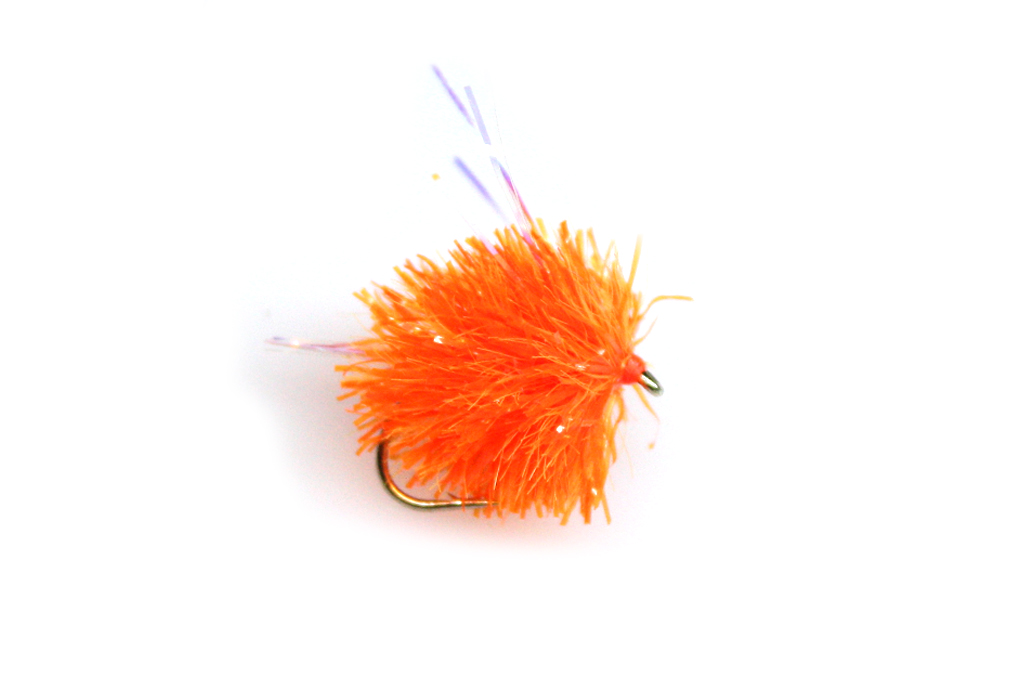
Fulling Mill Orange Blob
Orange · Hook size 10 · Sold individually
A size 10 orange attractor for stillwater trout, happy being left almost alone on a slow-glass line or pulled quickly on a sinker. Simple stuff, but depth and pace still matter.
- Fulling Mill Orange Blob, product code 3100.
- Orange pattern tied on a size 10 hook.
- Sold individually; listed in Fulling Mill’s Blobs category within Streamers & Lures.
- Can be fished static on a slow-glass line or retrieved quickly on a sinking line.
Make sure it’s the right one. This is Fulling Mill’s Orange Blob, product code 3100 — an artificial fly, not a conventional spinning lure.
Tackle Index Score
Tackle Index score
A useful stillwater attractor with contrasting presentation options; its appeal rests on versatility, not any guarantee of extra fish.
- Product Quality8.3/10
- Performance8.8/10
- Impact on Fish Catching8.1/10
- Ease of Use8.8/10
- Value for Money8.3/10
If you buy through our links, we might get a small kickback, but it won’t cost you a penny extra. As an Amazon Associate I earn from qualifying purchases. The full story
Who it suits
Is it right for you?
Great for
- Stillwater trout anglers building an attractor selection. It gives you a bold orange option to alternate with quieter patterns as the fishing changes.
- Anglers happy to vary lines and retrieves. The static slow-glass and fast sinking-line approaches give you useful room to experiment.
Maybe skip if
- Anglers targeting trout locked onto particular natural food. A closer imitation may be a better starting point than a conspicuous orange attractor.
- Anyone fishing an imitation-only venue. Check the rules first: blob-style flies may fall outside what the fishery allows.
The lowdown
Introducing the Fulling Mill Orange Blob
A size 10 orange attractor for stillwater trout, happy being left almost alone on a slow-glass line or pulled quickly on a sinker. Simple stuff, but depth and pace still matter.
- Fulling Mill Orange Blob, product code 3100.
- Orange pattern tied on a size 10 hook.
- Sold individually; listed in Fulling Mill’s Blobs category within Streamers & Lures.
- Can be fished static on a slow-glass line or retrieved quickly on a sinking line.
Quick verdict
A handy change of pace for the trout box
The Orange Blob makes sense when you want a bright stillwater attractor without committing to one retrieve. Fish it almost static or get it moving: you’ve got options before you need to change the fly.
It’s less convincing as your only answer to fussy trout. Keep some quieter patterns alongside it, check the fishery rules and remember that a cracking colour won’t rescue the wrong depth.
A useful stillwater attractor with contrasting presentation options; its appeal rests on versatility, not any guarantee of extra fish.
- Product Quality
- 8.3/10
- Performance
- 8.8/10
- Impact on Fish Catching
- 8.1/10
- Ease of Use
- 8.8/10
- Value for Money
- 8.3/10
It’s a clearly identified branded fly, though the confirmed details don’t justify a stronger claim about finish or durability.
The static slow-glass and quick sinking-line options give it a useful spread of presentations.
A bold attractor adds a worthwhile alternative, but success still depends on depth, fish behaviour and presentation.
It’s straightforward to fish as a single fly, with line management rather than complicated rigging providing the main learning curve.
Individual sale and multiple presentation options support its usefulness, although the asking price will decide the final value.
Head to head
How it stacks up
Side by side with the closest kit we've reviewed. This updates as we add more reviews.
Fulling Mill
Fulling Mill Orange Blob (this one)
Top scorer
Scores are our own, out of 10. Best in each row is in green. Prices change, so check the latest before you buy.
The full rundown
Everything you'll want to know about the Fulling Mill Orange Blob
The Fulling Mill Orange Blob is one of those flies that doesn’t muck about with subtlety. It’s orange, it’s an attractor, and it belongs in the stillwater trout box rather than among your carp rigs or spinning lures. This particular listing is the size 10 version, sold individually. The appeal is straightforward: you’ve got a bold pattern that can be presented in very different ways, without pretending it’s a perfect copy of whatever tiny morsel the trout have decided is dinner today.
That distinction matters, mate. A blob isn’t something you choose because you’ve spotted an orange insect hatch drifting across the lake. You’re offering a conspicuous target and seeing whether the fish respond. On stocked trout waters, that can be a perfectly sensible part of your approach, especially when you’re searching rather than covering a clearly identified hatch. It’s not a promise that bright beats natural, though. Some days a quieter nymph or buzzer is the better shout, and keeping both approaches available saves a lot of stubborn casting.
The most useful detail is the range of presentations Fulling Mill suggests for this exact pattern. You can fish it static on a slow-glass line, or retrieve it quickly on a sinking line. Those aren’t tiny tweaks to the same method; they ask quite different questions of the fish. One keeps the presentation restrained, while the other gives them a moving target to follow or intercept. That makes this more interesting than a fly you buy with only one pace in mind.
For the slow approach, think about what your line and the conditions are doing before you decide nothing’s happening. Static doesn’t mean the whole setup is nailed in place. A slow-glass line is still sinking, and wind or drift can move things around as well. Keep manageable contact without constantly dragging the fly out of its presentation, and watch for changes at the line. There’s a balance between giving it time and leaving so much slack that a gentle take becomes very easy to miss.
At the quicker end, a sinking line lets you explore a different presentation, but the countdown still deserves your attention. Chucking out and hauling back immediately on every cast can leave you fishing above trout sitting deeper. Let the line settle for a repeatable period, retrieve, then alter that count if you need to search another layer. Keep the rest reasonably consistent while you do it. Otherwise you’re changing depth, speed and direction together, and working out what made the difference becomes a proper muddle.
You don’t need to make the leader complicated just because blobs turn up in technical stillwater conversations. A single fly is a tidy starting point, particularly if you’re learning to manage sinking lines or fishing with limited room behind you. More experienced anglers can work an attractor into a multi-fly cast where the rules allow. Either way, match the leader to the tackle, likely fish and conditions, check your knots, and leave enough space between anglers. An enthusiastic retrieve isn’t a reason to forget the basics.
Where would it earn its place? In a small selection that already includes a few less shouty options. The orange colour gives you a clear change when your quieter offering isn’t getting attention, while the presentation range lets you try a different pace before reaching for another fly. Don’t read that as a season-by-season guarantee. Water temperature, clarity, light and fishing pressure all affect the bigger picture. If trout are visibly picking off a particular food item, matching that meal may make more sense than insisting on orange.
Buying it individually is handy if you just want to fill that attractor slot without buying a bundle. Its real value, though, depends on whether you’ll use it on suitable water and give the presentation some thought. Check that blobs are allowed, keep a subtler alternative ready, and treat depth as seriously as colour. That’s the sensible pitch here: a straightforward size 10 trout fly with two very different gears, not a magic little shortcut to getting bagged up every time you visit the fishery.
Specifications
The nuts and bolts
- Brand
- Fulling Mill
- Pattern and colour
- Orange Blob · Orange
- Hook size
- 10
- Product code
- 3100
- Category
- Blobs · Streamers & Lures · Manufacturer Group 1
- Pack quantity
- One fly
Specs checked with Fulling Mill, Oct 2026.
Spot a model or spec change?
Our take
Same fly, two very different approaches
The useful bit here isn’t just the orange colour. Fulling Mill describes fishing this pattern static on a slow-glass line or retrieving it quickly on a sinking line — two properly different presentations.
That gives you a sensible way to work through a quiet spell. Change the depth or pace deliberately, rather than swapping flies after every cast and learning next to nothing.
What you’re buying
A size 10 attractor, without the extra fuss
The identity is nice and clear: Fulling Mill Orange Blob, orange, size 10, product code 3100. You’re buying one fly. Fulling Mill places it among its Blobs within Streamers & Lures, so don’t let the word “lure” send you reaching for the spinning rod. This is a fly-fishing pattern.
The defining attraction is that bold orange presentation, rather than a close imitation of a specific natural food item. Think of it as one useful choice in the box, not the whole box sorted. The supported slow-glass and sinking-line methods give it flexibility, although the line you choose will do plenty of the work in controlling where and how it fishes.
Worth knowing. Static doesn’t mean floating. On a slow-glass line, the setup can continue settling even without a retrieve. Allow for the depth of the swim and avoid leaving it to sink into weed while you’re busy sorting something else.
Your sort of fishing?
Best for anglers who’ll change the presentation
This is a sensible fit for stillwater trout anglers who like having an obvious attractor alongside their more natural-looking flies. It’s also approachable as a single-fly option: there’s no need to start with a complicated team just to give it a go. The bigger skill is managing line depth and staying in touch with the fly.
If you already carry different fly lines, you’re better placed to explore its contrasting methods. Make changes with a purpose. Try a different countdown before changing everything else, or hold depth roughly consistent while adjusting retrieve pace. That’s a more useful habit than blaming the fly after a handful of empty casts.
It’s less suited to anglers who only fish imitation-led waters, or to situations where trout are clearly feeding selectively on something small and specific. Check the venue’s fly and hook rules before buying for a particular trip. There’s nothing clever about turning up with your chosen approach ruled out before the first cast.
Quick bank-side answers
The bits to get straight before tying it on
Is it a conventional lure? No — it’s an artificial fly intended for fly-fishing tackle. “Streamers & Lures” is the category name used for these fly patterns. You’re not buying a weighted casting lure for a spinning setup.
Which version is this? The orange size 10 Orange Blob, Fulling Mill code 3100, sold as one fly. Hook size describes the hook, not a stated overall length or weight, so don’t use that number as a substitute for either.
What’s the right retrieve? There isn’t one fixed answer. The stated options include static fishing on a slow-glass line and a quick retrieve on a sinking line. Pick a sensible starting depth, pay attention to follows or takes, and adjust. If neither approach gets interest, a subtler pattern is a perfectly reasonable next move.
On paper
Pros & cons
What we like
- Offers both near-static and fast-retrieve presentation options.
- Bright orange gives you a clear attractor choice alongside subtler flies.
- Buying individually makes it easy to add one to an existing fly selection.
- Straightforward pattern to use while experimenting with depth and retrieve.
Worth knowing
- Bold orange won’t suit every feeding mood, especially with selective fish.
- Getting the full range of presentations may mean changing fly lines.
- Blob patterns aren’t permitted under every fishery’s rules.
Want one?
Add it to your Wanted list or join a Group Buy — shops see anonymous totals only.
Your questions answered
What anglers want to know
The stuff you’d ask your mate on the next peg. Straight answers, no waffle.
01Is the Fulling Mill Orange Blob a fly or a spinning lure?
Is the Fulling Mill Orange Blob a fly or a spinning lure?
It’s an artificial fly. The Streamers & Lures category refers to fly patterns here, rather than plugs, spoons or other conventional spinning lures.
02What size is it, and how many do you get?
What size is it, and how many do you get?
This listing is the orange size 10 pattern, product code 3100. It’s sold individually.
03Should you fish it slowly or pull it fast?
Should you fish it slowly or pull it fast?
Either can be appropriate. Fulling Mill describes fishing it static on a slow-glass line or retrieving it quickly on a sinking line. Work out the useful depth, then vary the pace to suit the response.
What anglers say
The word from the bank
Our read: a handy change of pace for the trout box. The strongest reasons to choose it are offers both near-static and fast-retrieve presentation options. and bright orange gives you a clear attractor choice alongside subtler flies.; the main trade-off is bold orange won’t suit every feeding mood, especially with selective fish..
Our take on the feedback
Why it appeals
Checked Sept '26 — “Offers both near-static and fast-retrieve presentation options.”
Best fit
Checked Sept '26 — “Stillwater trout anglers building an attractor selection: It gives you a bold orange option to alternate with quieter patterns as the fishing changes.”
Worth knowing
Checked Sept '26 — “Bold orange won’t suit every feeding mood, especially with selective fish.”
Tackle Index’s take from the product details and fishing fit we checked. We haven’t found enough independent public feedback to call this an angler consensus yet.
Angler score
What our readers rate Fulling Mill Orange Blob
No angler score yet — nobody's reviewed Fulling Mill Orange Blob here. Be the first and get the score started.
Owner reports
Own this? Help the next angler.
Quick multiple-choice reports from people who say they own the Fulling Mill Orange Blob. Not verified purchases, and kept separate from our score.
No owner reports yet.
Alternatives & go-withs