Photos: Savage Gear · supplied retailer imagery
Predator lures · Topwater · Our take
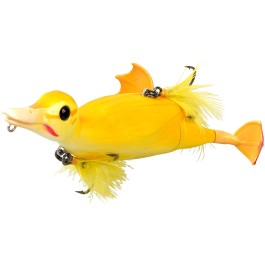
Savage Gear 3D Suicide Duck
10.5 cm / 28 g and 15 cm / 70 g
A duckling-shaped surface lure with spinning feet and a seriously noticeable wake. It’s a cracking specialist option for pike that are willing to look up, rather than an everyday answer for every swim.
- Topwater duckling imitation with 3D-scanned detail.
- Available in 10.5 cm / 28 g and 15 cm / 70 g versions.
- Spinning semi-soft feet create splashes, bubbles and a wake.
- Beak and chest attachments offer different running postures.
Make sure it’s the right one. This review covers the 3D Suicide Duck with a hard ABS body, spinning semi-soft feet and two feather-covered trebles.
Tackle Index Score
Tackle Index score
A well-considered specialist surface lure, with its strongest appeal in the action and presentation options rather than all-round versatility.
- Product Quality9/10
- Performance8.9/10
- Impact on Fish Catching8.3/10
- Ease of Use8.8/10
- Value for Money8/10
If you buy through our links, we might get a small kickback, but it won’t cost you a penny extra. As an Amazon Associate I earn from qualifying purchases. The full story
Who it suits
Is it right for you?
Great for
- Pike anglers deliberately targeting the surface. It gives you a conspicuous moving target for working open lanes, margins and the edges of cover.
- Lure anglers adding a specialist option. It offers a very different presentation from the usual shads, spoons and diving plugs.
Maybe skip if
- Anglers wanting one lure for every depth. It cannot search deeper water when predators won’t leave it.
- Anglers fishing thick surface weed. Hook clips and a removable belly treble don’t make it a genuinely weedless lure.
The lowdown
Introducing the Savage Gear 3D Suicide Duck
A duckling-shaped surface lure with spinning feet and a seriously noticeable wake. It’s a cracking specialist option for pike that are willing to look up, rather than an everyday answer for every swim.
- Topwater duckling imitation with 3D-scanned detail.
- Available in 10.5 cm / 28 g and 15 cm / 70 g versions.
- Spinning semi-soft feet create splashes, bubbles and a wake.
- Beak and chest attachments offer different running postures.
Quick verdict
More than a novelty duck
The Suicide Duck has proper thinking behind its cheeky looks. Spinning feet create surface disturbance, two attachment points change its posture, and the belly-down balance helps it arrive ready for the retrieve.
Buy it for deliberate surface fishing around clear lanes and cover edges. Don’t expect it to replace a subsurface lure, and choose the size around your rod’s casting range rather than how outrageous you fancy going.
A well-considered specialist surface lure, with its strongest appeal in the action and presentation options rather than all-round versatility.
- Product Quality
- 9/10
- Performance
- 8.9/10
- Impact on Fish Catching
- 8.3/10
- Ease of Use
- 8.8/10
- Value for Money
- 8/10
The hard ABS body, durable semi-soft feet and retaining clips make for a thoughtfully equipped lure.
Spinning feet and two towing positions offer useful surface action, though exposed trebles restrict its use around heavy weed.
It adds a distinctive surface option, but its contribution depends on predators being willing to rise.
A steady retrieve produces the core action, with sensible tackle matching especially important for the larger size.
Its specialist role makes it a more worthwhile addition for regular surface anglers than for someone needing one versatile lure.
Head to head
How it stacks up
Side by side with the closest kit we've reviewed. This updates as we add more reviews.
Savage Gear
Savage Gear 3D Suicide Duck (this one)
Top scorer
Scores are our own, out of 10. Best in each row is in green. Prices change, so check the latest before you buy.
The full rundown
Everything you'll want to know about the Savage Gear 3D Suicide Duck
A duckling with treble hooks sounds like something dreamt up after one too many brews in the tackle shop. But the Savage Gear 3D Suicide Duck isn’t just there to raise a grin. It’s a purpose-built topwater predator lure, using a recognisable silhouette and plenty of surface disturbance to draw attention from below. For UK anglers, pike are the obvious audience. You’re buying a lure for those swims and moments when a fish might leave cover and have a proper go at something moving overhead.
The clever bit isn’t simply that it looks like a little duck. Its spinning feet produce splashes, a bubble trail and a wake as you retrieve it. That gives you movement and disturbance without having to work through a complicated sequence of rod taps. A steady wind is a sensible starting point, with the speed adjusted until the feet are working cleanly. Watch it beside the bank first, mate. You’ll learn more from seeing its action over a few yards than from immediately launching it towards the far margin.
There are two quite different tackle propositions here. The 10.5 cm version weighs 28 g, while the 15 cm duck weighs 70 g. That’s a meaningful jump, not just a slightly bigger mouthful. The smaller one is the more approachable choice if your lure rod comfortably covers its weight. The larger one belongs on an outfit rated to cast it, with enough control to place it accurately. Don’t ask a light spinning rod to lob 70 g just because the lure looks more bath toy than serious hardware.
Construction is a hard ABS body paired with semi-soft, durable feet, and the duckling detail comes from 3D scanning. It certainly gives the lure character, though realism alone isn’t a promise of bites. More useful in practice is the balance designed to make it land belly-down. A surface lure needs to arrive in a workable position, particularly when you’ve dropped a cast beside cover and want it moving through the interesting bit straight away. That’s the sort of detail that matters beyond the initial novelty on the tackle-shop shelf.
You also get two line attachment positions, which give the same lure different attitudes in the water. Clip to the beak for a lower running posture, or use the chest attachment for a higher fleeing action. It’s a handy adjustment when you want to alter the presentation without digging out another lure. Start with a controlled retrieve and change one thing at a time. If you’re forever changing speed, attachment point and casting angle together, it gets harder to work out what actually interests the fish.
The hook arrangement deserves a proper look before you start chucking it around lilies. Two feather-covered trebles sit at the chest and back, with snug-fit clips holding them against the body. The belly treble can be removed for snaggy conditions, but that doesn’t magically turn the duck into a weedless frog. You still have exposed points to think about. Clear channels, the outside of weedbeds and open water alongside cover are more sensible starting places than dragging it straight through a thick mat and hoping for the best.
Session-wise, this is a change-of-presentation lure rather than something you need to persevere with all day. Look for signs of predators using shallow water, or try it along a margin where there’s room for a fish to come up beneath it. Surface disturbance is easier to follow in relatively settled conditions, although calm water doesn’t guarantee a take. If everything suggests the fish are holding deeper and refusing to rise, put the duck away for a bit. There’s no prize for stubbornly fishing above them while a subsurface option sits unused.
Keep the practical pike kit sorted too: a suitable wire trace, strong connections, long forceps and proper landing and unhooking gear. With a visible surface attack, resist the temptation to snatch the lure away at the first splash; respond when you feel the fish’s weight. That’s general topwater sense, not a magic trick. The Suicide Duck’s appeal is straightforward: a distinctive, noisy surface presentation with useful design touches. It earns its place as a specialist option, provided you’re happy buying a lure for the right opportunity rather than every opportunity.
Specifications
The nuts and bolts
- Lure type
- Topwater duckling imitation
- Smaller version
- 10.5 cm, 28 g
- Larger version
- 15 cm, 70 g
- Construction
- Hard ABS body with semi-soft, durable spinning feet
- Hooks
- Two feather-covered trebles at chest and back positions, with snug-fit retaining clips
- Line attachments
- Beak for a lower posture; chest for a higher fleeing action
Specs checked with Savage Gear, Oct 2026.
Spot a model or spec change?
Our take
The feet do the talking
The duckling detail catches your eye, but the spinning feet are the working end of the design. They throw splashes, bubbles and a wake that give predators a moving surface target to investigate.
That makes the Suicide Duck an attention-grabber, not a subtle search lure. Its appeal depends far more on fish being prepared to rise than on the novelty of fishing with a miniature duck.
Design and action
A surface lure with more going on than its looks
The ABS body supplies the duckling shape, while the semi-soft spinning feet generate the disturbance. Keep those feet clear of loose weed: anything that stops them turning interferes with the action you bought it for. A quick check after each retrieve is less faff than wasting the next cast.
The two towing positions are a useful feature rather than just another pair of eyes on the lure. The beak gives the lower posture; the chest produces the higher fleeing action. Neither is automatically best. Try each where you can see the lure and pick the presentation that suits the water in front of you.
Worth knowing. Removing the belly treble reduces the number of exposed hook points, but also changes the hooking arrangement. Treat it as a trade-off for snaggy water, not a free upgrade or permission to fish straight through dense weed.
Your tackle and water
Best for anglers with a surface opportunity in mind
If you already carry subsurface lures and want something for clear lanes beside reeds, open margins or weedbed edges, the duck makes sense. It lets you show fish something quite different without needing a fiddly retrieve. Accurate placement still matters more than simply making the biggest splash.
It’s a less convincing purchase if you mostly fish deep water with little reason for predators to rise. Likewise, don’t choose the 70 g version just because bigger looks more exciting. Match the lure to the casting outfit you actually own. Value here comes from having suitable opportunities to use it, not from the novelty alone.
Bank-side questions
Size, retrieve and fishing around weed
Which size should you buy? Start with your rod’s casting range: 28 g and 70 g need quite different consideration. Then think about the swim and the size of surface presentation you want. The smaller duck isn’t only for small predators, and the larger one isn’t a shortcut to a PB.
How should you retrieve it? Begin with a steady wind that keeps the feet spinning and the lure tracking properly. Compare the lower beak attachment with the higher chest attachment before experimenting with changes of pace. There’s no need to thrash the rod tip about to create the basic action.
Can you fish it over weed? Over submerged weed with enough clear water above it, yes, provided the hooks stay clear. Across thick floating weed, it’s a different story. The hook clips help keep the trebles close to the body, but they don’t shield every point. Pick a clean route rather than relying on the lure to bulldoze through.
On paper
Pros & cons
What we like
- Spinning feet give a straightforward retrieve plenty of surface commotion.
- Two line attachments offer useful control over posture.
- Balanced to land belly-down.
- Two sizes let you choose between a lighter outfit and heavier lure tackle.
Worth knowing
- Surface-only presentation limits its usefulness when predators stay deep.
- Exposed trebles can collect weed despite the snug-fit hook clips.
- The 70 g version needs a suitably rated rod and casting outfit.
Want one?
Add it to your Wanted list or join a Group Buy — shops see anonymous totals only.
Your questions answered
What anglers want to know
The stuff you’d ask your mate on the next peg. Straight answers, no waffle.
01What sizes does the Savage Gear 3D Suicide Duck come in?
What sizes does the Savage Gear 3D Suicide Duck come in?
The versions covered here are 10.5 cm at 28 g and 15 cm at 70 g. Check your rod’s casting range before choosing, especially with the larger duck.
02Which line attachment should I use?
Which line attachment should I use?
The beak attachment gives a lower running posture. The chest attachment gives a higher fleeing action. Try both close to the bank so you can see the difference at your chosen retrieve speed.
03Is the Suicide Duck weedless?
Is the Suicide Duck weedless?
No. Its clips hold the hooks close to the body, and the belly treble can be removed for snaggy conditions, but exposed hook points remain.
What anglers say
The word from the bank
Our read: more than a novelty duck. The strongest reasons to choose it are spinning feet give a straightforward retrieve plenty of surface commotion. and two line attachments offer useful control over posture.; the main trade-off is surface-only presentation limits its usefulness when predators stay deep..
Our take on the feedback
Why it appeals
Checked Sept '26 — “Spinning feet give a straightforward retrieve plenty of surface commotion.”
Best fit
Checked Sept '26 — “Pike anglers deliberately targeting the surface: It gives you a conspicuous moving target for working open lanes, margins and the edges of cover.”
Worth knowing
Checked Sept '26 — “Surface-only presentation limits its usefulness when predators stay deep.”
Tackle Index’s take from the product details and fishing fit we checked. We haven’t found enough independent public feedback to call this an angler consensus yet.
Angler score
What our readers rate Savage Gear 3D Suicide Duck
No angler score yet — nobody's reviewed Savage Gear 3D Suicide Duck here. Be the first and get the score started.
Owner reports
Own this? Help the next angler.
Quick multiple-choice reports from people who say they own the Savage Gear 3D Suicide Duck. Not verified purchases, and kept separate from our score.
No owner reports yet.
Alternatives & go-withs