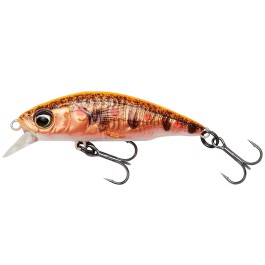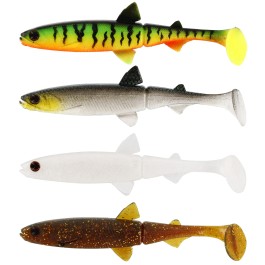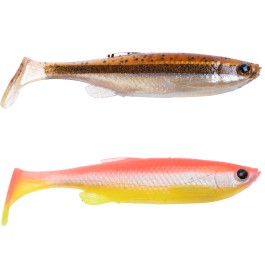
Photos: Savage Gear · supplied retailer imagery
Predator lures · Soft plastics · Our take
Savage Gear Fat Minnow T-Tail
Fat Minnow T-Tail; RTF options detailed separately
A chunky soft lure with a T-tail that works at slow retrieve speeds. A handy shout for predator anglers who want to cover water without winding like mad.
- Soft-material lure with a fat body profile.
- T-tail moves at slow retrieve speeds.
- RTF options use ball jig heads, fine-wire carbon-steel hooks and Pro Peg body holders.
- RTF versions are scented and have a belly rattle slot.
Make sure it’s the right one. The standard soft lure and RTF packs aren't interchangeable purchases. Jig-head, hook, scent and colour details below refer specifically to the RTF options.
Tackle Index Score
Tackle Index score
A useful slow-retrieve soft lure with practical RTF choices; head-weight selection and exposed-hook limitations matter more than the extra bells and whistles.
- Product Quality8.8/10
- Performance9/10
- Impact on Fish Catching8.5/10
- Ease of Use9.1/10
- Value for Money8.3/10
If you buy through our links, we might get a small kickback, but it won’t cost you a penny extra. As an Amazon Associate I earn from qualifying purchases. The full story
Who it suits
Is it right for you?
Great for
- Predator anglers who favour steady retrieves. The slow-working T-tail lets you keep the lure moving without needing a frantic winding pace.
- Anglers who want less rigging faff. The RTF options provide matched jig-head and hook combinations rather than leaving every component choice to you.
Maybe skip if
- Anglers fishing through dense weed. The exposed-hook RTF arrangement is more likely to collect weed than a suitable weedless setup.
- Anyone wanting one fixed setup for every venue. Shallow margins, deep stillwaters and flowing rivers can all call for different head weights.
The lowdown
Introducing the Savage Gear Fat Minnow T-Tail
A chunky soft lure with a T-tail that works at slow retrieve speeds. A handy shout for predator anglers who want to cover water without winding like mad.
- Soft-material lure with a fat body profile.
- T-tail moves at slow retrieve speeds.
- RTF options use ball jig heads, fine-wire carbon-steel hooks and Pro Peg body holders.
- RTF versions are scented and have a belly rattle slot.
Quick verdict
A sensible choice for slower lure work
The Fat Minnow T-Tail's big attraction is simple: a chunky baitfish profile with a tail that moves at slow retrieve speeds. That gives you a useful starting point for working predator swims without rushing the lure through them.
The RTF options cut down the rigging faff, while the separate soft lure lets you choose your own setup. Just match the head weight to the water rather than assuming one combination will cover every swim.
A useful slow-retrieve soft lure with practical RTF choices; head-weight selection and exposed-hook limitations matter more than the extra bells and whistles.
- Product Quality
- 8.8/10
- Performance
- 9/10
- Impact on Fish Catching
- 8.5/10
- Ease of Use
- 9.1/10
- Value for Money
- 8.3/10
The RTF body holders and colour construction offer useful detail, though soft bodies remain vulnerable to damage.
Tail movement at slow speeds gives the lure useful presentation flexibility when paired with an appropriate head weight.
The chunky profile and slow-working tail offer a credible predator presentation, but location and depth still do the heavy lifting.
A straightforward steady retrieve and matched RTF rigging keep the learning curve manageable.
The RTF extras add practical usefulness, but value depends on whether the supplied heads suit your fishing.
Head to head
How it stacks up
Side by side with the closest kit we've reviewed. This updates as we add more reviews.
Savage Gear
Savage Gear Fat Minnow T-Tail (this one)
Top scorer
Scores are our own, out of 10. Best in each row is in green. Prices change, so check the latest before you buy.
The full rundown
Everything you'll want to know about the Savage Gear Fat Minnow T-Tail
The Savage Gear Fat Minnow T-Tail is a soft lure with a straightforward brief: give predators a chunky baitfish shape to home in on, without making you crank it back at silly speed. The fat body supplies the outline; the T-tail supplies movement on a slow retrieve. That's a useful combination when you're working a likely swim carefully rather than just firing casts across it. No need to turn every retrieve into a workout, mate. Sometimes a measured wind is exactly the presentation you want.
The important bit is what that slow-speed action actually buys you. You can ease the lure along a reed edge, bring it past a drop-off or swim it above the bottom while still getting tail movement. It doesn't mean the lure magically hangs at one depth, though. Put too much lead on the front and a slow retrieve can drag it into trouble. Head weight and pace still need to work together. Think of the tail as giving you room to slow down, not permission to ignore the rest.
That fuller body is part of the appeal as well. If you're choosing this lure, you're choosing a substantial outline rather than a skinny, subtle little sliver. That can make sense when you want a noticeable baitfish target for perch, zander or pike, depending on lure size and venue. Bigger isn't automatically better, mind. Look at the prey fish around you, the fish you're targeting and how much lure your outfit comfortably handles. Pick a useful profile, not simply the biggest one in the shop.
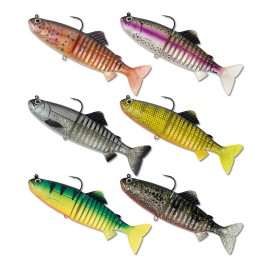
There's also a buying detail to get straight before you part with your quid: the Fat Minnow T-Tail name covers the soft lure, while RTF options come with their own rigging details. Those RTF versions use ball jig heads, fine-wire carbon-steel hooks and Pro Peg body holders. That's handy if you'd rather spend your time casting than rummaging through packets for a suitable hook and head. If you're buying the separate bodies, you'll need to make those choices yourself. Check the pack description rather than guessing from the photo.
For a first retrieve, keep things boring in the best possible way. Cast, allow the lure to reach your chosen depth, then wind steadily enough to keep contact. Once you've got a feel for where it's travelling, try a brief pause or a gentle lift. You don't need to throw the rod about to make a soft lure useful. Around an edge or change in depth, a controlled presentation is easier to repeat. If you get a knock, knowing what the lure was doing helps you make the next cast count.
The RTF versions have a few extra touches beyond the head and hook. They're scented, use twin- and triple-injection colours, and have a belly slot for a rattle. Nice options to have, but none deserves to overshadow the basics. Colour won't rescue a lure swimming miles above the fish, and scent isn't a promise of extra takes. Get the depth, speed and casting angle sorted first. Then play with the smaller details if you fancy it. That's a more useful approach than constantly changing colours while repeating the same unproductive retrieve.
There are practical limits, naturally. A soft body can suffer when teeth get involved, and an exposed jig hook needs a bit of respect around weed, branches and rough bottom. Check the body after a nip or snag, especially where the hook enters it. A lure sitting twisted on the hook isn't the presentation you intended. With the fine-wire RTF hooks, use balanced tackle and a sensible drag rather than trying to haul everything straight through cover. And where pike are around, a suitable bite-resistant trace belongs in the setup.
So who should have a look? Anyone after a chunky soft bait that doesn't demand speed to get its tail going. It makes particular sense if you enjoy covering likely predator water with steady, repeatable retrieves and adjusting depth as you go. The RTF route keeps the component matching simple; separate bodies offer more freedom over your rigging. Neither removes the need to read the swim. Choose the right weight, keep the lure running cleanly and give good-looking water a proper working over. That's the useful appeal here, without any magic-lure nonsense.
Specifications
The nuts and bolts
- Body and tail
- Soft material, fat body profile and T-tail.
- RTF 7.5cm
- Listed weight: 5g + 7.5g; hook: #1/0.
- RTF 9cm
- Listed weight: 7g + 7.5g; hook: #2/0.
- RTF 10.5cm
- Listed weight: 11g + 10g; hook: #3/0.
- RTF 13cm
- Listed weight: 20g + 12.5g; hook: #5/0.
- RTF colour options
- Clearwater Mix and Darkwater Mix.
Specs checked with Savage Gear, Oct 2026.
Spot a model or spec change?
Our take
Slow tail action, not automatic shallow running
A tail that works slowly is dead handy when you want to linger around a feature. But the lure's swimming depth still depends on head weight, retrieve speed, rod position and current.
That's the key buying decision here. Pick the body size for the profile you want, then make sure the rigging suits where you need it to swim.
Body, tail and rigging
Closer look: a chunky profile with straightforward rigging choices
The fat soft body and slow-working T-tail are the core of the lure. Together, they suit a baitfish-style presentation that you can swim steadily rather than constantly twitch. Keep the body straight when rigging it: a wonky mounting can spoil the presentation before you've even reached the likely spot.
RTF options add ball jig heads, fine-wire carbon-steel hooks and Pro Peg body holders. Their scented bodies also have twin- and triple-injection colours and a belly rattle slot. Clearwater Mix and Darkwater Mix are the listed colour choices; treat those names as starting points, not rules about what fish will take.
Worth knowing. The RTF weights are listed as paired figures, such as 5g + 7.5g for the 7.5cm option. Don't choose your rod using only the first number. Match your outfit to the complete casting load, and don't assume a belly rattle slot means a rattle is included.
Pick it for your water
Who it suits: steady-retrieve anglers, not just lure tinkerers
If you like walking a bank and giving each likely feature a few deliberate casts, this is a sensible style of lure to carry. Work different angles and depths before marching on. A steady retrieve gives you a repeatable baseline, which makes it easier to judge whether a pause or pace change improves the response.
The RTF option suits anglers who want less component matching. The separate soft lure makes more sense if you already carry jig heads for different swims. Neither is automatically the better buy: an included head is only useful if its weight suits the water you're fishing.
For thick weed or branches, an exposed jig hook can turn a promising cast into a clearing-up job. Likewise, very shallow water may need a lighter arrangement than a particular RTF pack supplies. Choose around those limits rather than expecting the slow-working tail to solve them.
Before you cast
FAQs in full: speed, RTF options and pike
Does it need a fast retrieve? No—the T-tail moves at slow retrieve speeds. Start with a straight wind and watch it in the margins where visibility allows. That gives you a useful feel for its movement, although current and depth will change how the same retrieve behaves farther out.
What's different about RTF? Those options use ball jig heads, fine-wire carbon-steel hooks and Pro Peg body holders, with size-specific hook and weight combinations. They also have scented bodies, twin- and triple-injection colours and a belly rattle slot. Don't automatically apply those extras to every separate-body pack carrying the Fat Minnow T-Tail name.
Can you fish it for pike? Yes. Choose the lure size and tackle for the water and fish you're targeting, use a suitable bite-resistant trace, and carry a proper landing net, long forceps and appropriate unhooking kit. Check the soft body and trace after contact with a fish, and replace anything damaged before the next cast.
On paper
Pros & cons
What we like
- Tail movement at slow speeds suits measured retrieves.
- Chunky profile offers a substantial-looking baitfish target.
- RTF options simplify matching bodies, heads and hooks.
- RTF belly slot gives you the option of adding a rattle.
Worth knowing
- Soft bodies are vulnerable to tooth damage and wear around the hook entry.
- An exposed jig hook isn't the best choice for thick weed or snaggy cover.
- The supplied RTF head weights won't suit every depth and flow.
Want one?
Add it to your Wanted list or join a Group Buy — shops see anonymous totals only.
Your questions answered
What anglers want to know
The stuff you’d ask your mate on the next peg. Straight answers, no waffle.
01Does it need a fast retrieve to work?
Does it need a fast retrieve to work?
No. The T-tail moves at slow retrieve speeds. Start with a steady wind and adjust the pace and head weight to keep it in the right part of the water.
02What makes the RTF version different?
What makes the RTF version different?
RTF options use ball jig heads, fine-wire carbon-steel hooks and Pro Peg body holders. They're also scented, have twin- and triple-injection colours, and include a belly rattle slot.
03Can I use it for pike?
Can I use it for pike?
Yes, it's a sensible baitfish-style option for pike. Use a suitable bite-resistant trace, tackle matched to the complete lure weight, and proper predator landing and unhooking kit.
What anglers say
The word from the bank
Our read: a sensible choice for slower lure work. The strongest reasons to choose it are tail movement at slow speeds suits measured retrieves. and chunky profile offers a substantial-looking baitfish target.; the main trade-off is soft bodies are vulnerable to tooth damage and wear around the hook entry..
Our take on the feedback
Why it appeals
Checked Sept '26 — “Tail movement at slow speeds suits measured retrieves.”
Best fit
Checked Sept '26 — “Predator anglers who favour steady retrieves: The slow-working T-tail lets you keep the lure moving without needing a frantic winding pace.”
Worth knowing
Checked Sept '26 — “Soft bodies are vulnerable to tooth damage and wear around the hook entry.”
Tackle Index’s take from the product details and fishing fit we checked. We haven’t found enough independent public feedback to call this an angler consensus yet.
Angler score
What our readers rate Savage Gear Fat Minnow T-Tail
No angler score yet — nobody's reviewed Savage Gear Fat Minnow T-Tail here. Be the first and get the score started.
Owner reports
Own this? Help the next angler.
Quick multiple-choice reports from people who say they own the Savage Gear Fat Minnow T-Tail. Not verified purchases, and kept separate from our score.
No owner reports yet.
Alternatives & go-withs